Uefa blink in test of resolve against embattled Infantino
The Observer · Rory Smith; Jessy Parker Humphreys · 2026-08-22T15:47:39+00:00 · nguồn gốc
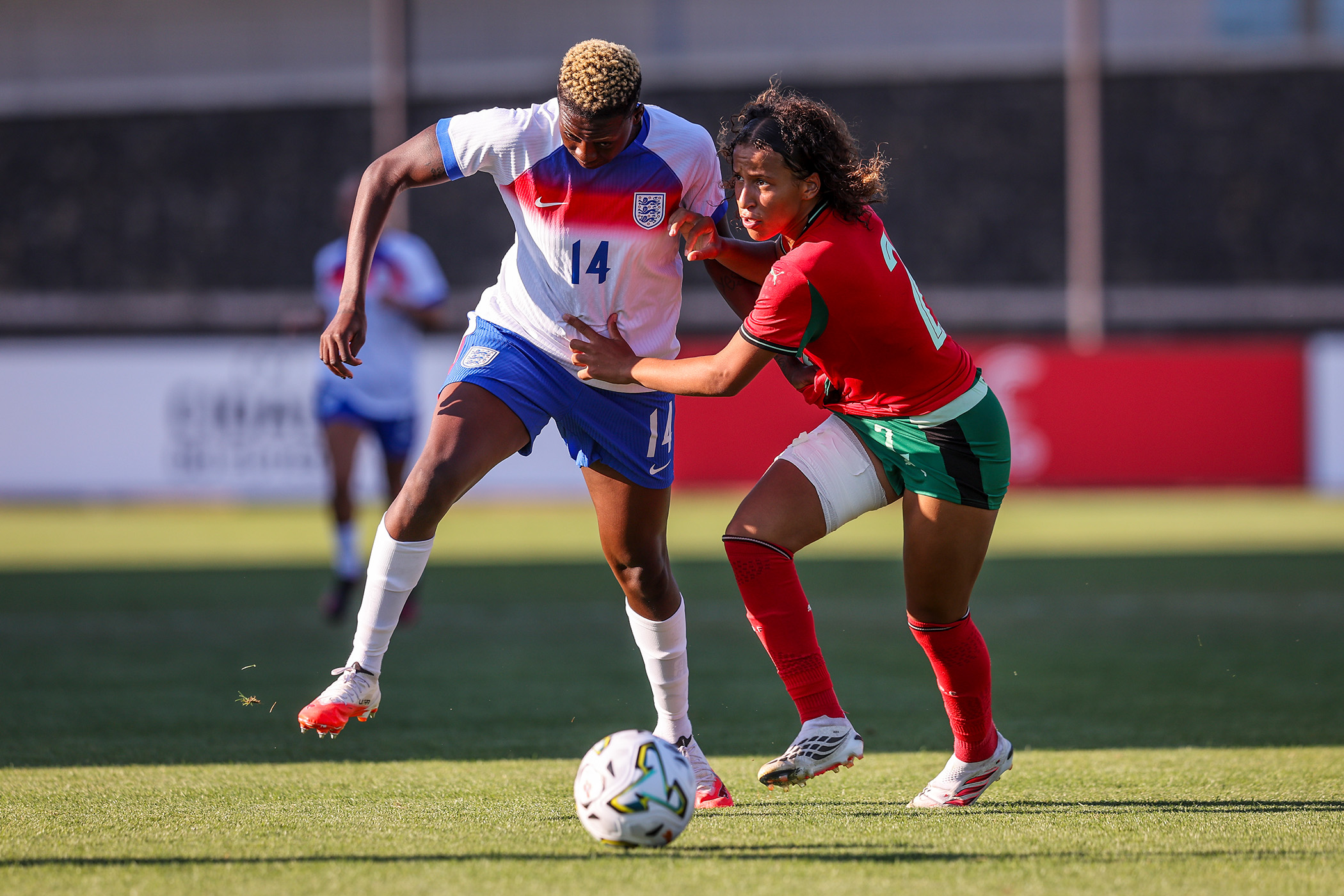
The good news was made public at lunchtime on Friday. Lydia Bedford, head coach of England’s women’s under-20 team, had been supposed to name the squad she would take to next month’s World Cup in Poland 24 hours earlier, but the announcement had been delayed. Operational reasons, apparently.
By that stage, most of those who had been included in her plans had already been advised that they had made the cut. This was just confirmation, but still, it was welcome: a chance for a clutch of prospects not just from the powerhouses of the Women’s Super League but two players from Stanford University and a couple of teams in North Carolina to celebrate too.
That jubilation may even have stretched a little further south. Gianni Infantino, the now-permanently embattled Fifa president, is due in the Dominican Republic this weekend. Officially, he is set to attend a regional youth tournament. Unofficially, he is desperately trying to corral the support he needs to keep his grasp on power.
He will, undoubtedly, interpret the fact that Bedford has named a squad for the tournament next month as an indication that struggle is shifting – slowly and subtly – in his favour. The Under-20 Women’s World Cup has, after all, rather unfortunately become the scene of the first skirmish between Infantino and those of his opponents who are determined to unseat him.
In the immediate aftermath of the exposure of Infantino’s plan to sell off the commercial rights to the World Cup to a group of investors led by Josh Kushner, European football’s governing body, Uefa, released a “unanimous and unequivocal” statement rejecting the proposal. More importantly, they delivered a threat.
“As a result of today’s discussion, no Uefa national teams will participate in any Fifa competition for so long as these proposals remain alive, unless this proposal has been abandoned in its entirety and binding assurances have been given that Fifa will never again open its governance or competitions to private ownership,” it read.
The ploy worked. Although Infantino’s powerbase has long rested on projecting himself as a bulwark against European dominance of world football, even he would doubtless recognise that tournaments without European teams lose a considerable portion of their appeal. Combined with the ferocity of opposition to his plans, the prospect of a boycott forced a climbdown. Within a few days, Infantino had abandoned the idea.
The problem was the second stipulation. Although there is an active dialogue between Uefa and Fifa over guarantees that no similar plan will be brought forward in the future, the latter has thus far not been able to provide the former with the assurances it has demanded. The boycott, as things stand, remains in place, with less than two weeks to go before the Under-20 Women’s World Cup provides Uefa’s resolve with its first test.
Internally, many at Uefa would concede that it is hardly the ideal battleground: there would doubtless be some sympathy with the idea, expressed to the BBC by Lisa Nandy, the culture secretary, that boycotts “unfairly penalise athletes and competitors who are not responsible for the reason [they] take place”.
That is especially pronounced when it is a women’s development tournament; the women’s game suffering while men play power games is not a good look for anyone. Even within the European bloc, then, some have assumed that this was not an appropriate place to pick a fight: the PZPN, the Polish federation organising the competition, has maintained throughout that it was assuming the tournament would go ahead as planned; the French, one of six European qualifiers, confirmed a couple of weeks ago that they intended to take part, regardless of the status of the boycott.
Sign up to newsletters from The Observer
View more
For information about how The Observer protects your data, read our Privacy Policy
Whether others would take that same approach has not been clear. Although the FA has taken a pragmatic approach to the build-up to the tournament – informing those players involved of their inclusion, sending their clubs details of how to stay in touch, arranging logistics for the squad’s arrival in camp later this week – nobody has been able to say for sure that England would take part.
Spain, France and Portugal waited until relatively late to name their teams. Italy, the final European participant, has still not done so. The United States, by contrast, announced theirs – including the high-profile omission of the Lyon midfielder Lily Yohannes – on Wednesday. Japan made theirs public on Tuesday.
That they have all eventually done so does not necessarily mean that they will all play, of course; the possibility of a boycott remains until they physically take to the field. But the fact that they have all belatedly selected players will doubtless serve to encourage Infantino in his belief that he can stare down not just this threat, but the challenge to his leadership more broadly.
A binding assurance that he will never invite private interests to share in football’s wealth is not, after all, the ultimate aim of Uefa and their allies in Concacaf and the AFC, the governing bodies of the game in North and Central America and Asia respectively. That would be enough to lift the boycott. Only his removal would genuinely placate them.
The longer he remains in place though, the stronger his grip on power becomes. He has already peeled away a handful of member nations in Concacaf from the ranks of his detractors, including Mexico; his trip to the Dominican Republic is designed to win over a few more. His pitch will be strengthened by the ability to claim that his opponents’ threats are empty ones.
Even within Uefa, there was no real appetite to see the Under-20 Women’s World Cup fall victim to political wrangling. They do not believe that the players should have to suffer for what they see as Infantino’s hubris. They had hoped they would have turned the screw enough by now to force his hand; officials from Uefa and Concacaf are already discussing a joint Nations League, to start in 2028, an idea designed to show that they are serious in their intent. But Poland was their first chance to stare him down. All he will see, as he scrambles to survive, is that they have blinked.
Photograph by Carlos Rodrigues/FA via Getty Images