Historic Dutch Women’s Football CAO Covers Six Clubs
Women's Football News · Samnihof · 2026-08-22T12:15:54+00:00 · nguồn gốc
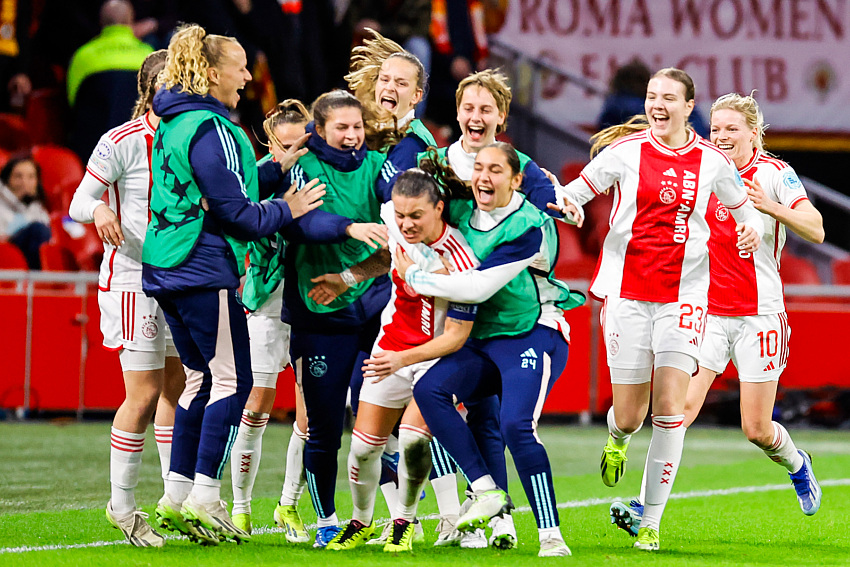
Six Dutch football clubs have introduced a collective labour agreement establishing shared minimum employment conditions for their women’s teams. Ajax, AZ, Feyenoord, FC Twente, HERA United and PSV negotiated the agreement with employers’ organisation FBO and player unions VVCS and ProProf.
The CAO took effect in July 2026 and has no specified expiry date. It includes provisions covering continued payment during pregnancy and sickness, as well as minimum contractual conditions. Every contracted player covered by the agreement must receive an appointment of at least 22 hours per week.
It is a significant development. Until July 2026, the six participating clubs operated under separate company-specific agreements. The new arrangement creates a common employment floor across multiple clubs for the first time.
However, this is not yet a league-wide Dutch women’s football CAO. It applies to six clubs, and the publicly available announcements do not explain several details needed to determine how much protection it provides in practice.
Which Clubs Have Signed the New CAO?
The six participating clubs are:
- Ajax
- AZ
- Feyenoord
- FC Twente
- HERA United
- PSV
The clubs were represented in negotiations by the Federation of Professional Football Organisations, known as the FBO. VVCS and ProProf negotiated on behalf of the players, with directors Louis Everard and Ko Andriessen forming the player-side delegation.
The arrangement is being described as a semi-sector collective labour agreement. It establishes shared conditions across several employers but does not yet cover every club operating in Dutch professional women’s football.
All parties have stated that they want more clubs to join in the future. Their ultimate ambition is for every club in Dutch professional women’s football to become part of the collective arrangement.
What Does the Dutch Women’s Football CAO Guarantee?
Three central provisions have been publicly confirmed.
Continued payment during pregnancy
Players covered by the agreement are entitled to continued payment during pregnancy. This is particularly important in professional football, where short contracts and physical availability can create uncertainty for players who become pregnant during their careers.
A collective provision means protection no longer depends entirely on an individual player negotiating it into her contract with one club.
Continued payment during sickness
The agreement also guarantees continued payment when a player is ill.
Public summaries have not yet clarified whether this provision uses “sickness” as a broad employment category that includes football injuries, rehabilitation and other forms of long-term incapacity.
That detail will be essential for players whose careers can be interrupted by serious injuries lasting many months.
A minimum appointment of 22 hours per week
Contracts covered by the CAO must provide a minimum appointment of 22 working hours per week. This creates a shared minimum and should prevent participating clubs from placing first-team players on extremely small employment contracts while still expecting them to meet the demands of professional football.
However, a 22-hour appointment does not automatically establish full-time professional status or guarantee that a player earns enough to live entirely from football. The practical value depends on the salary attached to those hours and which duties are included.
Why a Shared CAO Matters
Before this agreement, employment conditions were negotiated through separate company CAOs at the participating clubs.
Individual agreements can still provide strong protection, but they also allow differences to develop between teams competing in the same football system. A player’s basic rights may then depend heavily on which club employs her.
FBO director Laura van Putten described the agreement as an example of the solidarity needed in women’s football. VVCS and ProProf called it another milestone seven years after the first club-specific Dutch women’s football CAO was introduced.
The significance lies in clubs negotiating collectively. Professionalisation is stronger when minimum rights apply across multiple employers instead of being dependent on voluntary decisions made one club at a time.
HERA United’s Involvement Is Particularly Significant
HERA United remained part of the agreement despite the club’s relegation. The FBO specifically praised HERA for continuing to accept collective responsibility even though its immediate competitive circumstances had changed.
That decision strengthens the principle behind the agreement. Minimum working conditions should not only be supported when a club is successful, competing at the highest level or benefiting from increased visibility.
However, the public information does not clarify how relegation affects the CAO’s legal application. It remains important to establish whether HERA’s players continue to receive every protection while the club operates outside the top division and whether eligibility is based on professional status rather than league membership.
The 22-Hour Minimum Needs More Explanation
The minimum appointment is one of the most concrete provisions announced, but it also raises some of the most important questions.
Professional football involves more than scheduled training sessions. Players attend matches, travel, complete strength and recovery programmes, participate in medical treatment and may be required to perform media or commercial duties.
It is not yet clear which of those activities count towards the 22 hours.
The salary attached to the minimum appointment has also not been published. Without that figure, it is impossible to know whether the provision provides a viable professional income or primarily prevents the smallest part-time contracts.
A minimum number of hours can still represent progress. It should not be presented as a minimum professional salary unless the wage provisions support that interpretation.
Important Questions the Full CAO Must Answer
At the time of writing, Women Football Blog has not been able to obtain a complete copy of the collective agreement. The available club, union and media statements provide the broad principles but not the detailed clauses.
The following questions therefore remain unanswered for now.
Pregnancy and maternity
- What percentage of a player’s salary is guaranteed during pregnancy?
- How long does continued payment last?
- Does protection cover pregnancy-related inability to train or play?
- What happens when a player’s contract expires during pregnancy or maternity leave?
- Does the CAO address miscarriage, fertility treatment or the return-to-play process?
- Are clubs required to provide suitable medical and physical support after childbirth?
Sickness and injury
- What percentage of salary is paid during sickness?
- How long is payment guaranteed?
- Are football injuries explicitly included?
- What protection exists for players suffering long-term injuries such as an ACL tear?
- What happens when an injured player reaches the end of a fixed-term contract?
- Are rehabilitation costs and independent medical assessments covered?
Salary and working hours
- Is there a minimum salary or hourly wage?
- Is remuneration based only on the Dutch statutory minimum, or does football have its own salary floor?
- Which responsibilities count towards the minimum 22-hour appointment?
- Are matches, travel, recovery, medical treatment and media obligations included?
- Can clubs expect players to complete additional unpaid football-related work?
Players covered by the agreement
- Does the CAO cover every first-team player contracted by the six clubs?
- Are academy players on professional terms included?
- How are players on loan treated?
- Are foreign players automatically covered?
- Do players need to be members of VVCS or ProProf to receive the protections?
- Does the agreement continue to cover HERA United after relegation?
Enforcement and expansion
- How can a player challenge a club that fails to comply?
- Is there an independent complaints or arbitration procedure?
- Can another club join while the CAO is already in operation?
- Can a participating club later withdraw?
- When will the agreement be formally reviewed if it has no specified expiry date?
- What is preventing the remaining professional clubs from joining?
These questions do not diminish the achievement. Raising them is necessary if players and supporters are to understand what the agreement actually changes.
A Milestone, but Not Yet a Universal Standard
The most obvious limitation is the number of participating clubs. Six teams choosing collective standards is substantially better than six entirely separate systems. Players employed elsewhere, however, do not automatically receive the same shared guarantees based on the information currently available.
That creates the possibility of a two-tier employment landscape: clubs operating under a common minimum and clubs continuing with their own conditions.
The hope expressed by the FBO, VVCS and ProProf is that this first group will create momentum. If more clubs join, the CAO could develop from a semi-sector arrangement into a genuine common foundation for professional women’s football in the Netherlands.
Professionalisation Must Be Measured Through Employment
Women’s football is often described as professional because matches are televised, crowds are growing and clubs use professional branding. The employment conditions beneath that presentation matter more.
Can a player afford to treat football as her primary occupation? Is her income protected when she is injured? Can she become pregnant without placing her career and financial security at unacceptable risk? Are training, travel and recovery recognised as working time? The new CAO begins to address those questions collectively.
Ajax, AZ, Feyenoord, FC Twente, HERA United and PSV deserve recognition for accepting a shared responsibility that extends beyond competitive results. The unions and FBO have also created a structure upon which broader standards can be built.
Publishing the complete provisions would allow players, supporters and other clubs to assess the agreement properly. Bringing every professional club into the system would ensure that basic employment protection no longer depends on the badge a player represents.
The launch is historic. Its long-term legacy will be determined by the detail—and by who joins next.
Source: Telegraaf – Dutch Women’s Football CAO