An heir to an SF coffee fortune and a secret hideaway in Lake Tahoe
SFGATE · Julie Brown Davis · 2026-08-19T19:49:52+00:00 · nguồn gốc
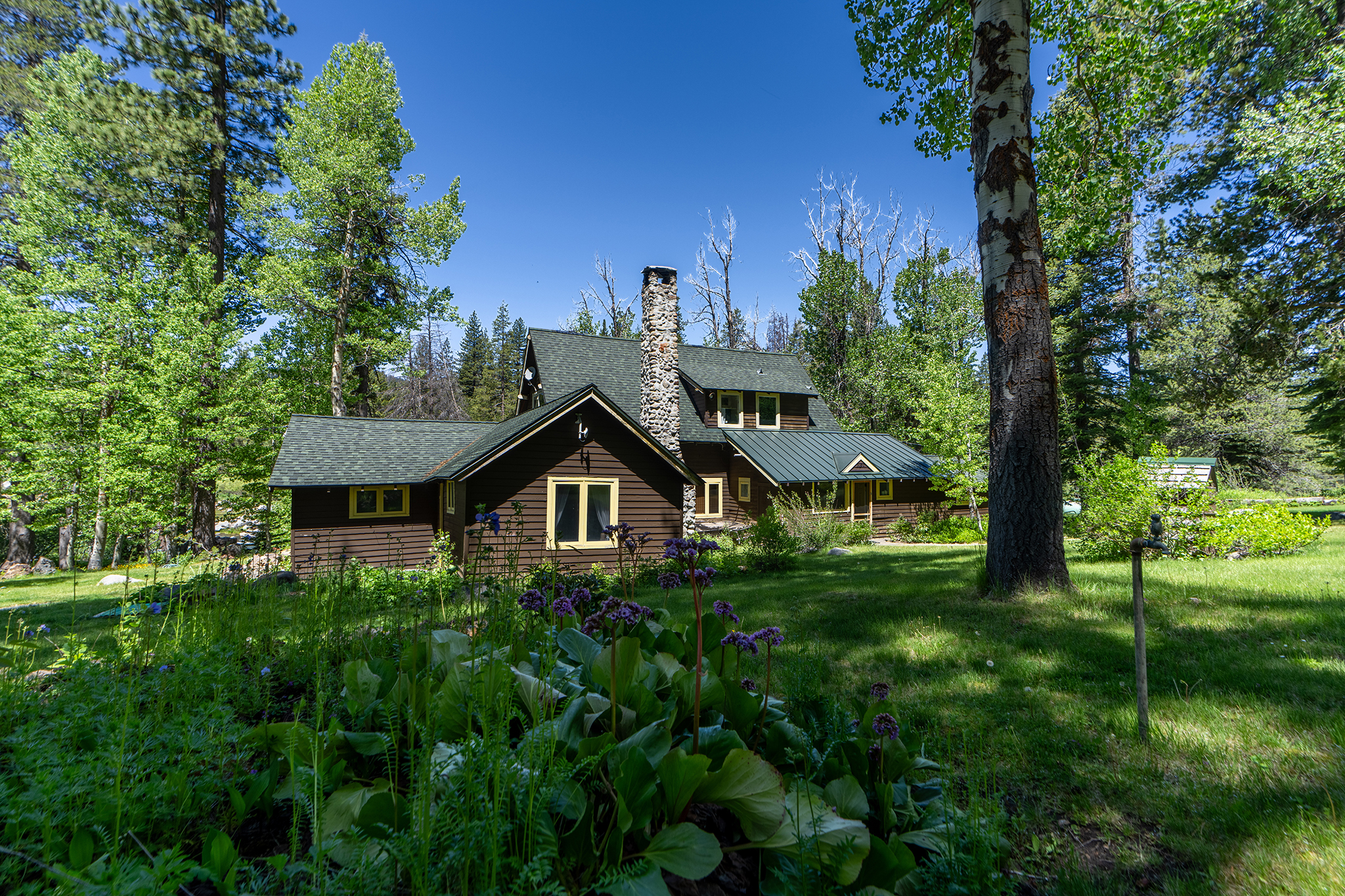
Picture an oasis in the middle of the forest near Lake Tahoe in the late 1920s and early 1930s: The cabin has a stone chimney and yellow trim around the windows. Out the front door, a path leads through a grassy meadow with dappled shade and wildflowers. The sound of rushing water is ever-present from the Truckee River’s gentle rapids.
On the other side of the river, a horseshoe-shaped valley steps up to the Sierra Nevada crest — eventually, this valley will be developed into what’s now the Palisades Tahoe ski resort, host to the 1960 Winter Olympics. But it’s summertime in the late 1920s or early 1930s, and the ski resort won’t exist for another two or three decades. In fact, there was hardly anybody around on the summer afternoons when the daughter of a San Francisco entrepreneur ambled up the creek — now called Washeshu Creek, for the Washoe people who once summered here — with only a picnic lunch and a fishing rod.
Phyllis Hills was the heiress to a coffee fortune made in San Francisco. Her father was Austin Hills, who founded the Hills Bros. Coffee company in San Francisco in 1878 with his brother Reuben Hills. The Hills brothers pioneered the way coffee was packaged and sold across the world, and they built a legacy in San Francisco that endures today: One of the old Hills Bros. coffee plants is a landmark on Harrison Street, where the famous “Hills Bros Coffee” sign overlooks the Embarcadero. As Austin’s middle daughter, Phyllis grew up as a debutante in San Francisco society. But when they came to Tahoe, their lifestyle shifted to a much simpler and quieter pace.
Advertisement
Article continues below this ad
In 1925, Austin rented a house on the Truckee River. He loved it so much that he wound up buying the house and the 84.5-acre property, which they named “Coffee Grounds.” From then on, the Hills family spent every summer in Tahoe. Phyllis and her father passed the time with a fishing rod cast in the Truckee River.
“My father couldn’t spend the whole summer with us, because he’d be working, but he would come up at times,” Phyllis wrote in her memoir. “He would dress in a coat and tie to go fishing; that’s what they did in those days. He taught me how to fish at Tahoe. I still love to fish — fly-casting and all of that.”
Eventually, Phyllis Hills Meek Jayred (she married twice) became the matron of her family’s property on the Truckee River, and it was a role she held through two marriages as her family grew, until she died in 2020 at the age of 100. “Family occasions were an important part of her life, whether locally or in Tahoe at the family home on the Truckee River,” her obituary read.
Advertisement
Article continues below this ad
Now, her descendants are selling the 84.5-acre property for $5.7 million. The listing reflects a trend in Lake Tahoe that’s seeing younger generations part ways with coveted estates and properties that have been under their families’ care for decades.
Coffee Grounds is the kind of property that only exists because it’s been safeguarded and preserved by a family for multiple generations. Across the river, proof of the world’s acceleration to modernity is evident in the traffic zipping on Highway 89 between Tahoe City and Truckee. But all that noise fades away when you cross the bridge to the estate.
The wildflower-studded meadows, the swimming hole in the river, the stone patio and the three cabin-like homes are a time portal to old Tahoe and an era when second homes were relatively modest.
The main house is full of board games, a vintage croquet set and family portraits, real estate agent Sean Collins said. “You just feel family at this place,” Collins noted.
Advertisement
Article continues below this ad
The listing is also incredibly rare for the sheer size of the property and its coveted location — 84.5 forested acres with 485 feet of riverfront access, flat lots for the three homes on site and a back property line that runs three-quarters of a mile long against a steep hillside. It’s a short distance to the Palisades Tahoe ski resort — with a pair of binoculars from the deck of the main house, Collins said he can see the ski resort’s upper mountain ridgeline — and a quick drive to Tahoe City or Truckee. Even though it’s close to the highway, the forest and the river yield privacy and buffer the property from noise and onlookers.
The river is the defining feature of the property. Beyond the deck of the main house, water gently rolls downstream. There are fishing spots, plus a swimming hole. A stone patio was built near the river, with a grassy area, a barbecue pit and a pizza oven.
The compound’s three homes are built on a flat area that looks down to the river and that is surrounded by grasses, wildflowers, aspens and pines, with dappled shade from the forest.
The main residence is approximately 2,800 square feet and has four bedrooms and two baths. It was built originally in 1916 as a two-bedroom cabin, according to Collins, but as the family grew, they added two bedrooms and updated elements of the house with new windows and flooring.
Advertisement
Article continues below this ad
“And then some of it, they kept it exactly how it was,” Collins said.
A smaller one-bedroom, one-bath house on the property is just under 1,000 square feet and was remodeled last year, Collins said, noting that local tenants currently rent this home. In the 1970s, a garage was converted into a third residence for the caretaker, a position the family still employs.
Behind the homes, a vast greenbelt features access to some of the most iconic recreation trails and climbing spots in the area: the Western States trail, the Wall, the Tahoe Rim Trail, the Fiberboard Freeway, Painted Rock and Big Chief.
The location offers prime access to outdoor recreation right out the front door. Summertime is for swimming, river rafting or fishing in the river. Beyond the driveway, a paved bike path leads to Tahoe City and down Lake Tahoe’s West Shore to Meeks Bay. The proximity to Palisades means you can beat the ski traffic. “It’s just got something every season with easy access,” Collins said.
Advertisement
Article continues below this ad
For Phyllis, summers in Tahoe evolved over the decades. She wrote in her memoir about socializing at the famous Tahoe Tavern hotel in Tahoe City, built in 1902, and racing boats on Lake Tahoe with her first husband, Ollie Meek. Her obituary included a long list of hobbies and passions: “Fly fisherwoman, speedboat racer, golfer, painter, author, glass blower, knitter, needlepointer, bridge player, volunteer and accomplished floral designer.”
But her true love was fishing, according to Collins. “She would come up here and fish for hours, like sunrise to sunset,” he said.
Advertisement
Article continues below this ad
BECOME A FRIEND. GET OUR AD-FREE APP.
In her memoir, Phyllis credits fishing with drawing her close to her father: “I fished and fished up there,” she wrote, “and he said that when I caught the limit in one day, he’d buy me a Leonard rod, which was the Cadillac of fishing rods then. The limit wasn’t five or six fish; it was 25 a day. I got the rod when I was nine years old, and I still have it.”
Despite the family business, her mother and father wouldn’t give young Phyllis any coffee. But on her afternoon sojourns up Washeshu Creek, she befriended an old sheepherder. The sheepherder gave Phyllis her first cup of coffee: “He just drank this awful rotgut stuff in the sheep camp when I was fishing,” Phyllis wrote. “... Mother always had a fit.”
— The biggest name in Vegas makes a $200M bet on Lake Tahoe
— Incline Village aghast after trees criminally poisoned
— New report shows what happened in deadly Castle Peak avalanche
For weekly updates, interviews and profiles from a Tahoe insider, sign up for our Tahoe newsletter here.
Advertisement
Article continues below this ad