Springboks v All Blacks: Five focus points for New Zealand at Ellis Park, from a scrum that has to survive the bench to the one contest they can turn
Planet Rugby · James While · 2026-08-19T15:27:28+00:00 · nguồn gốc
Springboks v All Blacks: Five focus points for New Zealand at Ellis Park, from a scrum that has to survive the bench to the one contest they can turn
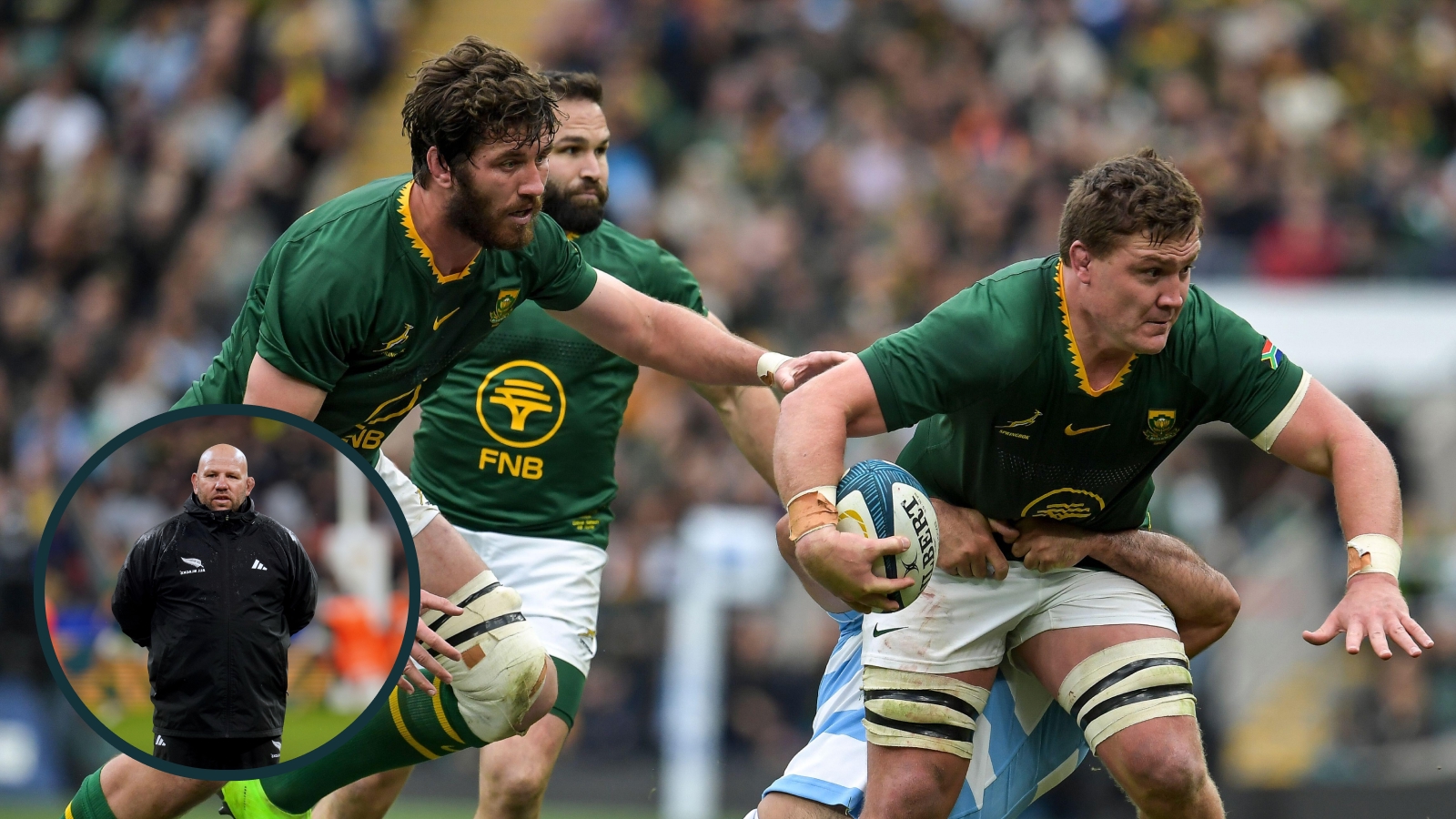
All Blacks assistant coach Jason Ryan has spent the week calling the Springbok scrum the best in the world and telling his own pack to arrive with confidence anyway.
Six wins from six, 142 points across three franchise games, and an unbeaten tour record count for precisely nothing at 17:10 on Saturday.
The top line is that Dave Rennie’s All Blacks arrive in Johannesburg in better form than anyone predicted but with a worse recent record against these opponents than any New Zealand side in living memory. Those 142 tour points came at 47 a game against 40 conceded in total, and the three Nations Championship Tests before them were all won, France 34-32, Italy 47-17 and Ireland 40-21, at 40.3 points and 11 line breaks a match.
Against that, South Africa have won 12 Tests in succession and 31 of their last 34, putting 45 on England at this ground in July and 43 on Wales in Durban without reply. 11 months ago in Wellington they led 10-7 at the break, scored 36 unanswered points after it and won 43-10, the heaviest defeat in All Blacks history and the result that ended Scott Robertson’s tenure.
The scrum problem is a bench problem
The tour evidence runs in both directions, a contradiction in its own lifetime. Pasilio Tosi conceded four penalties against the Stormers. Against a Sharks side missing six Springboks and finishing with an U20 replacement front-row, New Zealand were never dominant and the home scrum won penalties of its own. Then Loftus, where Xavier Numia drove Francois Klopper backwards five metres from the All Blacks line, Tyrel Lomax won another, and Siale Lauaki and George Bower held their sides after the changes. Ryan credits a fortnight of work on reaction time and maul defence; Rennie credits Ryan. The Nations Championship numbers were better again, a 100 per cent success rate on New Zealand’s feed against both France and Ireland.
Against the Boks, the specific danger is not the first scrum, it’s the 12th. And the 13th. And thereafter. Rennie has identified the mechanism precisely: South Africa hunt back-to-back penalties rather than free-kicks, put a side in its own corner and convert that field position better than anyone. Wilco Louw, 144kg, was crumpling Nicky Smith into his own second-row by the closing stages in Durban, and Jan-Hendrik Wessels changed the scrum the moment he arrived. Ox Nche’s knee is the one variable, and even without him, two complete front-rows remain. At Eden Park last September, the Springboks took a tighthead against the feed and shunted the New Zealand pack backwards, which is the kind of thing that changes how a stadium behaves.
Parity at half-time is not the target; parity at full-time is.
The air is the one contest they can turn
Cape Town produced the worst number of the tour. New Zealand won possession from one of seven contestable kicks and took no clean catch at all from seven high balls. Damian McKenzie then twisted an ankle fielding a high kick in Durban and is the injury Rennie is least confident about.
The counter is real. In torrential rain against the Sharks, the All Blacks kicked 34 times, 10 more than in any other match of the Rennie era, most of them contestable, and both the aerial game and the discipline improved. Leroy Carter won a high ball off a Beauden Barrett kick at
Loftus and scored twice. Will Jordan, who broke Doug Howlett’s New Zealand try-scoring record in the Nations Championship, is among the better aerial fielders in the game and should start at full-back if McKenzie fails, with Barrett’s return giving a second set of hands and a kicking game good enough to make the exchange even.
They will need all of it. Damian Willemse was barely troubled under the ball against England here in July, adding a 50/22 and 12 carries on his 50th cap. Kurt-Lee Arendse has 25 tries in 32 Tests and still said before the series that the high ball needed work. Cheslin Kolbe turns the aerial reclaim into a scoring weapon, and his intercept in Wellington was the only Springbok try of that first half.
This is the one area where New Zealand can reasonably expect to meet South Africa on equal terms, because it is a skills contest rather than a mass contest. Take four of seven and the whole shape of the afternoon alters.
Get to the floor before Du Toit does
The Springbok jackal threat is not one man and has not been for years. The name to know is Paul de Villiers, who arrived in camp having won 19 turnovers for the Stormers across the URC season and was retained through all three Nations Championship rounds whilst everything around him rotated. Against Wales he was the match’s top carrier with 16 and won three turnovers, two of which killed the visitors’ best passages. Add Pieter-Steph du Toit on 98 caps, who captains if Siya Kolisi’s hamstring does not come right, and Marco van Staden.
Which makes the carry decision more important than the cleanout. Against this back-row, the extra 70 centimetres is the trap: reach for it, and the ball sits exposed with three specialists arriving. Quick ball is worth more than the extra metre, and Quinn Tupaea sits at the centre of that judgement. He has nailed down the 13 shirt on form and was the most physical back on the field against Ireland, and against a midfield that folds loose forwards into short lineouts, his job is to balance carrying for the gainline with getting to ground on his own terms.
Tupaea in attack is a weapon. Tupaea placing the ball properly is what keeps the weapon loaded. Ardie Savea, held out of all three franchise fixtures after 18 months of accumulated minutes, is the one All Black capable of winning this contest in both directions. South Africa’s coaches have also spent the week publicly alleging illegal All Blacks technique at the breakdown and maul, which puts Matthew Carley’s early decisions under a spotlight.
Ex-All Blacks star reveals reason for ‘time wasting’ debate between Rassie Erasmus and Dave Rennie
Hold the line when the score turns
New Zealand’s defensive model under Tana Umaga is not built on line speed, and it is not built on the jackal. It is built on entry denial, and Umaga has spent the week saying so in almost those words: do not give South Africa entries into the areas they want to reach, because those areas promote their strengths. He has added that the All Blacks must win the possession count at Ellis Park, the same instruction from the other end.
Durban showed the model working. Jordie Barrett, man of the match, said afterwards that the Sharks were let into the New Zealand 22 inside the opening 10 minutes, that a turnover rescued it, and that the job is minimising entries. He was blunter about the cause: his side had handed over easy entries into their own half on their own terms, which became the half-time message. The numbers followed the correction. The Sharks held 56 per cent of first-half possession and scored nothing with it; New Zealand held 72 per cent of the second and scored eight tries. The hosts made 105 tackles to 79 and missed 21 to 12, finishing at 75 per cent completion against 83, and their captain’s verdict was that they knew the tourists wanted tempo and that quick ball made them deadly.
The difficulty is that South Africa do not need open play to manufacture entries. They generate them from the scrum, from the aerial contest and from penalties, which means entry denial against this opponent is not really a defensive discipline at all. It is the sum of the three sections above. Lose the set piece, lose the air, concede at the breakdown, and the Springboks are inside the 22, however well the defensive line is organised.
Umaga is honest about the margin: six games in charge, 23 points a game conceded against the July internationals and 13 against three URC sides, and an admission that a couple of areas have slipped since the Nations Championship. Victor Matfield watched the Bulls match and saw a side that looked vulnerable once pressure arrived.
Which brings it back to Wellington. The scoreboard says collapse; the tape says something narrower. With the game still reachable at the start of the fourth quarter, senior players including Barrett and Savea chased it with low-percentage decisions, and each one shortened the match. Nobody solves an eight-point deficit in a single defensive set, and the side that tries concedes the next try rather than scoring one.
Meet the first 20 minutes where they land
Rennie has been blunt that the intensity coming is three, four, five-fold what the Bulls produced, and that the line speed will be far higher than anything his side has faced under him. He is right, and it compounds a pattern that has run through the tour: New Zealand start slowly. 14-all with the Stormers deep into the second half, 14-0 at the break in Durban in a match they won by 54. Against the Sharks it cost nothing. At Ellis Park, at altitude, in a sold-out ground, against a side that scored 45 here six weeks ago, the same 20 minutes is three converted tries.
Discipline is the measurable version of this. New Zealand averaged 8.0 penalties a game across the Nations Championship and conceded eight against the Bulls, an improvement on Cape Town, whilst Loftus rehearsed what the final quarter feels like when the air is thin. Mike Blair, running the attack, has already conceded the obvious about Saturday: fewer opportunities, so better execution.
None of this asks New Zealand to become South Africa. Heyneke Meyer’s argument this week was that the modern game rewards scrummaging and mauling and that the Springboks hold decisive depth in both, and on the evidence he is broadly right. The route through is survival in those areas, then dragging the Test towards contests decided by execution rather than mass: the air, the speed of the recycle and the accuracy of the few chances that come. Do that, and this is a Test match rather than a demonstration.
The All Blacks have won six Tests at Ellis Park, the most recent a 35-23 win in 2022. South Africa have won nine of the 15 played there between the two nations.