Top 10 flankers in rugby: Springboks machine tops chart from All Blacks great and Ireland's most versatile forward
Planet Rugby · James While · 2026-08-18T08:54:55+00:00 · nguồn gốc
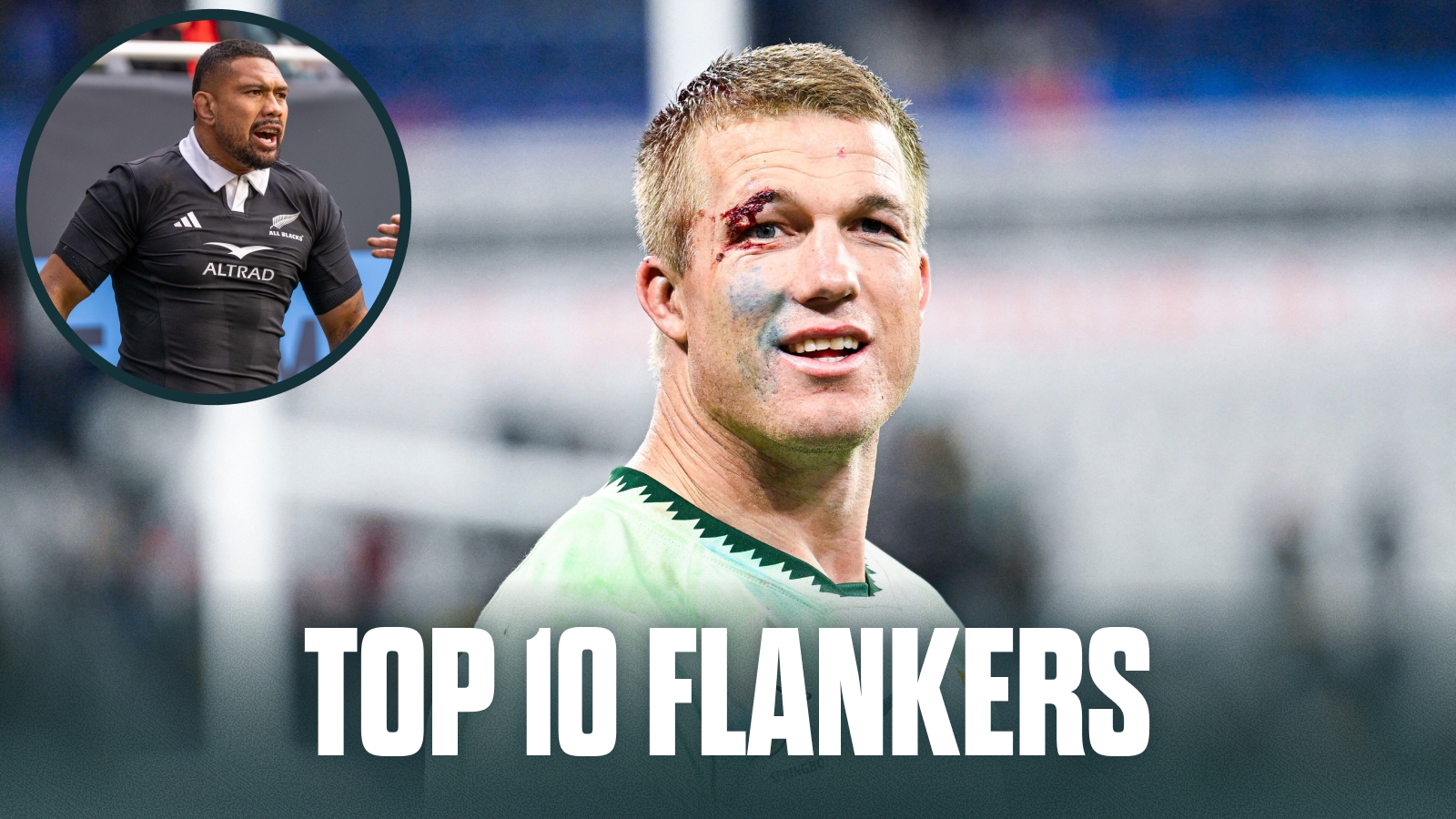
Top 10 flankers in rugby: Springboks machine tops chart from All Blacks great and Ireland’s most versatile forward
Planet Rugby have named the top 10 flankers in the world right now, and it’s a former World Rugby Player of the Year who sits clear at the summit.
Here are our top 10 flankers.
Top 10 flankers
10 Siya Kolisi (Stormers, South Africa): The most underrated great in the game, and oddly, the doubts are loudest at home. The rugby case is simple. Kolisi makes the players around him better, which is the hardest thing in the sport to measure and the easiest to see. He was South Africa’s best forward carrier against the Barbarians in June, then came back from injury to captain the side that beat Argentina in Buenos Aires on 8 August with a performance built entirely on unglamorous work. His work rate does not drop, and his decision-making in contact is excellent. The captaincy record has been picked over enough. What gets missed is that at this stage of a long career he is still among the best in the world at the least glamorous parts of the job, and South Africa have never found a reason to replace him. He is also the cultural and the emotional heart of that squad, which reads like a line from a press release until you have watched him do it. He sings his way out of the tunnel and the players around him come up with him. The rugby is better than the singing.
9 Rob Valetini (Brumbies, Australia): Australia’s primary carrier and the forward their attack is built around. He spent years at number eight and has been better since moving to six, largely because the workload suits him; he gets more collisions and fewer decisions, and both of those changes play to what he does. His athletic profile is enormous, and the consistency now matches it. Back-to-back John Eales Medals do not get handed to forwards who go missing, and in a Wallaby side that has spent several seasons searching for reliable set-piece ball, he has been the one man opponents plan around. Give him front-foot possession, and he is as destructive as anyone on this list.
8 Pablo Matera (Mie Honda Heat, Argentina): The heartbeat. When Matera is hot, Argentina are hot; when he is flat, they do not turn up, and the correlation has held for the best part of a decade. He is an emotional player in a side that runs on emotion, and he is arguably the finest back-rower Argentina have produced. Physically, he remains one of the hardest men in the world game to put on the floor. He captained the Pumas against South Africa in Buenos Aires this month, at six, opposite Kolisi, and that pairing was the head-to-head worth the entrance money on its own. There is still no sign of the intensity dropping.
Top 10 locks in rugby: Springboks enforcer leads young prospect while Lions captain ahead of pack
7 Jac Morgan (Gloucester, Wales): Morgan missed the 2026 Six Nations with a shoulder injury and came back in the summer looking like a man who had never been away. He scored twice against Fiji. He then made 22 tackles against South Africa in a side beaten 43-0, and that is the number to hold on to; a tackle count that high in a defeat that heavy is a player refusing to let go of a match everyone around him has already let go of. He is the flicker of light in Welsh rugby. He is not the biggest blindside or the quickest openside, but there may be no back-rower in the world more willing to do the ugly work. Morgan tackles until the job is finished, carries into traffic, competes over the ball and keeps appearing on the next phase. His 2026 Nations Championship numbers underline it: 60 tackles across the three matches, both of those tries, and a passing record of 100 per cent. Wales made him a young captain for exactly that reason.
6 Charles Ollivon (Toulon, France): 19 tries in 51 Tests is a strike rate no back-five forward in the history of Test rugby can match, and it is not an accident of position. A try every 2.6 Tests is Cheslin Kolbe territory. Ollivon scores because he picks his lines like an elite centre. He runs the angle rather than the man, arrives late and gets 6ft 7in of back-rower into holes that are not supposed to be there. Over the last 12 months he has also been the finest lineout thief in the international game, averaging 2.1 steals a Test, class-leading across all lineout forwards. He wore four through the 2026 Six Nations and has covered flank and number eight throughout his career. Anyone who had watched his running lines was not surprised and the range is why Fabien Galthié keeps finding a shirt for him. And if you like dogs, seek out the adventures of Valentin, his glorious Grand Pyrenean, who glowers out of Ollivon’s Instagram with equal menace and equal athletic presence to his owner.
5 Jack Willis (Toulouse, England): We will not know how good Willis is until he plays Test rugby regularly. At club level there is no more complete flanker anywhere. Toulouse pick left and right rather than blindside and openside, and Willis is their right flanker. The job there asks for le gratteur and le carrieur in the same body, the man who steals the ball and the man who takes it forward. His work over it is peerless. What has changed under Ugo Mola is everything around it; the carrying, the passing, the lineout detail and the physical resilience have all improved to the point where the breakdown is no longer the only reason to pick him. The frustration is an English one. Willis has been the best openside available to England for several seasons and has spent most of them out of the squad or on the bench, for reasons that have far more to do with where he plays his rugby than how he plays it. Toulouse have had the benefit and England fans have had the argument. And it’s still rumbling on.
4 Fraser McReight (Queensland Reds, Australia): The nearest thing in Test rugby to Willis, and the comparison is meant as a compliment to both. McReight is superb over the ball, but the part of his game that separates him is what happens afterwards. He is a genuine second receiver; his handling in support of a break is as good as any forward’s, and he is quick enough to be there in the first place. There is a serious rugby brain at work. He was outstanding against France in July and prominent again against Japan on 8 August, which is the run that has pushed him up this list. Australia have had a difficult few seasons, and McReight has been the constant through them. He is one of the very few players in their pack who would walk into most other Test squads on merit rather than on need, and he has carried a lot of weeks where the side around him gave him nothing to work with.
Top 3 flankers
3 Tadhg Beirne (Munster, Ireland): Beirne is the most awkward forward in world rugby to prepare for, and that is meant as the compliment it sounds like. He has spent a career being picked at six and at lock in the same season without either looking like a compromise, and Ireland have never had to choose because he is genuinely first choice in both. The turnover work is what puts him this high. Nobody in the Northern Hemisphere reads the moment a ruck becomes contestable better, and he gets his hands on ball that other forwards have already written off. He is a serious lineout operator on both throws; he carries cleanly, and he tackles at volume without giving away the penalties that usually come with a jackal’s appetite. A Lions Test starter in Australia and a British and Irish Lions forward of the series candidate, he arrived late in the professional game via Scarlets and has made up the time in a way nobody predicted. There is a full career’s worth of evidence now, and it keeps saying the same thing.
2 Ardie Savea (Moana Pasifika, New Zealand): Savea completes the skill set. He is not the biggest loose forward in the game and it has never mattered; he jackals as well as anyone alive, he carries into contact with a low body height that makes him almost impossible to hold up, and he scores tries at a rate no back-rower should, second only to Ollivon amongst modern players. He can play openside or number eight, and the sensible approach with Savea is to pick him first and select the rest of the back-row around him. And there is the cultural weight too. Ardie is the modern definition of New Zealand rugby, ferociously inventive with ball in hand, a monster in defence and a man who understands exactly what it means to be an All Black. He was the outstanding loose forward of New Zealand’s July, and the win over Ireland at Eden Park showed why; whenever the game needed a direction, the All Blacks played through him. Dave Rennie has built his back-row around Savea rather than the other way round, which is the correct order of operations.
1 Pieter-Steph du Toit (Toyota Verblitz, South Africa): Du Toit is defined by both sheer physicality and thunderous work rate. He was World Rugby’s Player of the Year in 2019, and again in 2024; he has won two World Cups, and he was the outstanding forward of the southern series in the Nations Championship this summer. He has played lock, blindside and openside for the Springboks and been world-class in all three, which is why South Africa can pick the pack they want and know the engine still runs. He does not have Savea’s feet or Ollivon’s finishing. He does not need them. He is the machine the Springboks are built on, the player who makes their bench strategy work by never dropping below his own standard for 80 minutes, and he is arguably the greatest Springbok of the professional era. Or any era, come to think of it. Nobody wants to run down his channel on a dark night. Rightly so. You’ll get a moerse klap, and probably another for good measure.