Mike Bailey | A tribute
Wolverhampton Wanderers FC · unknown author · 2026-08-18T08:49:21+00:00 · nguồn gốc
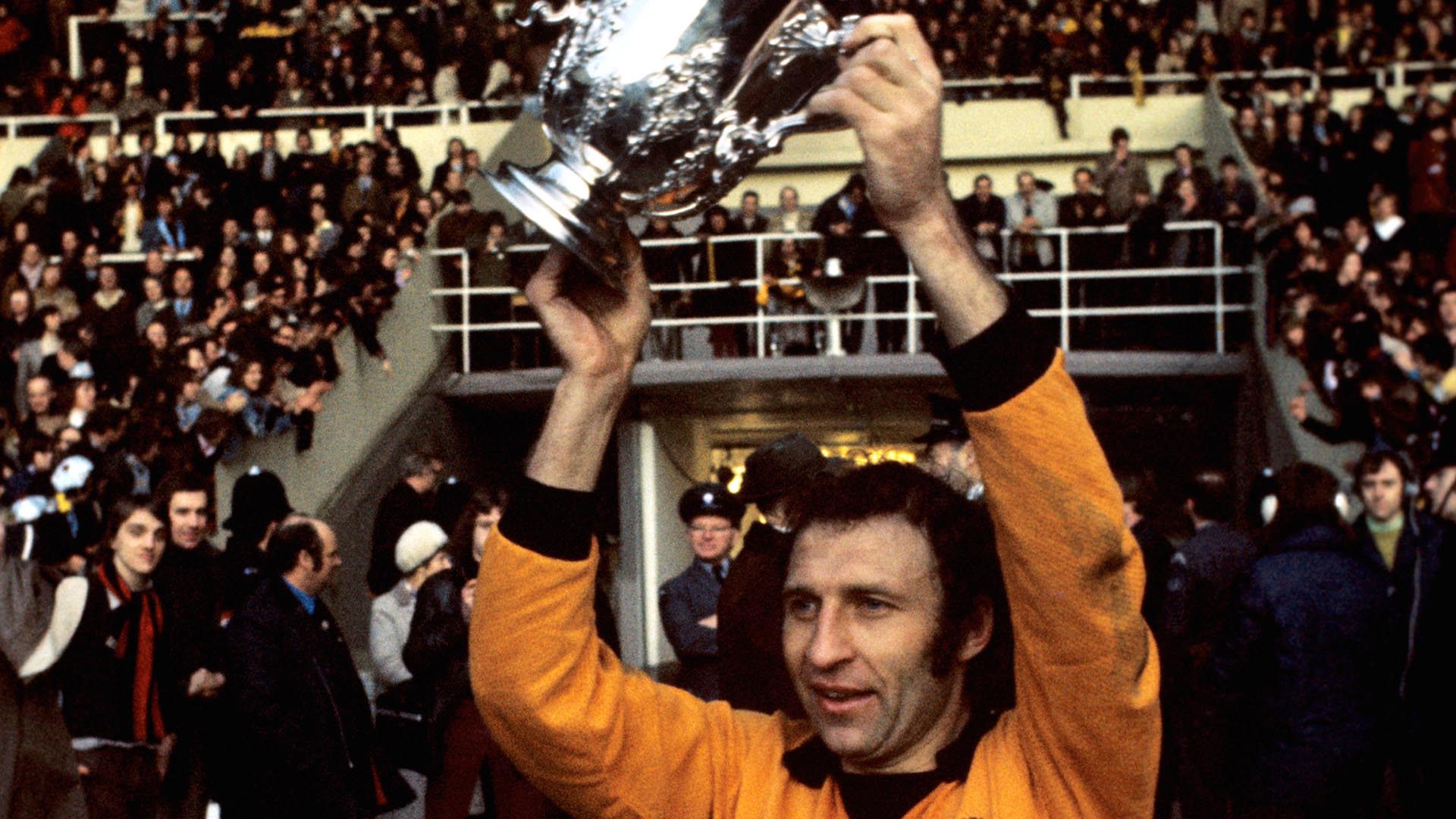
Historian Clive Corbett, the writer of the great midfielder’s autobiography, pays tribute to Mike Bailey who sadly passed away at the age of 84 on Monday.
At around 4.30 on the afternoon of 17th August, I was informed of the passing of Mike Bailey. Surely not, the superhero, the colossus, the immortal of my youth? Once I had taken in the shock of the news, my thoughts turned to Barbara, Andrew, Victoria and their families, whose loss is immeasurably greater than any of us fans.
It was in March 1966 that Wolves acquired the services of the man who I believe is the greatest Wolves captain that I will ever see in action. I must admit that I am biased on two counts, first I only saw my first Wolves match in 1965; and secondly, 50 years later I had the privilege of helping Mike to putting together his story, ‘The Valley Wanderer’. For me it was living the dream to visit Mike and Barbara’s home in Surrey and to help them to bring the project to fruition. Mike always said that going through it all brought back a number of wonderful memories, but with typical modesty he simply could not believe either the many nice things that people said about him or that anyone would be interested in his tale. Let me try to retell Mike’s story. How can I do justice to the great footballer and true gentleman? I can only try.
Although they lived in Great Yarmouth, Mike’s family was evacuated to Cambridgeshire during the war and it was in Wisbech that he was born on 27th February 1942. Mike was a true son of Norfolk though and retained that softly spoken brogue throughout his 84 years. The young boy who first practised his football skills with a tennis ball in the playground of the Edward Worlledge Primary School in Yarmouth would turn his boyhood passion for football into an illustrious career spanning four decades. He started out at Charlton Athletic and made his first team debut in 1960. He quickly won the hearts of fans as an energetic and tough tackling midfield dynamo and was very soon made their skipper. In 1964 Mike became the Valiants’ first full England international for eleven years. That same year, on 1st August, he married Barbara Mustin at St Michael’s Church in Welling. It was also in 1964, in May and November, that Mike earned his two full England caps.
Through the book I was delighted to help Mike to compile a story that can be passed down the generations and that will be truly treasured by his family. For me, the best aspects are not football-related, but those that tell the love story of Mike and Barbara that led them to a marriage that endured for over 62 years. I think that during my time with the Baileys I got to know the real man, a loving and modest human being, summed up by some extracts from postcards sent to Barbara from his time on England Under-23 summer tour of Eastern Europe in 1964. One has a picture of the Grand Hotel in Budapest: “Hello Darling - just a line to let you know I have sent a letter but you may get this card before it. Weather lovely, am playing tonight. Been for a bus ride up to a mountain overlooking Budapest. I love you and miss you very much. Love to all. All my love xxx.” Another is of Vienna Airport: “Hello Darling - just a few more lines to let you know that we are about to leave Vienna for Tel Aviv. The flight has been held up for one and a half hours. Played against Hungary, as you know, and we lost 2-1. It should have been 6-0 for us. I did not play too well; weather was too hot. Think I have been dropped in next game. Vienna is a lovely city. Had a coach tour for an hour this morning, was glad to leave Budapest. Hope everyone is okay at home. Only another week darling. All my love darling. God bless xxx.”
Back to football though, what brought Mike to Wolves? Somewhat unexpectedly, in late February 1966, Charlton boss, Bob Stokoe, called Mike into his office, told him of Wolves’ interest and asked if he would like to go to Molineux and talk with them. His first experience of playing at Molineux had come the previous November when in the Charlton team that drew 2-2. He already knew Ernie Hunt from sharing a room with him on England under-23 duty. Ernie had joined Wolves a few months earlier and before the match, Mike knocked on the Molineux dressing room door to say hello to him. Ernie called him in and asked him to sit down, saying, “I like it here, you would too.” Although Mike thought no more of it and went off to get ready for the game, he realised then that Ronnie Allen wanted him. What really impressed Mike was the Molineux crowd. Hughie McIlmoyle played up front and they made a tremendous noise every time Dave Wagstaffe or Terry Wharton fired in a cross for him to head on goal. He recalls how the crowd really got behind the team. The atmosphere was friendly but electric and he knew that he wanted to play in games like this every week.
Talking with the Express & Star’s John Dee in 1976 at the time he had completed ten years with Wolves, Mike recalled the occasion: “Three months before I joined Wolves, I was at Molineux playing for Charlton in a second division game. I had slipped into their dressing room for a quick chat with Ernie Hunt and as we chatted Ronnie Allen, who was manager at the time, chipped in by saying, ‘How would you like to play with these lads?’ My reply was ‘great’ but I thought Allen was just pulling my leg and I forgot about it. I didn’t hear anything else until the end of February 1966 when Wolves and Charlton agreed terms for my transfer. The deal was completed in the shortest possible time for I left London at 12 o’clock and was back at six having spent no more than half an hour completing the formalities at Molineux.”
Steve Gordos clearly remembers that match in November 1965: “My first proper glimpse of this all-action man was when he figured in a Charlton side playing against a newly-relegated Wolves in a Second Division clash at Molineux which ended 2–2. Wolves led the game at half-time after Hughie McIlmoyle broke the deadlock, but Bailey was very much in evidence when he burst through to equalise. Ron Saunders – yes that Ron Saunders – missed a penalty but then put the Londoners ahead before Wolves levelled within two minutes thanks to a neat header from Ernie Hunt. Even Phil Morgan in his Express & Star verdict the following Monday referred to, ‘Mike Bailey, an imaginative player’, and soon the man previously known as ‘Commentator’ would be writing about Mike on a regular basis.”
Steve adds more in his book on Peter Knowles: “The game also provided the chance for home fans to run the rule over Athletic's England half-back Mike Bailey. This barrel-chested bundle of energy did not disappoint. He had an impressive game, showing all the qualities that Molineux regulars admired in a half back. He was in the best tradition of Wolves' old-style wing-halves. An ideal captain he drove his team on and led by example; he was tough in the tackle and a good passer of the ball.”
Over the last weekend of February 1966 Wolves played at the Baseball Ground whilst Charlton entertained Leyton Orient, and, as indicated earlier, it was after this match that Stokoe made Mike aware of Wolves’ interest. He headed north to Molineux for two and a half hours of talks with John Ireland and Jack Howley, chairman and secretary respectively of Wolverhampton Wanderers, or at least that is what Jeff Farmer wrote in a Daily Mail article! Steve Gordos again comments: “While the spoils were being shared in Derby, Mike Bailey was helping Charlton win 2–1 at Leyton Orient. It would prove to be his last game for the Addicks as two days later - Monday 28 February - the England international was at Molineux and liked what he saw, agreeing to join Wolves for a fee of £40,000. Bailey, who a day earlier had celebrated his 24th birthday, would prove an inspirational figure during his Molineux career.”
Having had a look around and spoken with John Ireland and Ronnie Allen, Mike was indeed impressed but really wanted some time to discuss things with his wife Barbara. She was working in London, had never been to the Midlands and would be away from her family, so it was a big decision for her as well as him. Mike explained: “I had already made up my mind, but I told Mr Ireland that I wanted to talk to her. However, the chairman, who I admired very much and was loved by the players, was very shrewd and insisted that things had to be sorted quickly. He got me to phone Barbara, so I did and we agreed that I would sign. Later, cheeky Ernie Hunt asked me what I’d got as a signing-on fee, and when I told him how much he said that he’d got more! I respected John Ireland a great deal, but he certainly pulled the wool over my inexperienced eyes on that occasion.”
Speaking at the time I described my happiness at the move: “I feel that I am back to my top form now. I have always admired the Wolves style of play, and I am sure that I can fit in either a defensive or attacking role. Most of the first team are no strangers to me and I hope I can join them in putting Wolves right back into Division 1.” On returning to Charlton, Bob Stokoe was surprised to find that Mike had signed so quickly, asking him, “You haven’t signed, have you?” When he later heard that Spurs had enquired, Mike realised that Mr Ireland had known exactly what he was doing. It was the best for the club. He was not a businessman but quickly picked up that in those days you had to be both a player and business savvy to get the best deal for yourself.
Mike added: “I was sad to leave Charlton and after my move I would always ask for their score before I took my boots off after a game. I am always made very welcome at The Valley, and players like Keith Peacock, Brian Kinsey, Colin Powell, Harry Gregory, Derek Hales, Derek Ufton and Keith Tucker are still around, and we often meet up and talk about our times together. However, given what I achieved at the Wolves and the great life we had there, I have no regrets at all.”
Moving to Wolves was a huge event in Mike’s life and John Holsgrove aptly assesses the long-term significance of his signing: “Ernie, then Mike, great signings and the atmosphere changed. The club got what it needed, fresh blood. The players that Andy Beattie had brought in were to stave off relegation and that was his reputation. Ronnie wasn’t going to buy stopgaps. He was building a side to get us back into the First Division. I always tell people that Mike had everything. He was a better player than Alan Mullery. Mullery could pass the ball and was a great striker of the ball, but he couldn’t tackle like Mike. The whistle went and the first tackle, like the side of a house, straight in there, bang, got the ball. He set the tone for the whole team, great, a fabulous player.”
A fabulous player indeed, and within a period of little over twelve months Mike Bailey had succeeded the great Ron Flowers as captain and led Wolves back to Division One. In May 1967 he was rewarded for his endeavours when he chosen as the Evening Mail West Midlands Footballer of the Year. Typically, Mike’s reflections on leading Wolves to promotion from Division 2 in 1967 were more about consideration for Ron Flowers than his own glory. He described speaking to the fans after the home game with Bury on 22 April: ‘Overcome with the emotion of the moment, I had to repeatedly wipe away the tears that were streaming from my eyes but recovered my composure sufficiently to say: “We’re not finished yet. We want the championship for you, and we’re going to get it.” It was a difficult time in some ways for me because when I had arrived, Ron Flowers had been captain and although he hadn’t played a lot, I had never officially taken over. I didn’t want to be seen to be pushing, so in the directors’ box and at a future dinner I called myself acting captain, to keep it respectable and not look as though I was trying to take over. It was awkward. But most of all I remember the thrill that my dream of First Division football had been realised. It was fantastic. I felt that I had made it.’
At the celebration dinner Mike again spoke about his teammates and Ron in particular: “They are a grand bunch of lads to play alongside. It was tough on Ron Flowers, the club skipper, to be injured in the first match and then later in the season, but the lads seemed to accept me without complaint. Ernie Hunt has been a special pal. The fans are fabulous. The way the North Bank choir can raise us out of a struggling patch with a song, home or away, has been an important part of promotion.”
As ‘The Valley Wanderer’ charts, during his time at the club Mike was the talismanic leader who guided the swashbuckling Wolves team of the seventies to their best top flight finishes since 1960-61 (4th place in 1970/71 and 5th in 1972/73), a first major trophy (the League Cup in 1974) in 14 years and numerous European adventures. Only twelve men have bettered his tally of 436 league and cup appearances in the old gold.
There is no doubt in my mind that had Mike not suffered an injury in the third round FA Cup tie with Leicester City on 15 January 1972, Wolves would have won the league title, or UEFA Cup, or both. They were on an unbeaten league run that stretched back to mid-November and in Mike’s last league game before injury the Wanderers had taken Manchester United to pieces at Old Trafford to move into contention at the top of the league table. It is no coincidence that without Mike they won only six of their final league games to finish ninth and came up short against Spurs in the all-English European final, Mike making his only post-Leicester appearance as substitute for Kenny Hibbitt.
Despite a successful 1972/73 league campaign, a major trophy continued to elude Mike’s Wolves with defeat at the semi-finals stage of both League and FA Cups. However, it was on Easter Monday that season when Wolves beat Norwich City 3-0 at Molineux on a gluepot pitch. The match was memorable for Mike going through three shirts and a piece of Bailey skill that Alan Sunderland recalls: “The number one phrase that you associate with Mike is barrel-chested. He just dominated the middle of the park and I remember him doing the simple things that were still out of the ordinary. Against Norwich in the mud, I recall him striding up the pitch and fooling an opponent by allowing the ball to run through his legs to a teammate, changing the course of play and making space without touching the ball or breaking his stride.”
Wolves eventually put the near misses behind them on a memorable Wembley afternoon on 2nd March 1974. Time was running out for the elder statesmen of the team, like Mike, the Doog and Waggy. Appropriately enough, the trip to the Twin Towers was secured in a two-legged semi-final victory over Norwich. Few gave Wolves much chance against the fancy dans of Manchester City, and when Colin Bell cancelled out Kenny Hibbitt’s opener it looked as though the match would only go one way. Enter Mike Bailey, as Derek Parkin comments: “At Wembley in 1974 when we were struggling, Mike just started and everyone followed him. He totally ran the midfield against top internationals like Bell and Summerbee; he just rode over them. Mike wasn’t dirty, he was a barrel-chested guy and when he hit you, he hit you. He simply accelerated into everything; there were no half measures and if the ball was there to be won, he’d win it. I would say that with Mike out of the side one or two players didn’t play, he inspired players.”
However, when Mike talked about the 1974 League Cup final, he of course underplayed his role: “After the equaliser, City did not expect the reaction from a Wolves team that had so much desire to bring a major trophy back to Molineux and our loyal fans. I sensed that we had to get a period of control as we were hitting too many long balls up to the Doog and John. As we were unable to get up and support them, the ball just kept coming back to put us under greater pressure still. I started to encourage the lads to play shorter passes, keep possession, build up more slowly and not get stretched out. We gradually got back into the game.”
John Richards overcame injury to score the winner and Mike accepted the cup, wiping the mud from his hands so as not to dirty the gloves of the Duchess of Kent. The proud captain added: “As we followed a very sporting Manchester City side up the steps to the royal box. I felt enormous pride in holding up the trophy above my head to the Wolves end of the ground.”
Kenny and King John may have scored the goals that day, whilst Gary Pierce played the game of his life, but I hope they won’t mind me crediting Mike. Kenny adds: “Mike Bailey must have been a very proud man. He was the best captain I played under. The way Mick Bailey, Derek Parkin, Frank Munro and John McAlle played that day, and obviously Gary, was amazing. Mike was just an inspiration that day, leading from the front. I’ve never played under anybody as close to being as good a captain as him. He didn’t ask people to do anything he couldn’t do himself. If you needed telling off, he’d tell you off, and if you needed looking after he’d look after you.” John agrees: “Mike was such a good captain and with him missing we were not as good. He could read a game so well and was able to get that information out to players around him. Mike had the ability to see how things were developing and to tell people to do things to make a positive difference and turn things around.”
Sadly, that was as good as it got for Wolves and they slipped into the second division in May 1976. Mike remained loyal, playing in the early months of the Sammy Chung-led promotion challenge and making twelve outings (one from the bench). It was testament to Mike’s rapport with the fans that his testimonial match on 20th October (against West Bromwich Albion) attracted a crowd of almost 20,000, not to mention appearances by Bobby Moore and George Best, who scored twice. Mike’s last competitive game in a Wolves shirt came ten days later at Blackpool’s Bloomfield Road before former Birmingham City boss, Freddie Goodwin, persuaded him to take on a new challenge in the USA. Mike played for Minneapolis in the North American Soccer League before returning home to try his hand at management. Mike set off with a short spell at Hereford United, and in the autumn of 1979 returned to The Valley. He became manager of Charlton Athletic the following year and launched them to promotion from Division 3. He was then persuaded to work under Mike Bamber at Brighton and Hove Albion. Two seasons at the Goldstone Ground saw the Seagulls achieve their highest league position to that point whilst Mike’s team also made it to the 1983 FA Cup final, albeit led by Jimmy Melia. Although he later took on posts in Crete and the lower English leagues, the trials and tribulations of management never really suited him. In my opinion, he was much too nice a person.
Mike was admitted to the Wolves Hall of Fame on 14th January 2010 at the same time as six other greats of the club - Peter Broadbent, Billy Harrison, John Richards, Bill Slater, Graham Turner and Bert Williams. Express & Star reporter, Martin Swain, wrote: ‘Bailey, the thundering captain of the next great team to emerge from Molineux (after Cullis’s Wolves), enjoys incredible admiration from his fellow pros even if the man himself quite clearly does not see what all the fuss was about. “I was just so lucky to be surrounded by such great players,’ he claimed. Try telling that to Messrs. Parkin, Hibbitt, Richards et al.” Mike modestly preferred to repeat John’s words on the night: “I always feel the best thing about it all is this warmth we get from the supporters. In a restaurant, in a shop, on the street, someone will always stop you and tell you the smallest detail about a game you can barely remember. And you realise what an impact you have had on their lives and how special it is to be part of this.”
One thing that Mike certainly appreciated was that for all the fulsome tributes from his footballing peers, the most important thing was the love of his family. This is evidenced by the contributions that follow from his children, representing the most telling epitaph of all.
From Mike’s daughter, Victoria: “Whilst writing this book, my dad has been astonished by everyone’s amazing comments about him. I am not, but that totally sums up my dad, he is a very humble man. I do not know anyone more determined to succeed than him. He has always been a true grafter in life; nothing was ever handed to him on a plate. His success has always been due to sheer hard work, respect for others and a determination never to give up. Here is a tip for you all though, never compete against dad in any sport because he always wins. He has an unbelievable natural talent and hand/eye coordination that puts him at an advantage right from the start. I used to try to play tennis with him and needless to say I would get thrashed. I am not even sure I ever won a point! When they first meet dad, people think he is quite serious and yet that is the total opposite of his character. He is so naturally funny. Even at Christmas this year we were all in stitches with his comments at the dinner table. As a daughter, I could not be more proud of both of my parents. They have taught me to never take anything for granted, to work hard and to respect others. Through football they have made very special, lifelong friendships which have enabled them to have lots of holidays and go to so many social events. That is the retired life that they truly deserve.”
Mike’s son, Andrew: “He was more interested in me becoming a golfer as he said, ‘You never see them playing in bad weather!’ Dad was and still is a great golfer and the only sporting hero he has ever really talked about is Seve Ballesteros, rather than a footballer. I cherish the golf matches we have although he always beats me! I’ve been very privileged to have been to so many games with Dad over the years and hear his views on how a team is playing or a particular player that he thinks will make the grade. I remember one occasion when I took my now wife Lorna to Millwall v Wolves (being a romantic this was one of our first dates)! Dad told us to keep an eye Teddy Sheringham as he was certain that he would be one for the future. There were many instances like that over the years. He has never complained about the amount that players are paid these days, but it does frustrate him when a player is earning good money but can’t control and pass with both feet. He spent many hours perfecting this with a tennis ball when he was a youngster. Dad has always been an honest man which has come out in what his contemporaries have said about him and I am immensely proud of him. I don’t suppose there are many footballers who can say they have played in the top flight for so many years, played in Europe, held a major trophy aloft at Wembley and played for their country. He deserves all the plaudits that he gets, as he is a great man and a wonderful father.”
In retirement Mike enjoyed the tranquil life and the joys of his extended family in Surrey along with his wife Barbara. ‘The Valley Wanderer’ tells the story of a man who was fiercely competitive on the field, and still was on the golf course, but whose laid back disposition made him hugely well-liked by former teammates and opponents alike. Mike Bailey was a reassuringly down to earth man who was admired by all who met him, whether they were celebrities or ordinary folk. The Norfolk boy lived his dreams but always remembered his roots. Mike could never understand why anyone would want to read his story or want to meet him. Once the book was published, he became aware that he will never be forgotten, even though he was always most interested in giving thanks for the contributions of others.
As the reader will by now understand, I am immensely proud to have played a tiny part in the story of my hero, Mike Bailey. I can only imagine the pride felt by Barbara, Andrew, Victoria and the extended Bailey family, as in paying homage to Mike, I must assure them that they are in the forefront of my thoughts and those of my wife Heather. Rest in peace Mike.
Word | Clive Corbett