Yashasvi Jaiswal’s attacking weapon turns weakness as alarming Test numbers emerge after three-ball duck vs Sri Lanka
Hindustan Times · Aratrick Mondal · 2026-08-18T07:44:20+00:00 · nguồn gốc
Yashasvi Jaiswal’s attacking weapon turns weakness as alarming Test numbers emerge after three-ball duck vs Sri Lanka
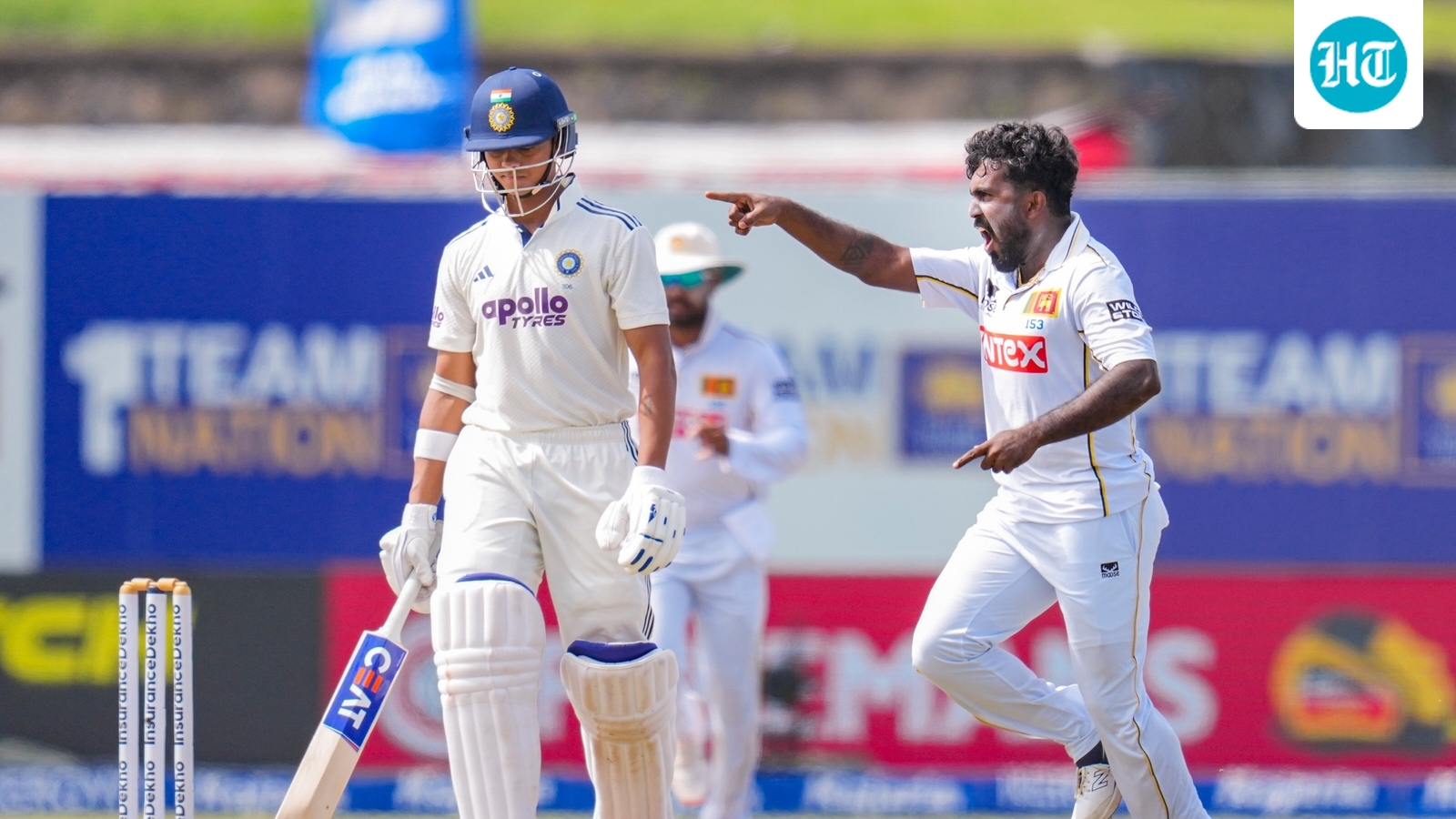
Yashasvi Jaiswal's three-ball duck in the second innings has highlighted a worrying trend in his aggressive strokeplay.
Yashasvi Jaiswal did not have luck on his side when he was dismissed after a bizarre mix-up with KL Rahul in the first innings in Galle during the opening Test against Sri Lanka. However, his three-ball duck in the second innings has highlighted a worrying trend in his aggressive strokeplay, which was once a defining feature of his young Test career.
Jaiswal was dismissed for a three-ball duck on the fourth morning of the series opener, falling to Asitha Fernando after attempting to chase a delivery outside off on the third ball of the innings. There was plenty of width on offer, but Jaiswal barely moved his feet and remained stuck in his crease as he went after the good-length delivery. He got a bottom edge, with the ball carrying straight to wicketkeeper Niroshan Dickwella, who got down low to complete the catch.
Fernando was delighted, but India had lost a batter perfectly suited to the aggressive template the visitors had in mind for their second innings, to score quickly, set Sri Lanka a sizeable target and force a result.
This was the seventh time Jaiswal had been dismissed for a duck as an opener in World Test Championship matches. More significantly, the manner of his early dismissal highlighted a trend that India and the batter himself cannot afford to ignore. His attempts to play cut shots against pace have become significantly riskier in Tests.
A Cricbuzz statistic highlighted that during his debut series on the tour of England in 2025, Jaiswal scored 239 runs through cut shots against fast bowlers and was dismissed just four times while attempting the stroke. He averaged 73.25, struck at 172.35 and had a false-shot percentage of 31.1.
However, since the 2025 home season, those numbers have dropped significantly. Jaiswal has managed just 47 runs from cut shots against pace at an average of 11.75, while being dismissed four times again. His false-shot percentage has also shot up to 48.1%. Interestingly, his strike rate has remained almost identical at 174.07.
The numbers suggest that while Jaiswal's attacking intent has remained unchanged, his execution and shot selection have become increasingly vulnerable. His dismissal in Galle on Day 4 provided another example of that trend.
The cut shot itself is a potent weapon in Jaiswal's arsenal and allows him to put pressure on fast bowlers. But the circumstances in which he is attempting it, particularly against pace and away from his body, appear to be causing increasing problems.
His false-shot rate provides perhaps the clearest warning. A 31.1% false-shot rate during the England tour indicated that Jaiswal could attack without consistently losing control. Since the 2025 home season, that number has climbed to 48.1%, meaning almost one in every two attempts has resulted in a false shot.
Yet his strike rate has barely changed, suggesting that Jaiswal has not sacrificed his attacking intent. Instead, he appears to be paying a considerably higher price for maintaining it.
India, who bowled Sri Lanka out for 284 on Day 3 to take a 178-run lead, lost four wickets before lunch on the fourth day for 116 runs, extending their overall lead to 297. Devdutt Padikkal, who scored a century in the first innings, was once again among the runs, top-scoring with 44 off 75 balls.
- ABOUT THE AUTHORAratrick Mondal
Aratrick Mondal is a senior sports journalist based in New Delhi. In his eight years as a sports writer, Aratrick has worked at leading media organisations, including The Times of India, Times Now, Zee, India TV and currently works at a senior position at Hindustan Times Digital. He writes on cricket, football, pickleball and tennis, among other sports. He has extensively covered India's evolving cricket landscape, the country's new-found love for private leagues such as Indian Pickleball League (IPBL), Ultimate Kho Kho League (UKK), Rugby Premier League (RPL) and several tennis leagues. He has closely covered emerging sports such as pickleball. His coverage of major franchise events lends an atmospheric flavor to his ground reports. His recent story on how SA20 (the domestic cricket league of South Africa) had opened up its grounds to create a carnival-like fan experience garnered major international attention, including appreciation from major cricketers. Tennis holds a special place in his heart. Aratrick has built a strong niche in analytical tennis stories—ranging from Grand Slam narratives and player profiles to tactical breakdowns and ranking trends. His long-form features often decode grand slams, career highs and lows of tennis greats and the upward trajectory of emerging stars. He also closely follows India's tennis landscape, having covered the Davis Cup, Bengaluru Open and Tata Open, among others. His reporting is backed by strong data capabilities, with hands-on experience using tools like Python, Tableau, and Excel to produce visually rich, insight-led stories. This data-first approach enhances accuracy, transparency, and trust. In leadership roles, he has managed editorial shifts, overseen homepage strategy, optimised SEO workflows, and mentored peers to deliver consistent, high-traffic journalism. He recently won the HT DigiStar award for the third quarter of financial year 2025-26. Aratrick is trusted for his balanced reportage, sound sourcing, and ability to translate complex sporting events into engaging narratives that speak to a wide audience. He believes sports is for everyone, not just for the enthusiasts and has a unique ability to bring people together - just like the sumptuous meals you'll often find him cooking on a weekend evening.Read More