Nielsen unveils 'Local NFL Fandom Index' ranking fan avidity in each NFL market
Awful Announcing · Drew Lerner · 2026-08-17T17:06:19+00:00 · nguồn gốc
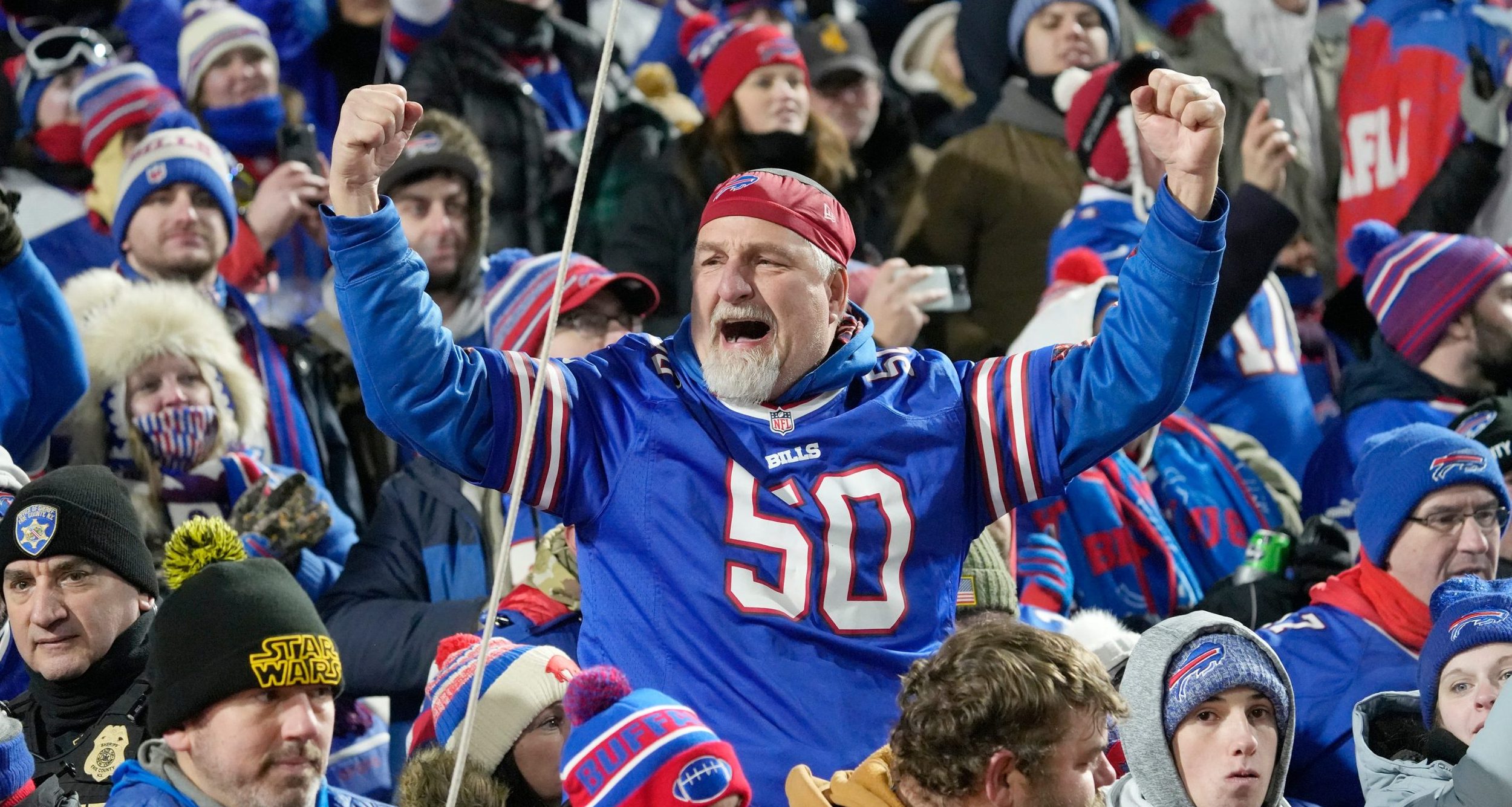
You know what they say about the AFC North. It just means more.
At least, that’s what you might think after looking at Nielsen’s first-ever Local NFL Fandom Index, which aims to rank each NFL market by fan avidity. The rankings, released on Monday, show a particular affinity for smaller cities that out-kick their coverage in terms of fandom intensity. As such, markets with smaller populations and dedicated fan bases performed well, while larger markets tended to perform poorly.
Nielsen used eight individual metrics to quantify its Local NFL Fandom Index: apparel purchases, event attendance, streaming, social media following, TV viewership, radio listening, betting intent, and overall interest level.
The top three NFL markets, per Nielsen’s proprietary measurements, are Buffalo, Kansas City, and Green Bay. Four of the next seven markets align with the AFC North — Baltimore, Cincinnati, Cleveland, and Pittsburgh — with Philadelphia, Detroit, and New Orleans rounding out the top ten. See the full rankings below:
As you can see, the top of the rankings generally skew towards smaller “legacy” markets, as Nielsen describes them. “These are markets with one team, strong local identity, and fewer competing entertainment options — a ‘small market, concentrated loyalty’ pattern that inflates per-capita engagement,” Nielsen’s report reads.
One city in the top cluster stands out: Philadelphia. Despite being one of the most populous cities in the United States, Philadelphia indexed in the top five for five of Nielsen’s eight metrics: third in apparel, second in betting, fifth in interest, fifth in social media following, and fourth in streaming.
Meanwhile, other populous cities like New York and Los Angeles found themselves at the very bottom of the list, despite each city having two NFL teams.
“New York and LA’s split Giants/Jets or Rams/Chargers fandom, combined with media markets saturated with other entertainment options, likely dilutes per-capita NFL intensity despite these markets’ enormous absolute fan count,” Nielsen’s report suggests.
“True fandom is intensely local,” the report concludes. “Mid-sized legacy markets punch far above their weight in per-capita engagement.”
Perhaps it’s not all that surprising that smaller cities can generate more avid fans than the country’s biggest cities, where attention can be diluted across any number of other entertainment options. In Green Bay, the biggest thing going on is the Packers, and it’s not particularly close. So if you live in Green Bay and you’d like to be engaged with your community, that likely means being engaged with the Packers. A person living in New York, however, could find community in many other activities that don’t involve the Giants or Jets. There’s not as much incentive to be invested in your local NFL team. Not to mention, big cities like New York and Los Angeles are very transient; people move in and out of them from different areas of the country and likely bring their hometown fandoms with them.
While Nielsen’s list might be pretty intuitive, it’s certainly interesting to see these factors quantified in a single index. From a television perspective, this list may at least partly explain why the league and networks make certain programming and scheduling decisions. Buffalo, Kansas City, and Green Bay are always going to rate well in their home markets, but maybe the intensity of these fandoms is contagious. Maybe it rubs off on the viewer at home, or creates a more compelling television product.
It certainly can’t hurt to put the teams at the top of this list on television often. By and large, that already seems to happen.