Appointing Sébastien Pocognoli is a Gamble - but Perhaps it's Exactly What Scotland Needs
Scotzine - The Scottish Football Blog · Andy Muirhead · 2026-08-16T19:04:25+00:00 · nguồn gốc
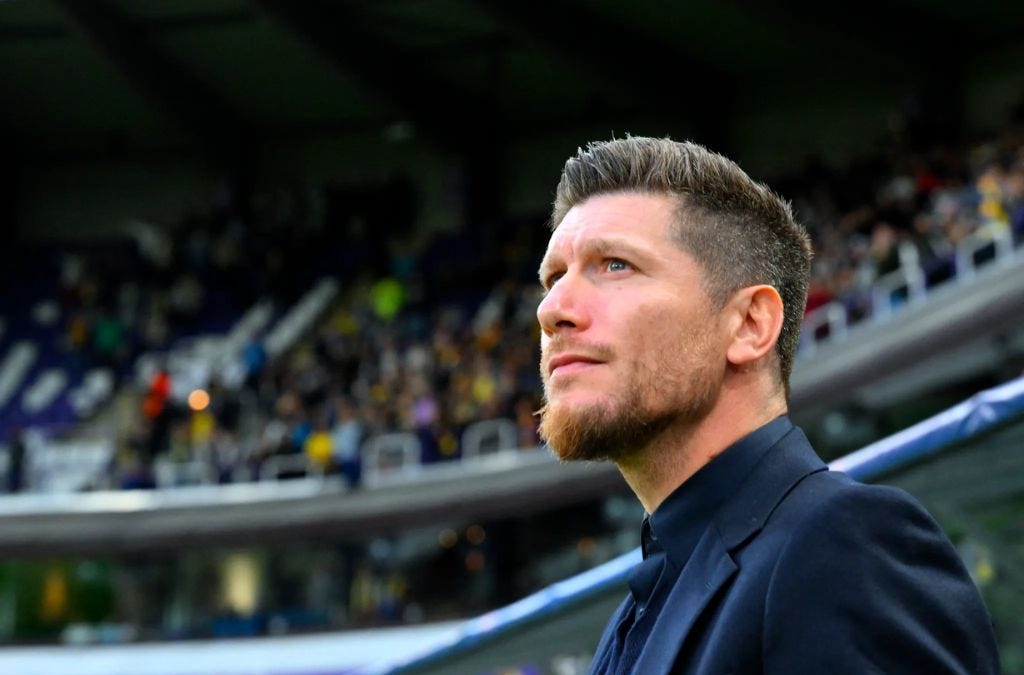
Appointing Sébastien Pocognoli is a Gamble - but Perhaps it's Exactly What Scotland Needs
Pocognoli’s appointment is a bold gamble by the Scottish FA, but his fresh ideas could help Scotland break free from familiar thinking and build for the future.
The Scottish FA’s decision to appoint Sébastien Pocognoli as Scotland’s new head coach is, on the surface, a significant gamble.
This is not simply because Pocognoli is young. Plenty of successful international managers have taken major jobs before reaching the traditional milestones of a long club career. The concern is that his senior managerial record remains remarkably short, while his most recent experience as Monaco manager ended with dismissal from one of France’s top clubs..
Pocognoli led Union Saint-Gilloise to a remarkable Belgian league title, the club’s first in 90 years, and helped secure Champions League football. That achievement understandably attracted attention. However, his subsequent spell at AS Monaco was far less convincing as Monaco ended the 2025–26 Ligue 1 season in seventh place and parted company with Pocognoli after 38 matches. His record in the Principality was 16 wins, nine draws and 13 defeats, although Monaco did reach the Champions League knockout-stage play-offs during his tenure.
That is not a disastrous record in isolation, but it is hardly the résumé of a manager taking over a national team expected to compete under significant pressure. Pocognoli has had one outstanding breakthrough season and one mixed spell at a high-profile club. Scotland will now be asking him to manage international expectations, tactical limitations, mould Scottish players from across Europe into a team, and an entire football culture that can be unforgiving when optimism turns into frustration.
The obvious concerns
The first question is whether Pocognoli has accumulated enough experience to lead a national team.
International management is a specialised job. Training camps are short, matches carry disproportionate importance and there is little time to correct mistakes. A club manager can work on a team every day, reshape a squad over several transfer windows and recover from a poor run. A national coach has none of those luxuries.
Pocognoli will inherit an ageing group with some talented ballers in the ranks, but talent alone does not remove the pressure. Scotland returned to the World Cup after a 28-year absence this summer, expectations were high and once again we fell at the first hurdle. The Belgian will be judged not only on results and qualifying for tournaments, but on whether Scotland can turn qualification into sustained progress.
The Monaco experience should therefore be examined honestly. Pocognoli arrived during the season, inherited an established squad and still guided the club into the Champions League knockout-stage play-offs. Yet a seventh-place league finish was deemed insufficient, and his contract was ended after less than eight months.
For Scotland, that raises a legitimate concern - was Union Saint-Gilloise the beginning of a major managerial career, or an exceptional first chapter that has yet to be repeated?
The alternative candidates were hardly risk-free
The appointment also needs to be judged against the alternatives. Names reportedly connected with the vacancy included Roberto Martínez, Steven Naismith, Duncan Ferguson, John McGlynn and Alex Neil. David Moyes was also mentioned, although the idea that he would leave Everton always appeared fanciful in the context of the speculation.
There was no perfect or stand out option. The Scottish FA was choosing between different forms of uncertainty - the familiarity of a domestic appointment, the reputation of a high-profile international coach or the potential of a younger outsider.
Recent reports had placed Naismith and Martínez among the leading contenders, with McGlynn, Ferguson and Neil also appearing in discussions around the role. None of those names inspired faith or belief that they would help Scotland take the next step.
Why the gamble could work
The strongest argument in Pocognoli’s favour is that Scotland may benefit from breaking out of its usual football ecosystem. Scottish football can become trapped in its own wee bubble. The same managers, tactical assumptions and internal networks are repeatedly examined whenever a major vacancy appears. Familiarity can look like security, but it can also produce predictable thinking.
Pocognoli arrives without the same pre-existing relationships or baggage. He will not be defined by his record at a Scottish club, his standing within the domestic game or his previous connections to the national setup. That distance will help him assess the current squad and all eligible players with fresh eyes.
His teams are also expected to play with intensity and ambition. If he can introduce a more aggressive, front-foot approach without sacrificing structure, Scotland could become less reactive and more capable of imposing themselves on matches.
That does not mean importing a foreign coach automatically makes an appointment progressive. Fresh ideas are only valuable when they are communicated clearly and adapted to the players available. Scotland cannot copy and paste Union Saint-Gilloise or Monaco onto the national team. Pocognoli must develop an approach suited to Scotland’s strengths, limitations and identity.
The clock is already ticking
The timing of the appointment - nearly two months after Clarke resigned - leaves little room for a lengthy bedding-in period. Scotland’s Nations League campaign begins next month with a match against Slovenia. That means Pocognoli will have only a short period to assess his players, establish his backroom staff, settle on a tactical plan and communicate his expectations.
The first camp will tell us more than the announcement. Will Scotland build from the back or play more direct? Will Pocognoli retain the core of Clarke’s system or make immediate wholesale changes? Can he create a clear attacking identity without exposing a defence that needs protection?
The temptation will be to demand instant transformation. That would be unrealistic. However, Scotland must see evidence of direction immediately. Results will matter, but so will the clarity of the team’s performance.
A risk worth taking?
The Scottish FA is taking a considerable risk, yet safe appointments are often less safe than they appear. Choosing a familiar name might have reduced the initial criticism, but it would not necessarily have improved Scotland’s prospects and in my opinion none of the alternatives are good enough to manage Scotland. Pocognoli offers something the national team needs - a different perspective, a modern coaching outlook and no obligation to preserve Scottish football’s established thinking. That makes the appointment defensible, even if it is not yet proven.
Pocognoli does not need to arrive as the finished article. He needs to demonstrate that he can learn quickly, build trust and make Scotland more ambitious without losing the traits that took them to the World Cup.
The first test comes against Slovenia. By then, the debate will move away from what Pocognoli has achieved - and what he has failed to achieve - and towards the only question that ultimately matters - can he make Scotland better?