‘Hunger to score more runs’: Devdutt Padikkal reveals what drove him to turn maiden Test hundred into towering 167
· Probuddha Bhattacharjee · 2026-08-16T14:13:07+00:00 · nguồn gốc
‘Hunger to score more runs’: Devdutt Padikkal reveals what drove him to turn maiden Test hundred into towering 167
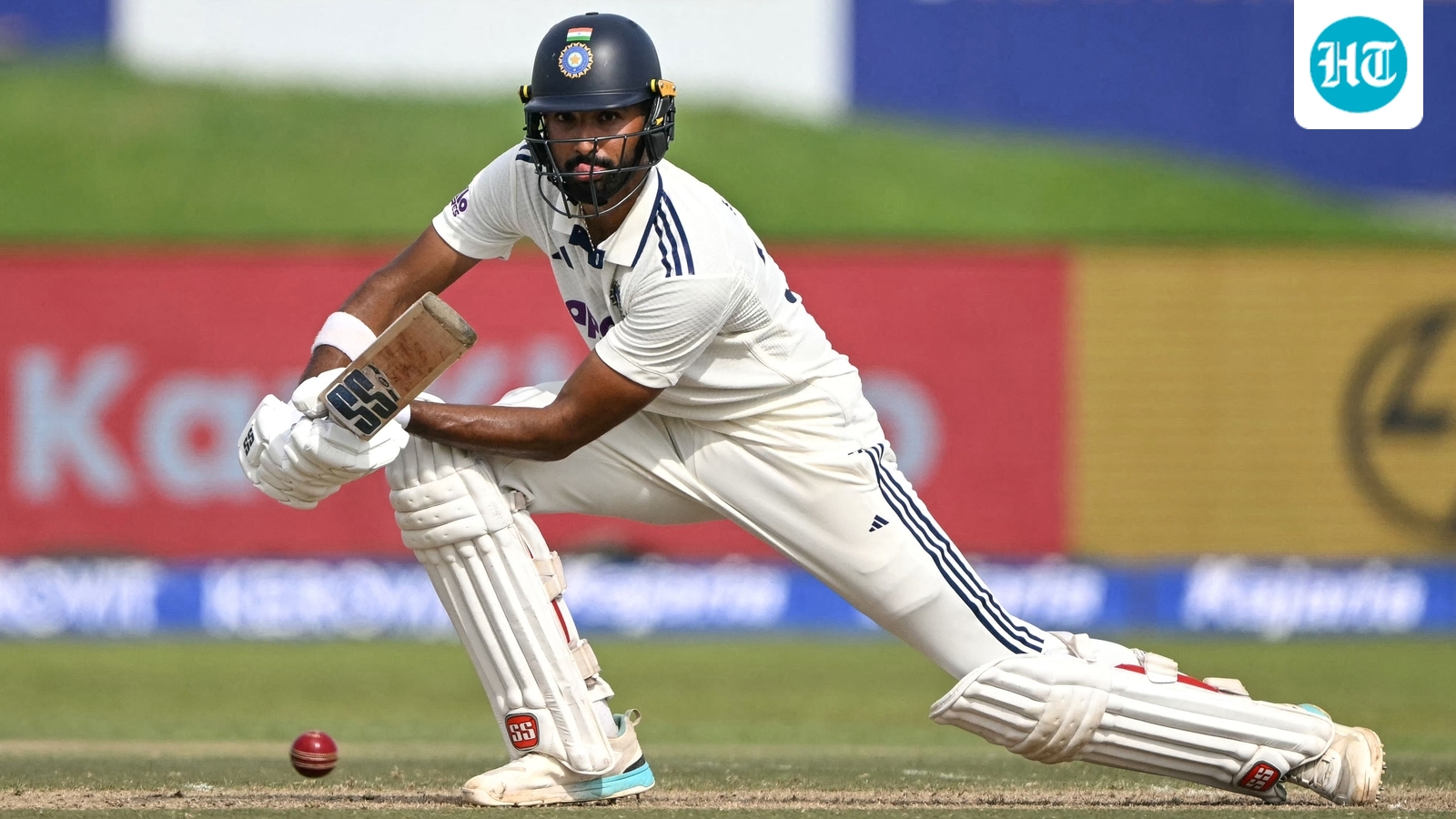
Devdutt Padikkal opened up on the hunger and post-century mindset that helped him turn his maiden Test hundred into a commanding 167 in Galle.
Prefer HTon Google
Devdutt Padikkal waited more than two years for another opportunity to establish himself in India’s Test side. When it finally arrived, the left-hander did considerably more than merely take it. Padikkal turned his maiden Test hundred into a commanding 167 against Sri Lanka in Galle, providing the centrepiece of India’s first innings as the visitors reached 460 for nine at stumps on a rain-affected second day of the opening Test. His innings contained 15 fours and a six before Prabath Jayasuriya eventually had him stumped by Niroshan Dickwella.
India had resumed on 288 for two after Padikkal had already made his century on the opening day. With rain and a wet outfield delaying the start by almost four hours on Sunday, only 43 overs were possible, but Padikkal continued where he had left off and moved beyond 150 before Sri Lanka finally found a way past him.
For the 26-year-old, however, the significance extended well beyond the runs accumulated in Galle. Having spent the last couple of years working towards another opportunity at the Test level, Padikkal admitted that reaching three figures was the fulfilment of something he had repeatedly imagined.
Deep Dive
Ask HT
“Yeah, definitely. I’ve dreamt of this moment. For the last two years, I’ve been working really hard to try and make sure that when I get that opportunity, I can do something special like this, and I’m really happy to do that,” Padikkal said at the post-day press conference.
Padikkal explains the hunger behind converting hundreds
What made Padikkal’s innings particularly significant was that he did not allow the emotional release of a maiden Test century to become the endpoint of his knock. Having reached the landmark, the India No.3 added another 67 runs, ensuring his first Test hundred developed into the kind of substantial innings that could shape the match. Padikkal explained that he has consciously trained himself to regard the period immediately after reaching three figures as one of the most important phases of an innings.
“I think honestly, it’s just the hunger to score more runs. I just enjoy batting out there, and the moment you get to 100, it’s easy to relax and feel that relief. But it’s important that for me, the next 20-30 balls are the really important phase that I try and make sure that I’m completely focused, completely there.”
For Padikkal, surviving that brief period after a century allows him to effectively reset and begin constructing another innings. “I think when I get past those first 10 balls after 100, I think it makes my job a whole lot easier. And over the years, I’ve seen so many cricketers get big runs, get big hundreds, especially back in Karnataka. So just watching them bat makes me want to do the same.”
The method served him well in Galle. Padikkal resisted Sri Lanka’s spinners for long periods and pushed India towards a position of strength before Jayasuriya finally ended his stay. Sri Lanka did fight back after taking the second new ball, with India losing wickets regularly during the latter part of the day, but Padikkal’s 167 ensured the visitors already had a sizeable first-innings total on the board.
For a batter trying to turn an opportunity into a long-term claim on India’s No.3 position, the maiden hundred was an important statement. The fact that Padikkal refused to be satisfied with merely reaching 100 made it considerably stronger.
- ABOUT THE AUTHORProbuddha Bhattacharjee Probuddha Bhattacharjee is a sports writer and analyst with expertise spanning cricket, football, and multi-sport events, with a strong emphasis on data-driven journalism and tactical storytelling. He currently focuses on international cricket, the Indian Premier League, global tournaments, and emerging trends shaping modern sport, blending advanced statistics with strong narrative context to explain performance, strategy, and decision-making. His work aims to bridge the gap between numbers and storytelling, helping readers understand not just what happened on the field, but the tactical and structural reasons behind it. Trained in data journalism through the Google News Initiative (GNI) Data Journalism Lab, Probuddha works extensively with ball-by-ball datasets, performance metrics, and trend-based modelling to produce evidence-backed reports, explainers, and long-form features. His analytical approach focuses not only on outcomes but also on process—selection strategies, phase-wise tactics, workload management, and the influence of preparation and planning on match results. He is particularly interested in how statistical patterns reshape conventional cricketing narratives and provide clearer tactical insight for modern audiences. Beyond cricket, Probuddha has written analytical and news-driven pieces on football and other major sporting events, with a growing interest in sports governance, scheduling dynamics, and the economics of elite competitions. He also tracks how rule changes, franchise structures, and broadcast pressures influence the evolution of contemporary sport. He has previously contributed to platforms such as OneCricket, Sportskeeda, and CrickTracker, and continues to specialise in analytical storytelling, live coverage, and audience-focused reporting. His work prioritises clarity, context, and credibility, while consistently exploring innovative ways to present data through accessible narratives and structured match analysis.Read More