How one ACL injury & Europa League failure changed everything for Rangers’ recruitment
· Andy Muirhead · 2026-08-16T07:50:27+00:00 · nguồn gốc
How one ACL injury & Europa League failure changed everything for Rangers’ recruitment
How losing their striker forced Rangers to rethink priorities, shifting focus from wide creativity to urgent attacking and defensive cover, using a failed medical as a useful excuse.
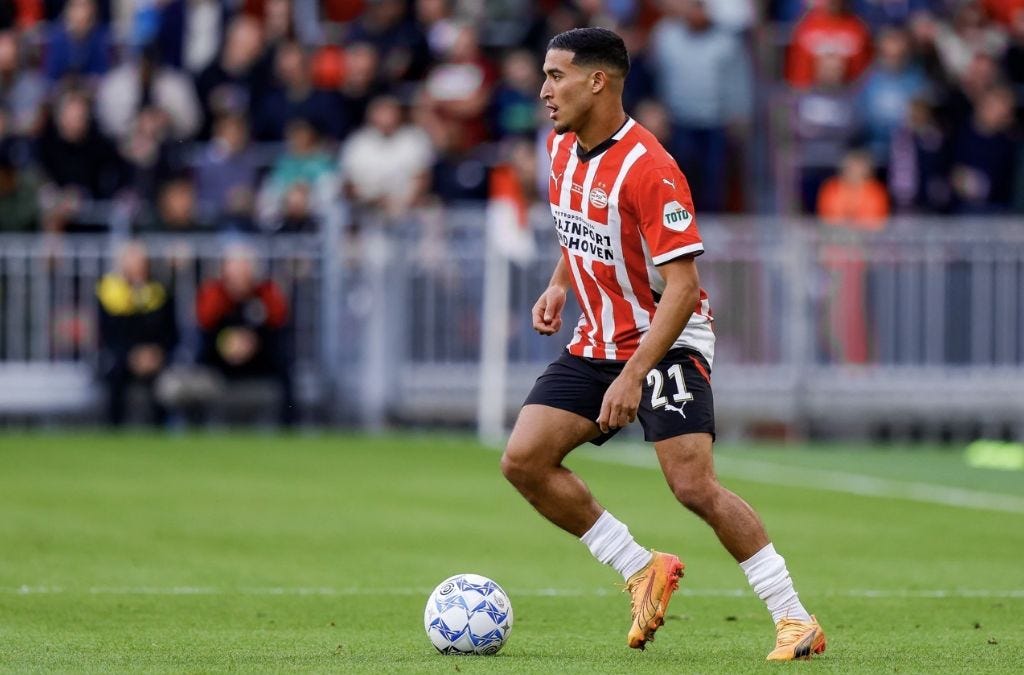
Rangers’ sudden withdrawal from the Couhaib Driouech transfer is being presented as a routine “failed medical”, but reports in the aftermath suggests a more complicated breakdown involving disputed injury timelines, short-term availability concerns, and a late ownership veto that undercut the club’s recruitment process. That picture has now been sharpened by the season-ending ACL injury to striker Youssef Chermiti, a blow that has clearly reshaped Rangers’ priorities and how they spend for the remainder of the window.
Driouech had travelled to Manchester and underwent medical examinations, with reports stating that he had passed those checks [as reported by the Rangers Review], with no long-term concerns deemed prohibitive. The player then travelled to Glasgow to take in the Ibrox side’s Europa League second leg qualifier against Jagiellonia Białystok as they lost 3-2 on aggregate.
Hours later, Rangers withdrew from the deal for the PSV winger, citing a thigh muscle tear identified in scans which would result in an estimated six-week absence. PSV on the other hand maintained the player had only a minor knock and would be out for around a week.
Dutch outlet ED reported that the final decision to cancel the transfer came from Rangers’ owners, stopping a deal that had already been arranged by senior football executives Gretar Steinsson and Dan Purdy.
The medical itself does not appear to have been a clear-cut “fail”, the collapse of the deal has centred on differing assessments of the immediate availability of the player.
A season-defining blow
The context around all of this changes dramatically when you factor in striker Youssef Chermiti season ending anterior cruciate ligament injury in their defeat to Hibernian last weekend. The injury came just hours after the club revealed it had rejected a bid from Galatasaray for the Portuguese striker, and with said injury that effectively ended any hope of Rangers’ hierarchy selling the striker to balance the cheque book. Rangers are already looking at a replacement for Chermiti with a £7.4m bid for Portland Timbers forward Kevin Kelsy reportedly been made. Money that would have been spent on Driouech for sure. They have also brought in former Hearts and Livingston full back James Penrice on loan from AEK Athens for around an initial £400,000 - with an option to buy at the end of the season - a position that they needed to strengthen given the lack of back up to the now injured Tuur Rommens and the injury to Ben Godfrey earlier in the campaign as well.
So it looks as thought the Driouech deal collapsing was more to do with the Ibrox side looking for a way out of the deal to fund a replacement for Chermiti, than actually worried about the time of his return to full fitness. Coupled with the reality of a winless four game start, and a failed Europa League qualifier - the natives are already restless - booing the team off the pitch in all four games, turning their daggers and pitchforks towards Derek McInnes and Andrew Cavanagh. So it makes sense to Rangers to pull the plug on another midfielder when they need a striker who scores goals unlike their currently fit strikers of Miovski and Naderi.
That all helps to explain why a deal for the PSV winger initially framed as a priority signing would be abandoned at the last minute.
Why the narrative matters as much as the injury
Andy Newport at the Daily Record, described as the paper’s dedicated Rangers correspondent, ran the “failed medical” exclusive hours after Driouech was pictured at Ibrox following reports he had passed his checks. That sequencing matters because it allows the club to frame the collapse as prudent medical diligence rather than a reversal on signing their priority target.
The timeline, however, raises obvious questions. If Rangers knew about a “minor knock” before Driouech travelled - which they did - why proceed to finalise details and then abruptly pull out after he was seen at the ground? Why is there such a stark divergence between a six-week prognosis from Rangers and a one-week outlook from PSV, especially when the player’s long-term medical status was reportedly acceptable? And why, if this was purely a medical issue, did Dutch reporting point to an ownership-level veto that overruled the recruitment team’s work? The simplest explanation that fits the facts is not a rogue scan, but a change of priorities at the top once the reality and the cost of their Europa League exit set in - it was all about saving face.
The Europa League shadow as Rangers’ exit rewrites transfer policy
Rangers’ exit from their Europa League qualifier, leaving their participation in Europe - with another play-off round to go in the Conference League - and associated revenue in doubt, appears to have been an early trigger for tighter spending.
After spending £60 million on roughly 27 players in the last 12 months and a winless start to the new season, the sums are simple for the 49ers and John Cavanagh shifting quickly from “back the manager’s priority target” to “stop the rot”.
Chermiti’s injury accelerated that shift, with a key forward now out long term and European money looking uncertain, the ownership’s risk tolerance for additional multi-million-pound commitments narrows further. Driouech was identified as a priority for McInnes to add pace and creativity after a sluggish start, senior recruitment figures had already arranged the deal before the owners’ late intervention undermined their authority and, by extension, the manager’s. Now they are having to react and find a striker to plug the gap and use the money that was earmarked for Driouech to do that.
Money, identity and the “bigger club” delusion
Rangers’ spending has not translated into competitiveness as the club’s hierarchy had hoped. The club has poured significant funds into the squad over the last 12 months yet remains dependent on favourable financial structures and loans to keep pace, while domestic results don’t back up the rhetoric coming from the Ibrox club and their supporters.
The Driouech episode, now viewed alongside the Chermiti ACL injury, exposes the tension between a hierarchy that wants to act like a continental operator, making big moves and backing a manager publicly, and an ownership group that, when confronted with losing out on Europa League revenue, a poor start, and a season-ending injury to its striker, reverts to cost control and narrative management.
The result is a club that looks increasingly like a money pit with a superiority complex - big spend, big talk, yet results to match up to their self-image.
For McInnes, the Driouech collapse is more than a missed signing; it is a signal that his recruitment priorities can be overridden at the last minute, even as he loses his first-choice striker for the long term. For the board, it is an admission that European revenue - and the fear of losing the last scraps of the Conference League - trumps the manager’s stated needs, while the Chermiti, Godfrey, and Rommens injuries force an urgent, reactive pivot towards a new forward and defensive cover.
For supporters, it is another reminder that Rangers watch Celtic set the pace once again, and are reacting to that rather than looking at their long-term strategy and planning. In that light, the Driouech “failed medical” is less a medical story and more a symptom of a club continuing to reconcile its spending, its perceived status, and its results, all while coping with an injury that has fundamentally altered the shape of the transfer window.