Patrick Connor: Revisiting Joe Louis’ Last Win On Its 75th Anniversary | The Ring
· Patrick Connor · 2026-08-15T19:22:54+00:00 · nguồn gốc
Patrick Connor: Revisiting Joe Louis’ Last Win On Its 75th Anniversary
Patrick Connor
4 hrs ago
6 min read
The heavyweight championship stands alone. It belongs to nobody, though sometimes a fighter might take hold of it for extended periods of time.
By 1951, the heavyweight title left Joe Louis behind. Another way of describing it would be that Louis sold his claim to the title two years earlier. And Jimmy Bivins, the heavyweight champion who never was, wanted a taste of the real thing.
Louis exited his prime when he exited the 1940s. That he held the title for 12 years, making 25 defenses along the way, was nothing short of miraculous. Despite the “Bum of the Month club” business, Louis cleaned out his division as champion, dominating and remaining consistently destructive for more than a decade, well into his 30s, despite serving in the U.S. Army during World War II.
From one angle, Louis made his getaway before anything truly catastrophic happened and he abdicated the throne while still champion. Behind closed doors, however, “The Brown Bomber” struck a deal that he would vacate the title in exchange for a position as director of the newly former International Boxing Club of New York, an outfit created to become a force of promotional and managerial influence in boxing.
Louis joined Jim Norris and Arthur Wirtz in the IBC, and his retirement lasted less than one year. The champion ran into a six-figure tax debt he couldn’t pay, which effectively undid his retirement. Louis fought a few dozen exhibitions over several months before his team negotiated a fight with new heavyweight champion Ezzard Charles in less than one day, and the old champion made just over $100,000 to get beaten up over 15 rounds in September 1950.
Against Charles, Louis looked slow and lumbering, as he weighed in at his career heaviest. Writers eulogized the ex-champ’s career, and few questioned them, so Louis dropped the extra weight and regained some of his previous form against a handful of contenders, buzzing off seven wins in about nine months. This version of Louis wasn’t able to wreck opponents quite the same as before, yet was still dangerous.
In any case, Louis appeared refreshed enough to be rated a favorite over most potential opponents, including “The Cleveland Spider Man,” Jimmy Bivins.
Although Bivins’ style differed from Louis’ stalking attack, there were other similarities between the two. To begin with, Bivins’ family, like many Black American families of the time, migrated from the U.S. South toward Midwest population centers. Bivins also held victories over a variety of former and future world champions, just like Louis. And Bivins was once briefly considered the heavyweight champion. Kind of.
The U.S. avoided involvement in World War II for as long as it could, and then it couldn’t anymore. Resources went to the war effort, from money and labor to the very lives of regular citizens, and boxing participated in the suffering. Countless boxers and ex-boxers served in the war, including some reigning world champions, and fight promoters still had a job to do even when the carnage only appeared endless.
Middleweight champion Tony Zale and light heavyweight champion Gus Lesnevich were among those called for duty, but Louis’ service left a heavyweight-sized gap on the fight schedule. Title vacancies because of a champion’s involvement in the war were seized upon by promoters looking to continue pushing title bouts, and as a result some of the first ever interim champions were created.
About six months after Louis’ rematch with Abe Simon, Bivins signed to face a quirky contender named Tami Mauriello for what writers called “the duration title” at heavyweight, or the title for the duration of the war, since nobody knew how long that would be. The bout ended in a disputed 10-round split decision for Bivins, though they settled matters in a rematch won by Bivins.
Writers weren’t convinced Bivins ruled any version of the heavyweight division. The duration title was often dismissed as “the so-called ‘duration title,’ ” or “temporary title,” and even Bivins mostly ignored it. After defeating Mauriello a second time, Bivins said, “Joe Louis could lick us both.” He later captured the light heavyweight version and treated that title similarly.
Boxing abandoned the concept of duration titles well before the end of the war, and when Louis returned to his throne, Bivins transformed into a divisional gatekeeper. As something of a blown-up light heavyweight himself, Bivins took on other 175-pound fighters looking to make the jump into the heavyweight division, losing to most world-class opponents – including Archie Moore, Joey Maxim and Ezzard Charles – and traveling in and out of The Ring’s ratings at heavyweight.
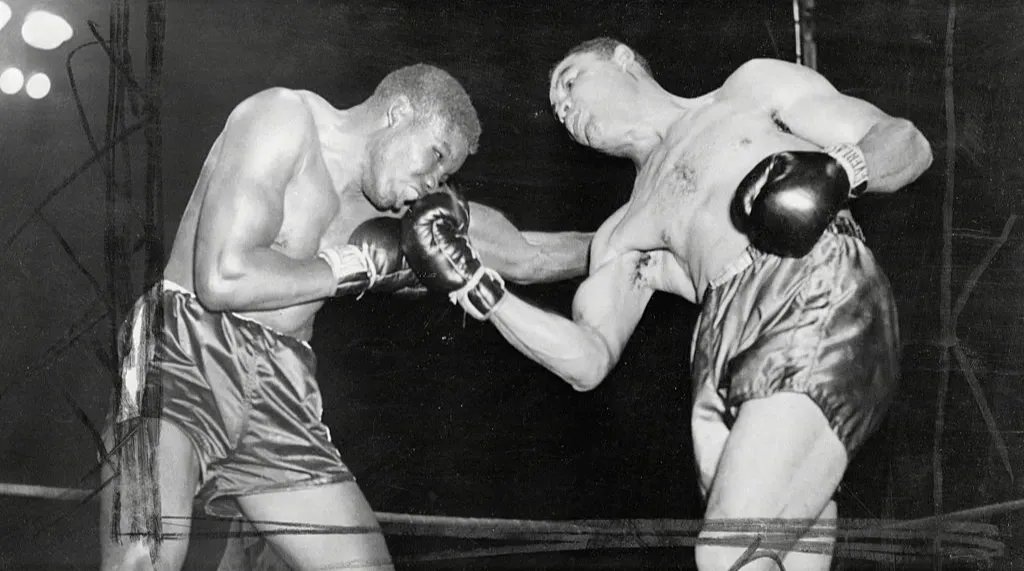
Bivins lost 15 fights between his time as duration champion and being given the opportunity to face Louis at Memorial Stadium in Baltimore on August 15, 1951, or 75 years ago today. The U.S. ended the war, life surged forward and boxing moved on, the duration titles a distant memory. At about 4-to-1, Louis was labeled a “heavy choice” to defeat Bivins.
Ringside reports described Louis as “gaunt,” and indeed the champion weighed lighter than he had in a decade. His team said he’d been fighting off a bad cold during training, which might explain part of his inability to line Bivins up that night. On paper, the fight was simply asking which fighter had more left, or if Louis had deteriorated enough for the watered-down model of Bivins to defeat him.
The threat of Louis’ punching power hung over every one of his fights. He was one of boxing history’s greatest punchers, and he habitually threw combinations. Opponents who allowed their attention to stray could be flattened at any moment, and most knew that. It affected game plans, disfigured faces, changed lives. It’s just that at 37, Louis’ fortune was just as thin as his hair.
Bivins was five years younger, and while he’d taken plenty of licks in pro fights, he also didn’t spar quite as much as Louis and didn’t wear himself out in dozens of exhibition bouts. Bivins also had the legs to keep himself away from Louis for at least six of their 10 rounds. It was more survival than anything, and Bivins was warned for holding and for measuring with an open glove as much as he landed effective punches. Louis rocked Bivins in the final round before drawing a warning for low blows, but Bivins survived to see the real heavyweight ex-champion’s hand raised as Louis won a comfortable decision.
An elderly Bivins chuckled as he said of the fight, “[Louis] tried his darndest to knock me down; he didn't even knock me off my feet.”
More than 18,000 fans showed and were unaware they witnessed Louis’ final career victory. “The Brown Bomber” moved forward with his plan to regain the heavyweight title only to be smashed into permanent retirement by Rocky Marciano two months after beating Bivins.
Louis fought most of his championship fights in New York, and his deal with the IBC cemented the city’s standing as the center of boxing activity. But it was in Baltimore, against Jimmy Bivins, that Louis erased any doubt about who truly held the reins on the heavyweight title during the war.
Column
Patrick Connor
Next
Patrick Connor: The Ring's top 10 greatest living fighters
RELATED ARTICLES
Patrick Connor: When Ali KO'd London in London
Column
Patrick Connor: 40 years ago, Frazier sacrificed son to Tyson
Column
Patrick Connor's 100-year flashback: The Ring's July 1926 issue
Column
RELATED ARTICLES
Patrick Connor: When Ali KO'd London in London
Column
Patrick Connor: 40 years ago, Frazier sacrificed son to Tyson
Column
Patrick Connor's 100-year flashback: The Ring's July 1926 issue
Column
Can you beat Coppinger?
Lock in your fantasy picks on rising stars and title contenders for a shot at $100,000 and exclusive custom boxing merch.
Partners