This is what the world's greatest supercar would look like if it was reimagined today
· Ted Welford · 2026-08-14T19:05:36+00:00 · nguồn gốc
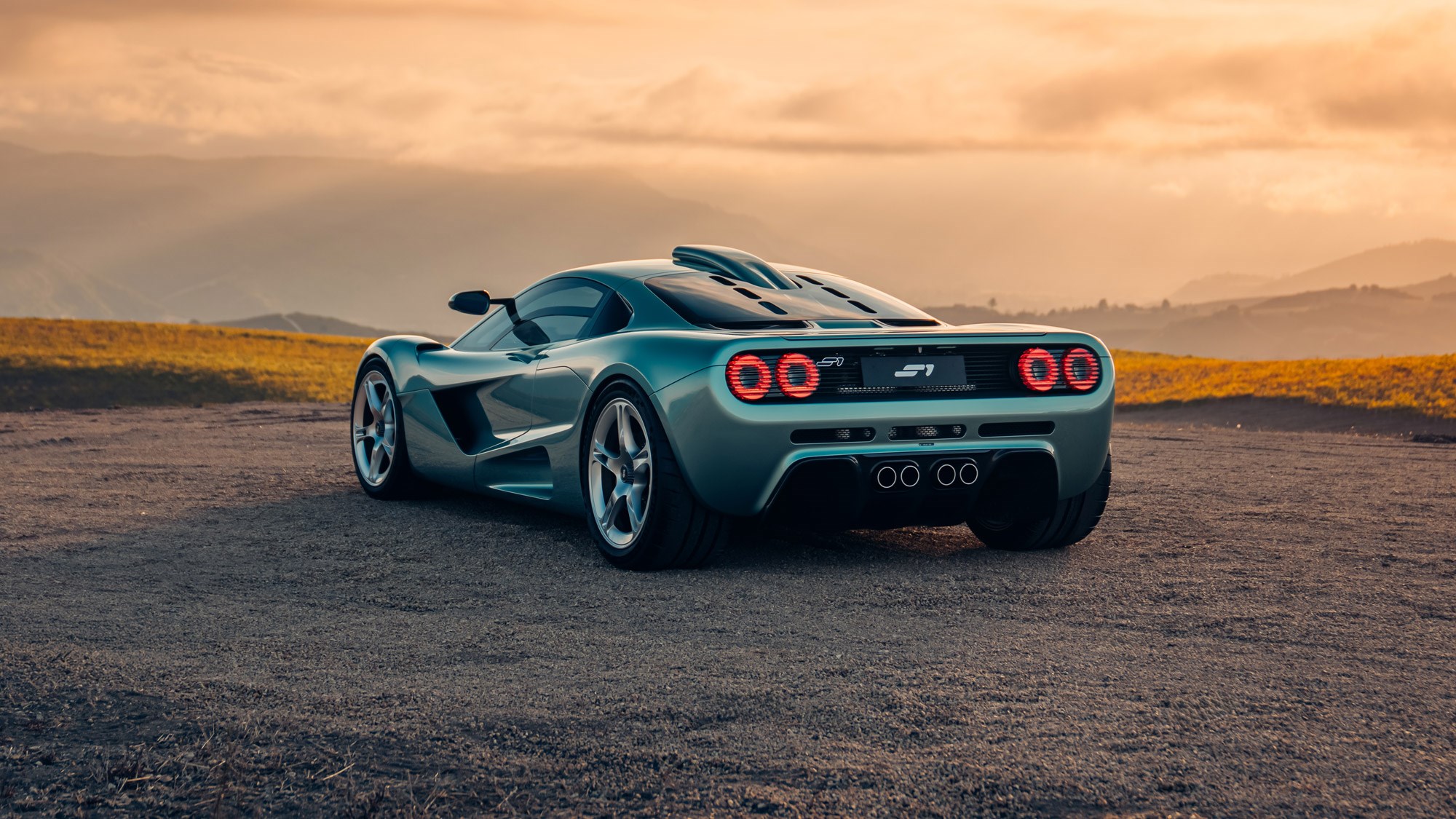
► Murray’s closest reimagination of McLaren F1 yet
► A more comfortable take on the S1 LM
► But don’t worry, its V12 still revs to 12,100rpm
If you thought Gordon Murray’s T.50 supercar was the closest thing there would ever be to a reborn McLaren F1, think again, as the firm’s now got even closer to the purity of the original with its new S1.
Unveiled at The Quail during Monterey Car Week, the GMA S1 might just be the best thing to come out of this week’s automotive extravaganza in California. Described as the ‘touring’ version of the S1 LM, revealed at last year’s event, only 64 S1s will be produced in contrast to only five of the LMs, all of which were originally sold to the same customer.
It couldn’t look much closer to an McLaren F1, could it?
The closer you look at the S1 LM, the more details you notice align with the original F1. From its four round rear lights, now using the latest LED technology, to its five-spoke wheels and its high-set rear-view mirror (a detail on early F1s that didn’t meet regulations at the time and had to be changed), it’s a true recreation in the best sense. The mirrors here are revised to include a digital camera-view through them.
Separate main beam lighting sits low in the S1’s air intake in the lower front bumper, a nod to the 1992 Monaco Grand Prix McLaren F1 show car, and a detail that never made production with the original F1.
How is it different from the GMA S1 LM?
The S1 comes from Gordon Murray’s ‘Special Vehicles’ division, and while sharing similarities to the LM, the firm says every panel has been redesigned and is unique to the model. Details such as the LM’s large wing, big side skirts and front splitter are removed to create a far cleaner look. The firm says the S1’s focus ‘moves away from extreme downforce and towards mechanical grip’.
The S1’s doors even open in a similar style to the F1, and have a wider opening than the LM, while a portion of the glass drops down, rather than the race car-like sliding ticket window openings. The roof scoop is carried over from the LM, though.
Gordon Murray said: “With the S1, we wanted to show how much beauty and purity there is in this design when the more extreme aerodynamic elements of the S1 LM are stripped away. It has the same intensity, response, and engineering integrity, but has been tuned for a different purpose.
‘It is exclusive, analogue, and deeply driver focused, but also more elegant, more refined, and more usable over distance.’
Go on, tell me about the engine
Its 681bhp 4.2-litre naturally aspirated Cosworth V12 is revised from the LM’s 4.3-litre engine and features a broader torque range, yet revs all the way to 12,100rpm. Gordon Murray puts emphasis on it using a ‘real’ six-speed manual gearbox, with an overdriven touring sixth gear as standard, while straighter gearbox cable routing is said to deliver a ‘rifle-bolt’ shift feel.
Such an engine also remains the focal point of the S1’s design, with details such as its 24-carat gold heat shield and polished Inconel exhaust both closely linked to the F1.
The S1 carries over the LM’s width, track and tyres, but the ride height has been increased by 10mm and the damping retuned for more compliance.
Lightweight parts are used throughout, with GMA targeting even less weight than the T50 (which weighs just 997kg dry), despite its claim to offer additional refinement.
What about the interior?
The central driving positive is, of course, retained, with the S1 having a posher interior than the LM with leather and ‘touring-level seat comfort’ promised.
A lightweight audio system has been introduced along with improved insulation and a revised infotainment screen, all said to improve everyday comfort and use.
Just 64 S1s will be produced (fewer than the 100 T.50s produced), with GMA saying ‘each car will be commissioned and specified by its owner. Pricing is not being revealed, but whatever it is, it will be cheaper than the circa-£20m figure that an original McLaren F1 can command today.