Como 1907 Might Be Building the Blueprint for Modern Football
· David Skilling · 2026-08-04 · nguồn gốc
Como 1907 Might Be Building the Blueprint for Modern Football
Como 1907 is building an identity where football, fan culture and commercial growth, strengthen each other.
Contact here for Advertising & Partnerships // Support the newsletter here.
Written by David Skilling
Outside of football’s elite, there’s often a sense that clubs have to make certain choices, whether that’s preserving tradition over modernising, focusing on the local community over chasing international audiences, or simply concentrating on winning games rather than trying to build a global brand.
But I don’t think those trade-offs are as inevitable as they’re often presented, and Como 1907 is becoming one of the strongest examples of why.
Much of the Como 1907 coverage celebrates the celebrities around the club, the beauty of Lake Como, the fashion collaborations and the glamour surrounding Serie A’s newest attraction, yet those things only work because they’re being built on top of a football club that seems to know exactly what it wants to be, and that’s the part I find most interesting.
Como wasn’t born as a lifestyle brand. It was founded, if you hadn’t guessed, in 1907, after a football match between members of a local rowing club and a group of keepers and Native Americans of the famous Buffalo Bill’s travelling circus, and spent more than a century living a life familiar to many historic clubs across Europe, cycling between divisions, financial struggles, and trying to maintain some stability.
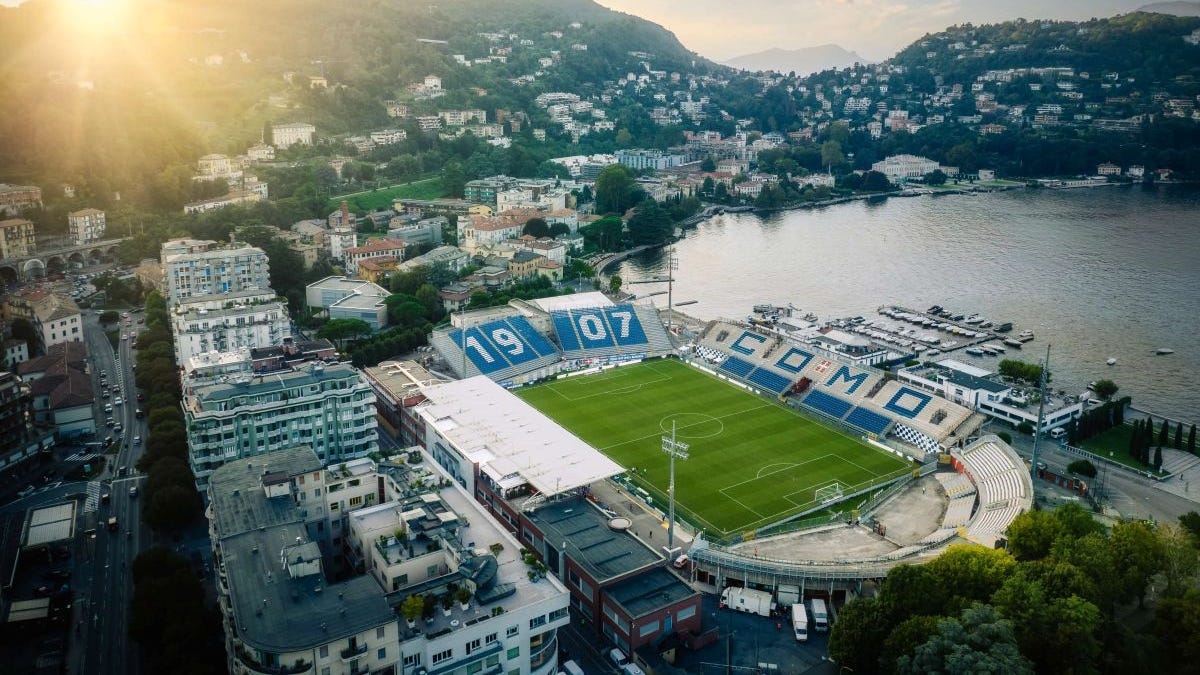
Throughout all of that, Stadio Giuseppe Sinigaglia remained one constant, sitting on the edge of Lake Como since 1927, where the late Italian journalist Gianni Brera famously described it as the most beautiful stadium in the world.
When the club’s current ownership arrived in 2019, it inherited something most football owners spend fortunes trying to manufacture: five million tourists visiting Lake Como every year, countless films and fashion campaigns using it as a backdrop, and a reputation that stretches well beyond football.
Mirwan Suwarso, a film producer and creative director who is also the club’s president, appeared to have recognised that the landscape could become part of the club’s identity if every decision reinforced the same story.
Plenty of owners talk about vision, but many clubs end up feeling like collections of separate departments. The football team moves in one direction, the commercial team another, the retail strategy follows whatever trend is selling elsewhere, and the supporter experience often becomes an afterthought. Como feels unusually coherent, because every piece appears connected to the same idea, and that idea starts with the football.
The temptation for clubs attracting this much attention is to lean into the spectacle and get carried away, yet Como has largely resisted that. Promotion back to Serie A, investment in the squad and the appointment of Cesc Fàbregas have established sporting credibility first, and I don’t think the lifestyle ambitions would carry nearly the same weight if the football wasn’t doing the talking first.
What I also like is that the supporters have become a serious part of the club's strategy. Como decided it would revoke season tickets if a holder had three unexcused absences, which surprised a lot of people, although I think many observers focused on the policy instead of what it says about the club’s priorities.
Empty seats have become normal across parts of European football because season tickets are often treated as products that have already generated their revenue, and a lot are bought by corporates as something to do when they have time. Como, on the other hand, understands that a full stadium creates atmosphere, atmosphere helps the team, television pictures become stronger, the matchday experience improves and demand increases. Every part reinforces the next.
Whether other clubs should copy the policy is open for debate, but protecting atmosphere as a competitive asset feels increasingly sensible in an era when live football is competing against almost unlimited entertainment options. Supporters aren’t just customers buying access to a game anymore; they’re contributors to the product everyone else experiences, and that’s as strong a marketing strategy as anything else, likely the strongest.
That same joined-up thinking explains why the club’s to fashion feels far more natural than many football collaborations we’ve seen over the past decade.
Football has become obsessed with lifestyle partnerships, but plenty of them still feel transactional. A designer arrives and produces a capsule collection, everyone posts campaign imagery for a week, then the collaboration disappears into the archive. Como’s partnership with Rhuigi Villaseñor, founder and fashion designer of the luxury streetwear brand Rhude, feels different because it doesn’t appear to have been built around creating merchandise. Instead, it extends the identity the club has already established, drawing on the architecture, design, and understated luxury that people already associate with Lake Como.
The same thinking appears to shape the club’s commercial partnerships. Revolut’s long-term agreement with Como feels like another considered approach to enhancing the club’s identity. Football sponsorships have traditionally been measured by visibility, impressions and television exposure, yet the relationship makes more sense when viewed through the lens of who Como is trying to become.
Both brands speak to an international audience that values design, travel, technology and premium experiences, so the partnership reinforces the image the club has been carefully building. The best sponsorships aren’t just about generating revenue; they’re about strengthening what people already believe about a club, and Como seems to understand that.
I’ve said it many times, but football fans are very good at spotting authenticity, even if they don’t always describe it in those terms. Fans rarely reject commercial growth inside the teams they support, but they will reject commercial decisions that feel disconnected from the club’s identity and values.
Clubs all over the world are asking how they become lifestyle brands, although I suspect that many are starting from the wrong place. They begin by designing better merch or hiring creative agencies, but the first step, in my opinion, should be asking whether the club has an identity strong enough to support those ambitions in the first place. Lifestyle isn’t something that sits alongside football; it grows out of football when the club understands who it is.
That’s why I don’t think Como’s story is really about fashion, celebrity ownership or one of the world’s most picturesque stadiums. It’s about having a clear identity and making every decision point in the same direction.
Every significant decision appears to strengthen the same identity, whether it’s recruitment, matchday atmosphere, design, hospitality or community, and that’s far more difficult than producing a good marketing campaign. Plenty of clubs have bigger budgets, larger stadiums and millions more supporters around the world, but size has never guaranteed clarity.
Como 1907 still has plenty to prove on the pitch over the coming years, and sustaining this approach will become harder as expectations keep rising. Success has a habit of exposing weaknesses that aren’t obvious during the climb, yet I think the foundations look unusually solid because they’re rooted in football first, while recognising that modern clubs also compete for attention through culture, design and experience.
More clubs should study that order carefully. Football comes first, supporters give the club its identity, and everything else should grow naturally from those two foundations. Como hasn’t finished building its project yet, but it may already be showing the rest of football how one should be built.
Thanks for reading. If you hit the like button, you’ll be doing me a huge favour.
David Skilling: Follow on Instagram