AC Milan 1-1 Inter: Three things we learned - the battery life issue and some what ifs
· Oliver Fisher · 2026-08-05 · nguồn gốc
AC Milan took another step forward in their preseason preparations as they drew 1-1 with Inter in a derby down under.
The game took place at the Optus Stadium in Perth after some more touching tributes to Franco Baresi. The Milan players took to the field wearing No.6 shirts after a rendition of ‘Nessun Dorma’, while there was a moment of silence after a jersey was laid on the centre circle.
Read SempreMilan ad-free and get access to exclusive news. Click here for a free trial!
In what was an intense and hotly-contested game despite the ‘friendly’ tag, both goals came in the second half. Federico Dimarco was found alone by Nicolo Barella to open the scoring early on, then Christopher Nkunku won and converted a penalty inside the last 10 minutes.
Ruben Amorim had 13 players unavailable for the game for various reasons, yet he continues to learn about his squad. After the game he spoke of a need to improve in all aspects, but what are the three main things he can take from the draw?
1. Battery life
What was quite striking about this particular game is that it can more or less be split into equal thirds. Milan were the better side for the vast majority of the opening 30 minutes, then Inter had the better either side of the break, before the Rossoneri finished strongly after making many changes.
One of the big reasons behind this circles back to something Amorim considers a major part of his philosophy and his tactical ideas: the press. When legs were fresh, Milan got a lot of joy generating high turnovers in the Inter half, really putting them under pressure.
They did not make the Nerazzurri pay often enough when they did surrender the ball in dangerous areas, but the idea is that will come. The fact that the press seemed to be co-ordinated, effective and intense was a refreshing watch after last season’s bunker and low-block approach.
However, as mentioned, there was a 30/40-minute period where the players looked out of energy, like a teenager so excited with a new phone that they use all the battery too quickly. Against opponents with quality in ball possession and circulation, this will lead to dangerous lulls.
The idea of course is that with more fitness and with more practice, the pressing aspect of Amorim’s Milan will be refined. If they can do that, we might begin to see a team greater than the sum of the parts, like Stefano Pioli’s side in the lockdown period.
2. What if…?
Speaking of getting more out of what’s there, a couple of players stood out positively for their performances, to the extent that there might well be a reflection regarding where their immediate future lies.
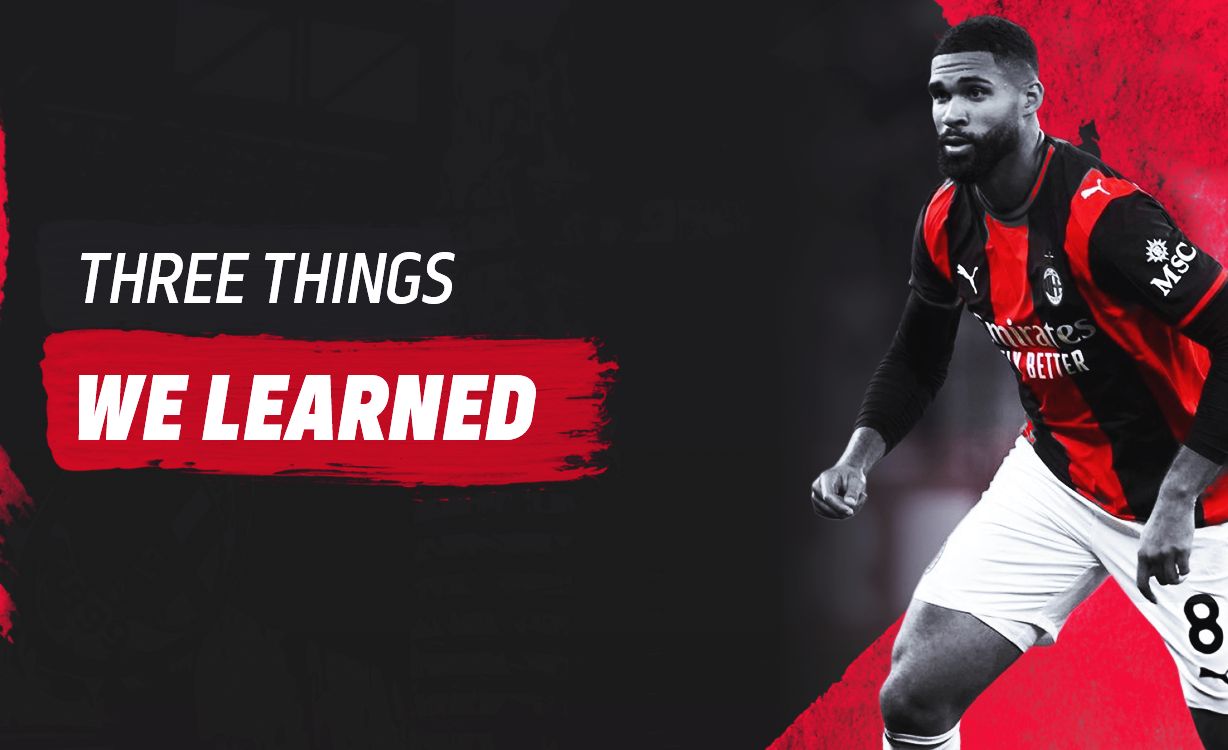
Ruben Loftus-Cheek got a second straight start in the attacking midfielder role. Having looked like the only player up to it physically against Celtic, he had moments and flashes today which demonstrated just how useful he can be.
As always with Loftus-Cheek the question isn’t about what he can do in friendlies nor when he has his best games, it’s about the injuries and the inconsistencies. However, with his excellent hold-up and link-up play and obvious athleticism, it might be enough for Amorim to have a further look.
Rafael Leao certainly did his reported wishes to fight for a spot at Milan no harm either with a lively cameo off the bench. He looked far more at home in a wide left position compared to last season, linking up nicely with Goncalo Ramos on two occasions, and only lacking in end product.
Then there were Lorenzo Torriani and Ardon Jashari. Torriani made a couple of excellent saves to deny Lavelli and Calhanoglu, the latter being a beauty at full-stretch. Is he ready to be the deputy right now? Jashari came on and immersed himself in the battle, switching play with two excellent long balls, fuelling the notion he is starter quality.
3. Obvious needs
For all the talk about ‘new’ assets from within the squad, it is also very obvious that Milan need some help in certain areas. Generally speaking, the technical level of the team – in terms of first touch, composure under pressure, passing accuracy and other key attributes – does not lends itself to being a possession-based side.
In terms of individuals to unfortunately highlight for the wrong reasons, Fikayo Tomori and Matteo Gabbia were lost in No Man’s Land for the Inter goal as neither managed to take charge of a ball across the six-yard box. They also showed hesitance and sometimes sloppiness in build-up play.
They weren’t entirely at fault for the goal though, as Samuel Chukwueze showed the duality of the wing-back experiment. While he appeared an excellent outlet wide on the right versus Celtic, he was a liability defensively on this occasion, allowing Dimarco an uncontested finish. It is a reminder of the work he must do in the tracking back phase for this to work.
In addition to the Nigerian, Yunus Musah’s only meaningful contribution was hitting the post from a perfect cut-back when he had to score. Alphadjo Cisse had moments to surge into space but coughed the ball up a lot; Francesco Camarda battled but missed his only decent chance; and Pervis Estupinan looked off the pace.