NUFC and the Transfer Hype Tax
True Faith - Independent NUFC Fanzine · True Faith · 2026-09-10T09:35:27+00:00 · nguồn gốc
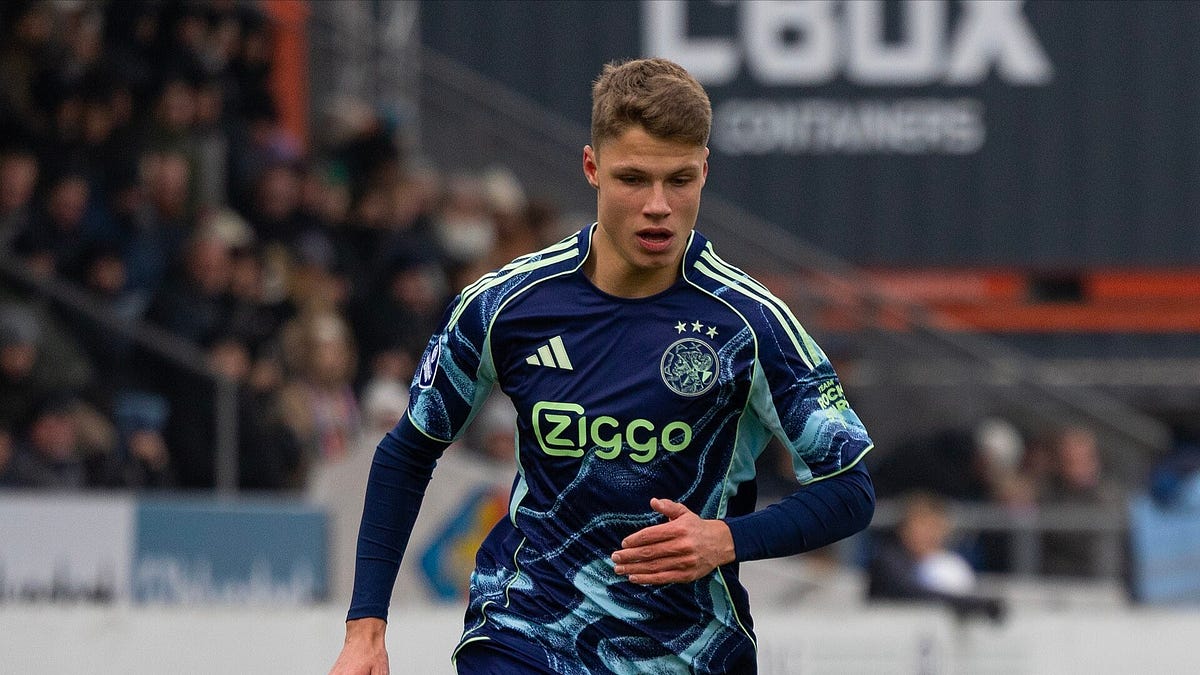
The Summer 2026 transfer window's been and gone, and somebody needs to say the quiet part out loud: this was an expensive summer to acquire a teenager with a decent left foot.
Here's the headline before the receipts - Newcastle paid a bigger transfer premium than any other Premier League club this summer — more, relative to what their signings were actually rated beforehand, than anyone else in the league, and by some distance. The twist is what makes it interesting rather than reckless: the entire league paid for new relatively unproven potential more than ever before and Newcastle just embraced this more tightly than any other club.
To put it simply, I went through all the PL transfer deals and compared the fee paid with the relevant Transfermarkt valuation. The gap between fee and valuation is the transfer "premium" paid — the hype tax. It's real, it's consistent, and one club paid it harder and more consistently than the rest. Us.
Let's take a helicopter view of the transfer data and the premiums paid.
The PL Price Premium - Not What you Think
Two leagues post the biggest raw premiums of the summer, and neither belongs anywhere near a serious table. Belgium shows +189%, Eredivisie +159% — but Belgium is four deals (one of them is Liverpool's roll of the dice on a development goalkeeper, Brughmans, more on him later) and Eredivisie is three. That's not a league premium, that's a rounding error, and both are excluded from the table below. Here's what's left once you only trust leagues with a real sample size:
The picture flattens out fast once Belgium and Eredivisie are gone: La Liga (+55%, 9 deals), Ligue 1 (+42%, the biggest continental sample by far at 21 deals), Primeira Liga (+40%), and — this is the one worth sitting with — domestic Premier League business, +40% across the single biggest sample of the entire window, 35 deals. Buying Premier League wasn't the most expensive everyone assumed.
The genuinely interesting finding is right at the bottom, not the top: if you actually wanted a discount this summer, Germany and Italy were where you found it, not Portugal or Holland. Bundesliga and Serie A imports cost 11 to 14 points less on average than a domestic PL move. The usual story, is that the premier league buys have the highest premiums, not necessarily so, the hype markets for young talent were La Liga and Ligue 1, and the potential bargain buys were German, Italian…. or from the Championship.
Part of that is an age thing: Portuguese and Dutch import ages averaged early-20s, while the average PL-to-PL signing was pushing 26. You already know what a player who's spent three years destroying full-backs at Selhurst Park is going to give you. You're guessing about the kid who had one good Champions League qualifier for Sporting. The market charges for the potential, for the hope and ambition and unfortunately the guessing —and this year, at least, it charged almost exactly the same guessing-tax whether the guess came from Lyon or from inside the PL itself.
The data show that a teenager costs one-and-a-half times his Transfermarkt rating; a 28-year-old costs a quarter more. Buying young isn't a slight premium, it's a bidding war tax. The picture for the 30+ number is noisier — only eight deals, mixing genuine bargains (Rulli, Martínez) with veteran squad-depth signings priced above their fading ratings.
How about Newcastle?
Below is a plot not of spend or net spend but of transfer premiums relative to Transfermarkt values prior to transfer. One of Liverpool's five signings, Brughmans, takes the award for the top premium paid (+728% premium, his Transfermarkt value was €4.0m vs €33m paid!). But the other business Liverpool did was more modest, while Newcastle’s overall premium paid was the highest in the league — real, and built across eight signings.
Every individual signing for the highest premium clubs, plotted by premium paid. Each point on the chart represents a club signing. The higher the position the greater the transfer premium. Newcastle's spread sits consistently high; Arsenal (included for reference) and the overall premium sits tight to zero; Brughmans stands alone… we had to break the y-axis to fit it in.
Newcastle's eight signings average 21 years old — level with Liverpool, just done at four times the volume, across nearly every position. Sean Steur walked in at 18 (+243% transfer premium), Touré and Bamba at 20; the "experienced" product, González (24) was also, tellingly, the second smallest premium in the batch (+40%). Compare to Arsenal: four signings, +9%, premium average age 26 — Arteta and Berta avoided the tax by simply not buying teenagers and buying short-term consistency.
Was it reckless? Less than it looks. Newcastle cashed in the whole proven spine of the 2024/25/26 team— Tonali to Spurs (€108.1m), Guimarães to Arsenal (€87.7m), Gordon to Barcelona (€80.7m), €276.5m total — funding almost all of the incoming spend. True net spend: €32.9m, 13th in the league despite the 5th-highest gross outlay. The eye-watering number was never the net spend. It was the premium, and they paid for it without a wedge of cash from the owners… leaving them to come good on the training ground and stadium promises.
There's a manager angle too: Howe left in August after a grim 12th-place finish; Jaissle arrived from Salzburg/Al-Ahli less than three weeks before the start of the season, inheriting exits already done or in motion, and built a squad around his own high-energy profile.
We know Newcastle didn't win every talent recruitment fight. Liverpool triggered Víctor Muñoz's release clause from under them; Villa talked Johan Manzambi away with Champions League football. Real skirmishes against real spenders, not scraps over leftovers, which tells you Newcastle's scouting had overlapped with the same shortlist as Liverpool and Villa, not a discount alternative to it.
The one they did land, Touré, became Hoffenheim's record sale — beating what they got for Joelinton in 2019 — and was being called "the next £100m winger" by FourFourTwo — and we know from the “socials” that Arsenal, Liverpool and Manchester City were sniffing about Fernández-Pardo. Toure was clearly on the talent radar already as his premium to Transfermarkt value was actually the lowest Newcastle paid at 18%.
It's also clear that the club's ownership are expecting Hopkinson to generate the revenue that drives the team forward sustainably. What we have seen is a club tearing up the spine of a relatively old, plateauing squad and handing the shape of what replaced it to a coach with a track record of developing young players in a high-energy system, who hadn't kicked a ball for them yet. That's a specific bet, not a random one — that a proven development coach, given players who fit his profile is worth more than continuity. Furthermore, like we are seeing elsewhere in the PL, established players are being turned over by incoming new managers…. They carry the accountability to deliver success and so need to “own” the team and the dressing room.
The premium for potential was up everywhere this summer — Newcastle just leaned into it harder and more often than anyone, while Arsenal and a few others declined to play at all. But "nobody bought a bargain" and "nobody paid below market" are different claims, and only one is probably true yet: price is fixed the day you sign; value takes seasons to show up. Sean Steur cost €24m at +243% — Newcastle's steepest markup of the window — and has already looked like one of Newcastle’s shrewder bits of business. If that holds, +243% ages into a steal, not a rip-off.
CEO David Hopkinson has staked his own credibility on Newcastle being "in the debate" as a top club by 2030 — not top four, the actual conversation. That vision, bold and outrageous though it was, assumed continuity. This summer blew the core up and bet on a squad of twenty-year-olds instead. Whether that's boldness or recklessness isn't a football question anymore so much as a countdown. Ask us again in 2029 — or, if you're the CEO, in about four.
Pete Newham
Image - Mtjonenfa, CC BY-SA 4.0, via wikicommons