The Last Time a Black Man Reached a Grand Slam Final Was 30 Years Ago. He’s Watching This One Very Closely.
Slate · Takashi Williams · 2026-09-04T20:28:30+00:00 · nguồn gốc
Sign up for the Slatest to get the most insightful analysis, criticism, and advice out there, delivered to your inbox daily.
The 2026 U.S. Open marks a daunting anniversary for American fans of the sport. While they’ve been basking in the glory of champions from the Williams sisters to Coco Gauff, and even a few soon-to-be major winners lurking in the Women’s Tennis Association’s top 15, it’s a completely different story for the men. Twenty-three years ago was the last time an American man won the tournament—let alone a Grand Slam title.
There have been many years of heartbreak: promising junior players that just never panned out, combined with sheer dominance from a few of the greatest men to ever play the game. But there’s reason to believe that the end of this drought is closer than ever before.
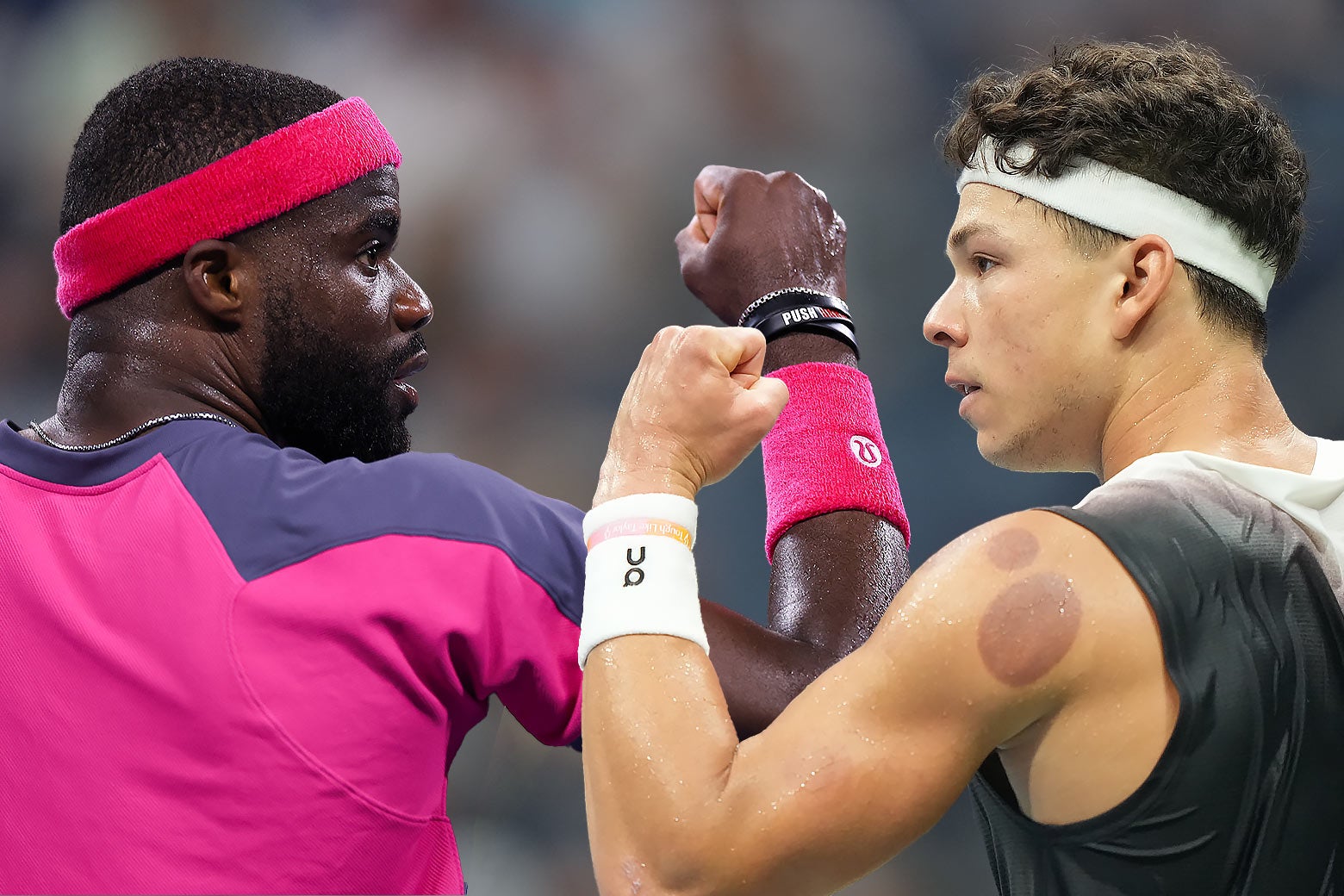
Ben Shelton, who is 23, leads the conquest as the top American at the moment. Ranked No. 9 in the world, the 2023 U.S. Open semifinalist looks to build off another impressive summer after securing his second-straight Canadian Masters title. Joined by D.C. Open champion Taylor Fritz and Cincinnati Open finalist Frances Tiafoe, he seeks to capitalize on a major that is missing World No. 1 Jannik Sinner to injury.
However, for Shelton and Tiafoe, an additional drought follows them into Flushing Meadows—a drought that invokes the ugly truth that less than a century ago, the pair would not have been allowed to compete in the U.S. Open at all, because they’re Black. Thanks to trailblazers such as Reginald Weir and Althea Gibson, who broke the color barrier in 1948 and 1950, respectively, they can. But since then, only two Black men have hoisted major titles.
France’s Yannick Noah won Roland-Garros in 1983. He did so 12 years after being discovered in his home country of Cameroon by the first Black man to win a major, Arthur Ashe. Ashe’s third and last Grand Slam triumph came in 1975. Since beating Jimmy Connors at the All England Lawn Tennis Club, six Black women have won Slams, and four of them have won more than once. Only two Black men have reached a Grand Slam final.
“There’s a lot on the line,” MaliVai Washington, the most recent Black man to reach a Grand Slam final, told me. “I’d like to see one of those two be the next. I really, really would, because it’s been way too frigging long.”
During his 10-year career, Washington reached as high as No. 11 in the world, beating the likes of Andre Agassi, Boris Becker, and Ivan Lendl. The highlight of his career came from a historic showing at the 1996 Wimbledon championship. He snapped a two-decade-long drought, becoming the first Black man since Ashe to reach a major final. From 1989 to 1999, Washington experienced a run that differed significantly from Shelton’s and Tiafoe’s—he competed during one of the most successful periods for American men, when half of the men’s Grand Slams were claimed by Americans. Though the pressure was not on him as the top American to win, it manifested in his being the top Black player of the time.
“People are pulling so hard for you, and they want so badly for you to do well. How you handle that pressure determines how well you do,” Washington said. “There’s a part in you that needs to enjoy it, embrace it, but block it out. You have to stay focused into what’s happening right there in the moment on the tennis court, and that’s not easy to do.”
Washington grew up around five siblings and a father, William, who was deeply in love with the sport. His father introduced Washington to tennis when he was 5. By 7, he was playing in tournaments, and he won his first at 8. But as he progressed on the junior circuit, Washington remembered, he realized that he and his family were outliers. It was rare to see a Black family from Flint, Michigan, in a country-club staple like tennis. And the elitist, very white culture of the sport made sure they knew it.
“There were absolutely times where we were in the South, where there were clubs that we could not play at, and I don’t think anyone who thinks critically would deny that,” he said. “It wouldn’t surprise me that in America today there are various athletic clubs or social clubs or otherwise where certain groups would not be welcome or they’re not ‘encouraged’ to join.
“You get a little bit older, and you hear from your parents what’s going on, and you look back and you’re like, OK, now I understand why we had some of those discussions. But it’s the nature of America. It’s the history of America.”
As Washington began to climb up the rankings in his own right, comparisons between him and Ashe started to brew. That made it much more difficult to focus on what he was being paid to do: win tennis matches.
“If I was playing, there was a good chance that the majority of the Black fans that were there on site were going to come and watch my match,” he said. “At 20 years old, I didn’t fully understand the role I could play, and it literally comes down to a level of maturity and growth. I understood that role better at 30 than I did at 20.”
In Shelton and Tiafoe, he sees two young men who understand this role and relish it. And as much as he and so many fans of the sport want to see them win a major, there are racial hurdles that these players have already faced in their professional careers.
Last year in Melbourne, Shelton cunningly shot down a joke insinuating that Gaël Monfils was his father by asking, “Is that a Black joke?” Tiafoe has opened up multiple times about feeling that he has to work twice as hard for recognition and the sense that because of his race, not everyone in the tennis world wants him to succeed. Off the court, you need look no further than Tiafoe’s or his girlfriend’s Instagrams after a loss; their comments sections are often littered with monkey and poop emojis or GIFs of enslaved Africans.
Yet, even in the midst of this treatment, both players have already made history. In 2022 Tiafoe became the first Black men’s U.S. Open semifinalist in half a century. The following year, he and Shelton met in the quarterfinals, marking the first time two Black American men had made the final eight of the same major. To keep the streak alive, the pair decided to meet once again in the finals of the 2024 Clay Court Championship, in Houston, to play out the first-ever all-Black American ATP final.
“You’ve been such an inspiration to kids, people of color in our sport,” Shelton said of Tiafoe after the match. “You’ve been that guy to always put on for us and always be selfless, thinking about others, kids younger than you. So thanks for everything that you do for our sport and people who look like you and me.”
For Washington, the two men have the potential to make an impact beyond the tennis court. He said that Shelton in particular could transcend the sport itself. What Shelton will do with that influence only he can decide. (Washington used his postgame life to dole out more than $2 million in scholarships.) “Depending on how someone wants to engage in their community posttennis or even during their tennis career, they have the ability to impact lives more off of the tennis court than on the tennis court,” Washington said. “If I get to meet God one day, I don’t know if he’s going to care about how I hit a tennis ball.”
Both Shelton and Tiafoe have now advanced to the third round at the 2026 U.S. Open, with matches set for Friday. Millions will be watching. But only Washington knows exactly what it feels like to be in their shoes.