Inside the Dorset hub of Britain’s world-conquering winds...
The Observer · unknown author · 2026-09-04T15:01:41+00:00 · nguồn gốc
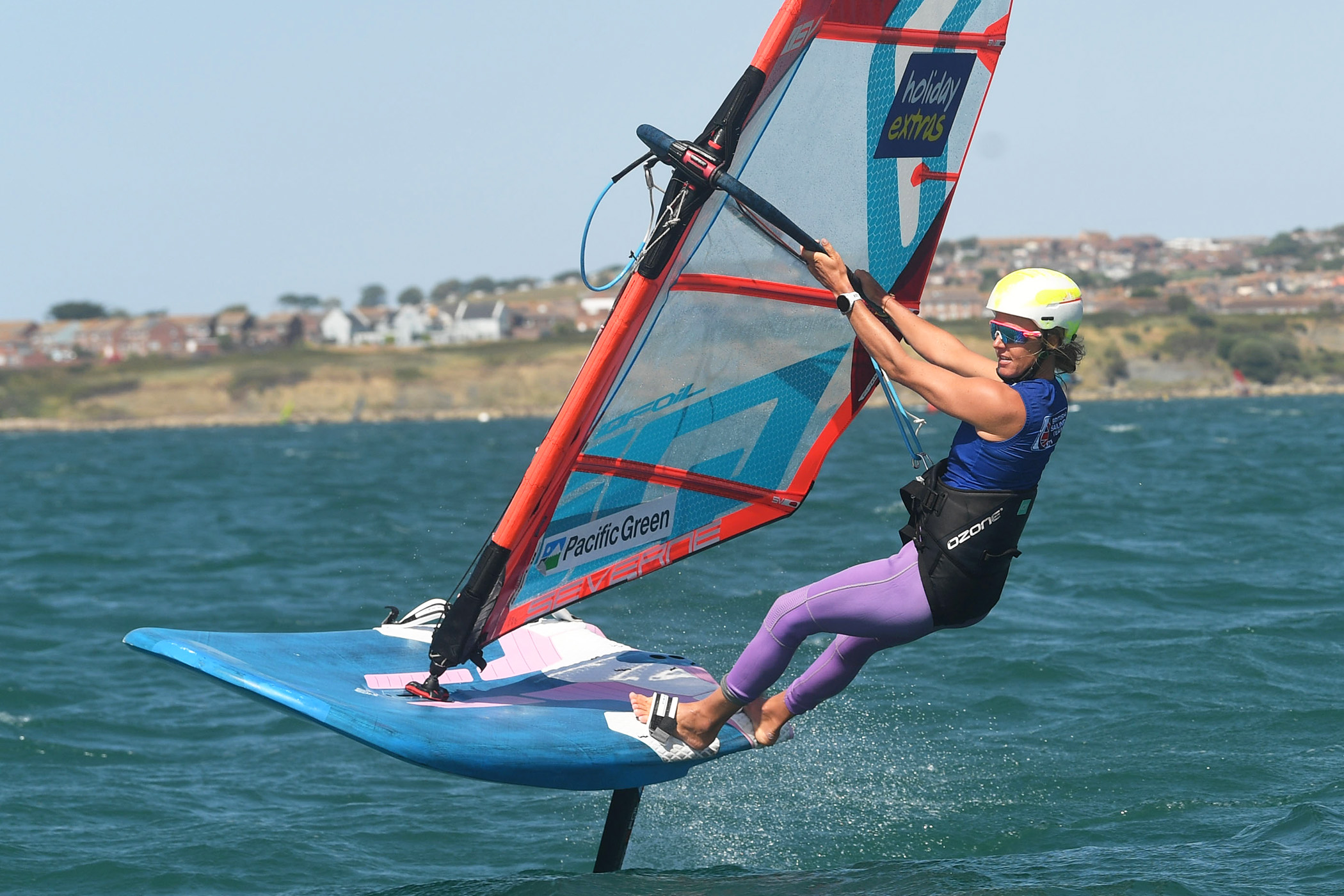
It was the first thing Emma Wilson, the sport’s dominant force, noticed: the absence of noise. Silence, save for the breath of the wind.
For much of its history, windsurfing meant a board skimming the surface of the water. Then, before the Paris 2024 Olympics, came the hydrofoil: a submerged wing attached beneath the board that lifts the rider clear of the sea, reducing drag to the point where the experience begins to resemble an aerial flight. At up to 35 knots (40mph), the effect is extraordinary. There is speed, but almost no sound. “It’s so quiet that you can chat to each other while going along,” says Wilson.
The introduction of the iQFOiL, replacing the previous Olympic equipment, forced the world’s leading competitors to learn what was, in effect, a new discipline. Britain adapted particularly well.
At last year’s World Championships, Wilson and Andy Brown both won gold over a few days of unprecedented success for British windsurfers. This week, off the Dorset coast, the pair will defend their titles on home water.
For those unaccustomed to the world of rigs and gybes, Britain’s windsurfing prominence may seem unexpected. Yet there is a small corner of England’s South West where the country’s leading windsurfers have spent years developing a structure that may help explain it.
Opened at the turn of the millennium and enhanced by investment before the London 2012 Games – for which it hosted the sailing events – the Weymouth and Portland National Sailing Academy is a hive of activity on a glorious summer’s day. Children on holiday courses splash around the harbour while retirees head out onto the water. Scattered conspicuously among them are the honed physiques of the world’s best windsurfers, preparing for their biggest competition of the year.
All 11 of GB’s centrally funded windsurfers are permanently based at the marina, alongside 40 British Sailing support staff, with facilities that include a gym, boat-building centre and data analysis unit. For Wilson and Brown, both 27, it has been home since they relocated there – like all of Britain’s leading windsurfers do – a decade ago.
Wilson, the daughter of former British Olympic windsurfer Penny Way, won her first world age-group crown at 12 and proceeded to dominate the junior ranks. She won Olympic bronze in Tokyo and Paris – the latter a bittersweet finish after a controversial new format undercut the advantage she had built from the earlier rounds – and also made the podium at the World Championships in 2023 and 2024.
“I live five minutes from here,” she says, perched on a rock overlooking the English Channel, about an hour from where she grew up along the Dorset coast. “It’s cool that I can just roll out of bed and come windsurfing – I cycled down this morning.”
From spring to autumn, she says, almost everything she needs is within walking distance: “You have your house here, the gym, the water. We are super lucky. We also have a really good team around us and a big squad. You can never chill – even if you’re me or Andy, there’s always someone trying to push you.”
Sign up to newsletters from The Observer
View more
For information about how The Observer protects your data, read our Privacy Policy
Distinct from their counterparts in France and Israel – habitual rivals for windsurfing supremacy – Britain’s set-up means that the world’s best are surrounded every day by compatriots trying to beat them.
Brown, from Glasgow, learnt his windsurfing trade on the lochs of the Scottish Highlands. His route to the top was rather less straightforward than Wilson’s, having not made a world-championship podium in seven attempts prior to winning gold.
“The sport system in the UK as a whole is incredibly supportive,” he says. “I was taken from a young age and there was a system that grew me to this point. Inherently the system is good, the venue is good and the guys and coaching are good. Every day on the water is a bit of a fight – it’s never relaxing training.”
As the late summer sun beats down, an encouraging breeze blows across the harbour for me to take the opportunity to make my windsurfing debut (thankfully without the added complication of a hydrofoil). My performance does little to challenge Britain’s position at the top of the sport’s hierarchy, but the conditions help explain the country’s success.
“We have, effectively, one of the best training grounds in the world with flat water,” says Henry Bloodworth, British Sailing’s women’s windsurfing coach. “But if you go outside the harbour wall, it can be really testing.
“You get swell, tide, quite a lot of wind at times. So on the same day, you can go from really easy sailing, to moderate, to really hard.”
The variety is a distinct advantage. “The good thing about here is we get every different condition,” Wilson says. “You can have a few days of this, then no wind and then really windy. We get used to every condition, so when we go away, we’re not shocked by what we might find.”
Having just won the first Los Angeles 2028 Olympic test event, and preparing to compete on water she says she “probably knows inside out”, Wilson expects nothing less than another world title next week. Brown’s ambitions are marginally less lofty, but he insists he wants “to be in the mix fighting for a medal again”.
Two reigning world champions bidding for silent glory at the Dorset sporting machine they call home.
Photographs by Russell Sachs for The Observer