Jens Berthel Askou on Motherwell and why he joined Toulouse
· Ben Banks · 2026-08-09 · nguồn gốc
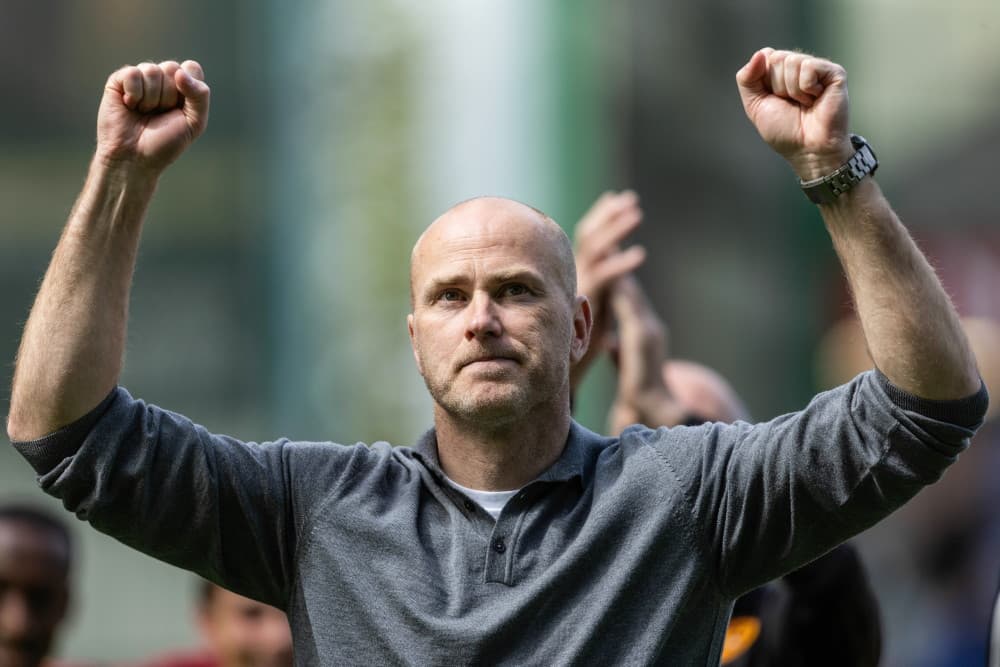
Exclusive:Jens Berthel Askou on Motherwell, Scottish football investment hope, fear removal and joining Toulouse
The innovative former Motherwell manager has discussed his sole season in Scottish football with the Scotsman.
When Jens Berthel Askou rocked up at Motherwell in June 2025, a few critical eyes rolled, another Premiership newbie making declarations of attacking vigour that couldn’t ever be realised.
Millions made in player sales, European football and a move to Ligue 1’s Toulouse later, the Danish manager has not only changed Motherwell’s long-term trajectory, but created discussion on Scottish football’s. Many have tried to play the daring, possession-orientated brand of play that Askou introduced at Fir Park, on budgets far greater than he was playing with in ML1. The critics turned disciples and it became evident quickly as Motherwell had talk of the title surround them in the late winter that this was a man destined for Europe’s top leagues. Amid murmurs of Celtic, England and a clutch of other clubs, it was Toulouse who proved the biggest pull away from a project he fell in love with.
“I had a great time at Motherwell and I could have stayed there,” Askou said in an exclusive interview with the Scotsman. “There had to be something that I thought was really special to make me want to move because the project there, and to take that to the next level and be part of that journey that the club is on now, it was extremely tempting. I loved every part of Motherwell, and being there, and the people within the club. Then this opportunity came up. There were a lot of rumours about different things. People can speculate all they want about that. I just know that I found an opportunity in France that I thought was on so many levels very interesting. It’s a very interesting and challenging league for me in a country that I find very interesting. It gives me the opportunity to express myself the way I need to express myself to get the best out of me.”
How did Jens Berthel Askou install his style of play at Motherwell?
While players like record-sale Elijah Just claimed headlines, others who were already at the club like experienced top flight duo Paul McGinn and Stephen O’Donnell were equally impressive. They proved that not only could Askou recruit, but he improved what was already there, no matter their circumstances. A back-four of traditional right-backs shone in a particularly impressive downing of eventual champions Celtic last December and a removal of fear proved key to unlocking each individual's potential throughout the remarkable season.
“I think in general there's a higher chance of being successful if you try and go your own way instead of copying what is already being done,” the Dane explained. “Especially when you have a budget that is low. You can't compete on money. You need to have a competitive edge somewhere else and I think we identified something that if we were good enough at making that successful, if we were effective enough in what we were doing and consistent enough, then there was an opportunity to reach out for something. We also did a good job in finding the right players to come in with a lot of potential, a lot of talent, and lift the level of the squad that was already there with a lot of good people. I think it’s the whole idea of setting them more free. Removing the fear of making mistakes, really trying to up the tempo in everything they were doing, but really setting them free to push their own limits and try to play with more risk. It turned out very competitive and successful.”
Debates have spawned in the wake of Askou’s tenure, at odds with the pragmatic approach Scottish football has been known for, over why more teams don’t try to adopt the same style Motherwell did under their previous gaffer. He senses an attitude change from the traditions of physicality towards a more European style, John McGlynn’s Falkirk one team impressing him in this bid, but investment is needed from the top. With the Scottish Football Association holding a ‘critically important’ summit around the future of the national game next month, it may help keep homegrown players in the top flight for longer too.
Jens Berthel Askou’s thoughts on Scottish football
“My experience from the last season was that there's room for clubs who want to go in a more modern direction, both in the way they recruit but also in the way they play, the way they see themselves as a club,” Askou explained. “I think last year was a good example of that. I also think the way Falkirk performed over the season was a very good example of that. I think we will see more and more examples of that. I see more clubs developing into a more modern European style, which I think is interesting.
“I think it's evident for the football development in the country that from the top there will be more funds invested in talent development, coaching development, and in general developing the league at all levels to develop the international competitors but also develop even more top talents in Scottish football. Hopefully they have the ability to keep them a little bit longer. Obviously what we were doing, there weren’t many teams I'd seen play that style consistently, and as uncompromising as we tried to do. Some have to try, then some succeed, and some fail.
“It sparked an interest. What I find interesting is that you have a league with a big variety of approaches. I think that's equally important for a football country to develop, that not everyone is doing the same all the time. I think last year we learned a lot and had some of the hardest games playing against teams who were playing a little bit more traditional Scottish football. In terms of how to cope with that, we learned a lot from that. At the same time, we also learned a lot in terms of tempo and intensity, and how fast we needed to think when we played against Celtic.”
It says a lot for Askou’s ingraining of his possession-style that successor, Alfred Johansson, has arrived from a spell at Norway’s Rosenborg and continued what made Motherwell so successful as they finished fourth last May. Askou was aware of him from work at former side Copenhagen in Denmark and held talks with Johannsson over what to expect in Scotland.
“He's a young and talented coach who's done really well, especially in his spell with Copenhagen and Denmark,” said Askou. “He's had a good experience in Norway in a club that is also proud and has big traditions and a lot of expectations in Rosenborg. I just told him a lot of good and positive things about Motherwell, and Scottish football, and that he should be really excited about that opportunity and I hope that he enjoys it as much as I did. I wish him the best of luck.”
A task to change attentions lies in store now for the ex-Motherwell boss with a club looking to rival a large team in the same city. Toulouse has a world-famous rugby team, the most successful in Europe, having won the European Rugby Champions Cup a record six times. Dragging some attention across to the football side that finished ninth in France’s top flight is a key aim.
“There's a lot of attention on Ligue 1 because it's the league that produces most people to the English Premier League,” added Askou on his next job. “There are a lot of very talented and athletic young players, and you see that with the French national team as well, which has an incredible amount of talent to pick from, and possibly the best club team in the world right now, in PSG. Toulouse is a team that has a strong foundations with their academy. It's one of the highest ranked academies in France and has historically produced a lot of talents over the recent years and right now in the squad we have a lot of talents, really, really talented players, who have already broken through to the first team.
“I can see the next generation because we have used them a lot in pre-season, they are coming and really knocking on the door to take their place, which is really cool to work with as well. We have around 25 staff members in total. It’s a big team around the team as well to manage and to get to know. Toulouse in France is more known for its rugby team than its football team. That's something we're trying to change. We have arguably the best rugby team and the biggest rugby club in the world. We're trying to get some of the attention from them.”
As Askou journeys on his Les Violets adventure, he will be fondly remembered in Motherwell as major inspiration for the modern course the club is embarking upon. Predecessor Michael Wimmer was the club’s first permanent foreign appointment since Harri Kampman’s short-lived 1998 tenure, and as Wimmer’s tenue lasted months, Fir Park chiefs needed a firestarter to attract collective buy-in to their approach. Askou not only had Motherwell dreaming of the impossible, but got others wondering whether they could enjoy similar, and that’s as big an achievement as any boss has had in Scottish football over recent years. His impact looks likely to extend several years beyond his ML1 reign and those who watched Askou at the wheel first-hand will gleefully tell you how good it truly felt.
Comments
Want to join the conversation? Please or to comment on this article.