4 NBA All-Stars Who Weren’t Traded This Summer Despite Trade Rumors - Fadeaway World
Fadeaway World · Eddie Bitar · 2026-09-01T16:47:21+00:00 · nguồn gốc
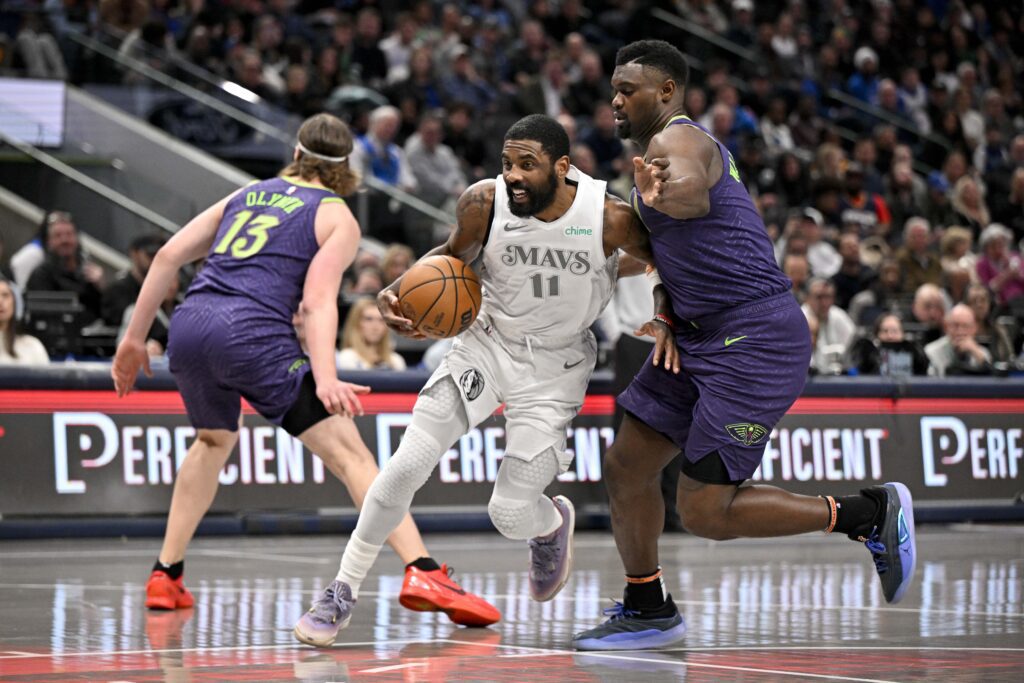
The NBA offseason was busier than we thought it would be, to say the least. Giannis Antetokounmpo finally left Milwaukee, joining the Miami Heat in one of the biggest trades in recent league history.
Jaylen Brown went from Boston to Philadelphia after spending weeks at the center of trade speculation, while LaMelo Ball was shipped from Charlotte to Minnesota to form an exciting backcourt with Anthony Edwards.
And then there were the stars who stayed put. In some cases, their All-Star-caliber names were attached to potential trades for months. But when the dust settled, they were still with their respective teams.
Some probably should have been moved, but the remaining had legitimate reasons to stay. Either way, these are the four NBA All-Stars who weren’t traded this summer.
4. Zach LaVine
Zach LaVine spent most of the summer in an uncomfortable spot in Sacramento. The Kings finished 22-60, and with the franchise clearly headed toward a younger direction, it was difficult to see why a 31-year-old scorer making nearly $49 million would necessarily fit the long-term plan.
We explored multiple potential landing spots for LaVine, including Detroit, while later reporting examined the possibility of Sacramento considering a buyout. The problem was that LaVine’s contract complicated everything.
He exercised his $49 million player option for 2026-27, effectively turning himself into a one-year rental for any team willing to absorb the salary. And while that could actually make him attractive to teams that don’t want long-term money on their books, finding a willing trade partner wasn’t simple.
There is still plenty of basketball left in him, too. LaVine averaged 19.2 points, 2.8 rebounds, 2.3 assists, 0.7 steals, and 0.3 blocks per game in 39 games for Sacramento last season while shooting 47.9% from the field and 39.0% from three.
The problem is that his season ended after hand surgery, leaving teams with another question mark to consider. Sacramento ultimately kept him, meaning LaVine enters 2026-27 with perhaps the biggest opportunity of his career: remind the league that he’s more than an expensive scoring contract.
3. Domantas Sabonis
Domantas Sabonis was arguably the most logical Sacramento player to move this summer. The Kings were coming off a disastrous 22-60 season, and Sabonis, at 30 years old, didn’t exactly line up with a franchise that appeared ready for a reset.
It was reported that Sacramento was willing to listen to offers and later detailed several potential destinations, including the Hornets, Raptors and Lakers. And there was a legitimate basketball argument for moving him.
Sabonis has been one of the NBA’s best offensive centers for years, but Sacramento’s experiment built around him and De’Aaron Fox ultimately failed to produce a deep playoff run. Sabonis was a three-time All-Star and three-time rebounding champion entering the summer, and he averaged 19.1 points, a league-leading 13.9 rebounds, and 6.0 assists in 70 games in 2024-25.
The catch is that Sabonis isn’t simply a stat-stuffer Sacramento can casually give away. He’s a unique offensive hub who can create from the elbow, dominate the glass, and punish smaller lineups. His 2025-26 season was derailed after only 19 games, however, when he averaged 15.8 points, 11.4 rebounds, and 4.1 assists.
That limited sample probably didn’t help Sacramento’s ability to maximize his trade value. So Sabonis stayed. Now the Kings need to find a way to move the productive center to extract some value out of him.
2. Zion Williamson
If there was one player whose name seemed capable of generating a new trade rumor every few weeks, it was Zion Williamson. The former No. 1 overall pick’s career in New Orleans has never matched the expectations and is clearly a standout player who doesn’t belong on the team. The Pelicans, overall, don’t have much of an exciting team for next season.
We even explored a blockbuster scenario that would have sent Williamson and Trey Murphy III to Boston for Jaylen Brown. That is obviously gone down the drain with Brown sitting in Philadelphia right now.
The frustrating part is that Zion still looks like a superstar when he’s healthy. In 2025-26, he played 62 games and averaged 21.0 points, 5.7 rebounds, and 3.2 assists while shooting 60.0% from the field. He has also shown before that he can produce at an All-NBA level, averaging 26.0 points, 7.0 rebounds, and 4.6 assists in 29 games during the 2022-23 season.
Yet New Orleans didn’t pull the trigger, and that may ultimately come down to the fact that trading Zion means selling low on a player who could still become one of the league’s most devastating offensive forces. The Pelicans went just 26-56 last season and are clearly rebuilding, while it was reported in August that the franchise was holding off on extension talks with Williamson as it evaluates its future.
That’s an important distinction: not trading Zion doesn’t mean New Orleans has completely committed to him long term. It means the Pelicans apparently weren’t willing to make a deal just for the sake of making one.
1. Kyrie Irving
Kyrie Irving may be the most fascinating name on this list because, for a while, it genuinely seemed like Dallas could go in either direction. The Mavericks had already moved on from Luka Doncic and Anthony Davis, hired Masai Ujiri, and shifted their organizational focus toward Cooper Flagg.
That timeline made a 34-year-old Irving look like an obvious trade candidate. The Miami Heat are an obvious suitor, while the Detroit Pistons were later described as one of the teams most interested in acquiring him. Otherwise, expect teams such as the Houston Rockets to keep tabs on the former NBA champion.
Then Dallas essentially said: We’re keeping him for now. That still hasn’t stopped teams monitoring Irving’s situation to try to disrupt any further plans.
And honestly, it makes sense. Irving remains one of the most gifted offensive players of his generation. In his last full season, 2024-25, he averaged 24.7 points, 4.8 rebounds, and 4.6 assists per game. He is still a top-5 point guard in the game when healthy and firing on all cylinders.
The Mavericks also have something most rebuilding teams don’t: a potential superstar in Flagg who could benefit enormously from having an elite veteran shot creator beside him. The biggest issue, obviously, is health.
Irving missed the entire 2025-26 season after undergoing ACL reconstruction, with Dallas announcing in February that he would not return that season. That injury likely made a summer trade even more complicated.
Why sell low on a player who hasn’t even had the chance to return to the court? It was reported that Dallas had no interest in trading Irving and that the veteran guard was believed to be comfortable with the Mavericks. So rather than cashing out, Dallas is betting on one of the league’s most unpredictable veterans, or at least until his value is rebuilt before being traded eventually.