Ranking The Detroit Pistons Biggest Concerns Before The 2026-27 NBA Season - Fadeaway World
Fadeaway World · Fran Leiva · 2026-08-30T18:04:38+00:00 · nguồn gốc
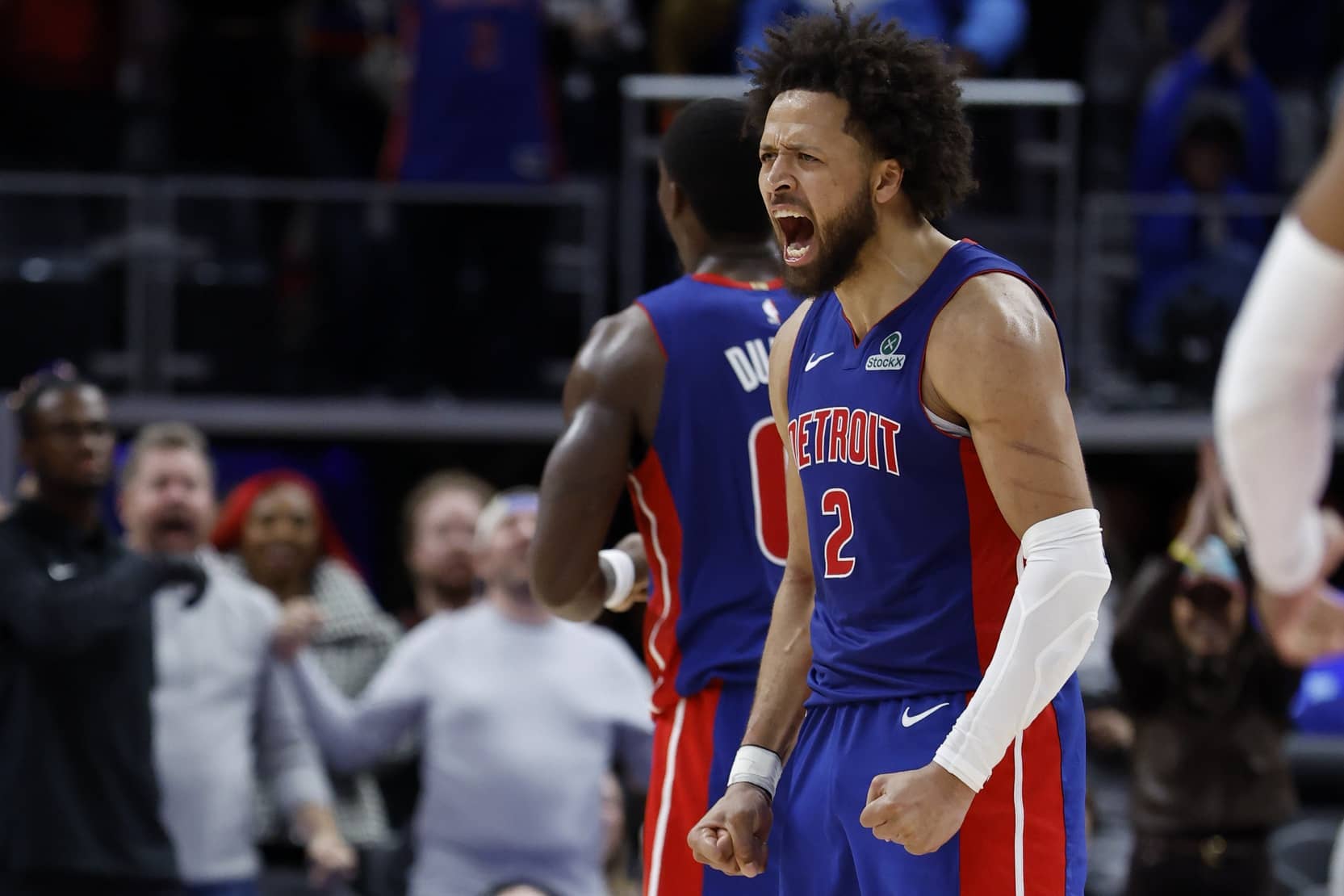
The Detroit Pistons already showed they are done with rebuilding and passed the regular-season test. They went 60-22, finished first in the East, posted a +8.2 net rating, and built the NBA’s second-ranked defense. Cade Cunningham made the All-NBA First Team, Jalen Duren became an All-Star and All-NBA Third Team center, and Ausar Thompson finished third in Defensive Player of the Year voting.
The question now is whether that formula works deep into the postseason. Detroit’s offense fell from 117.9 rating in the regular season to 110.7 in the playoffs, and the Cavaliers exposed some problems that 60 wins had covered up. The Pistons were absurdly elite defensively to contend, but they couldn’t build an efficient half-court offense to be a title favorite.
John Collins, Isaiah Joe, Taurean Prince, and Gary Harris help, but Detroit also lost Tobias Harris, Isaiah Stewart, Caris LeVert, and Marcus Sasser. Assuming Duren eventually gets the new contract everyone expects, the core isn’t really changing. The next step depends on fixing these four issues.
4. The Frontcourt Depth Took A Hit
Detroit’s frontcourt is still good at the top. Jalen Duren averaged 19.5 points and 10.5 rebounds while shooting 65.0% from the field, and John Collins should give Cunningham another strong pick-and-roll target who can also stretch the floor after making 40.6% from three last season.
The depth behind them isn’t nearly as comfortable. Isaiah Stewart averaged only 10.0 points and 5.0 rebounds, but those numbers undersell his role. He gave Detroit 1.6 blocks in 22.7 minutes, could defend either big man spot, played next to Duren when the Pistons wanted size, and could also close games at center when they needed more mobility. Stewart finished seventh in Sixth Man of the Year voting because his impact went well beyond scoring as this team’s enforcer.
Harris also gave Detroit a reliable 63-game starter at power forward. He averaged 13.3 points, 5.1 rebounds, and 2.5 assists while shooting 46.9% from the field and 36.8% from three, then averaged 21.6 points in the first-round series against the Magic. Harris wasn’t spectacular, but he rarely made the lineup harder to organize.
Collins should replace most of Harris’ scoring and probably improve Detroit’s vertical spacing. The defensive replacement for Stewart is harder to find. Paul Reed can handle some backup center minutes, but after him Detroit gets thin if they need an extra big body. Collins can slide to center in smaller lineups, but that isn’t something Bickerstaff will want against the big teams.
3. They Still Don’t Have Enough Proven Scorers
The Pistons addressed some of the lack of shooting they needed last season, but they’re still lacking that secondary scorer to take over games alongside Cunningham.
Duren’s scoring is heavily dependent on the ecosystem around him. He’s elite around the basket, grabbed 3.8 offensive rebounds per game, and shot 65.0% from the field, but he’s still mostly finishing plays created by others instead of creating them.
Collins isn’t solving that either. He’s an efficient play finisher, cutter, roller, and spot-up shooter. Duncan Robinson and Isaiah Joe can destroy defenses that lose track of them, but they’re mostly shooting threats rather than players you give the ball to with eight seconds left and ask for a bucket.
That’s where losing Harris matters more than his 13.3 PPG suggests. Harris could at least attack a switch, post a smaller defender, get to a mid-range jumper, or rescue a possession that had already broken down. Detroit has less of that now.
Ron Holland II could eventually grow into a bigger scoring role, but he shot only 25.3% from three last season. Ausar shot 52.5% from the field but attempted almost no threes. Both are valuable young players, but neither is ready to become a reliable 18-point secondary scorer.
Detroit drafted Ebuka Okorie partly because he offers something different. He averaged 23.2 points at Stanford, got to the free-throw line 7.3 times per game, and showed real self-creation, but he’s just an unproven rookie.
2. Secondary Creation Behind Cade Cunningham Is Thin
This is the main reason why they couldn’t get past the Cavaliers and really struggled against the Magic in the playoffs. Cade isn’t just their scorer; he’s the one who also has to control and create everything else on offense.
He averaged 23.9 points and 9.9 assists last season, while no other Pistons player averaged more than 3.1 assists. Duren’s efficiency, Robinson’s movement shooting, Ausar’s cutting, and plenty of Detroit’s transition offense all could happen because Cade consistently managed to manipulate the defense first.
Cunningham jumped to 28.1 points, 7.5 assists, and 5.1 rebounds across 14 playoff games, but he also played 40.9 minutes per night and committed 5.6 turnovers. His usage climbed above 32.0%, and Detroit eventually reached the point where almost every important half-court shot needed him to create something.
That’s too much for four playoff rounds. Daniss Jenkins has shown some passing and a lot of scoring ability, and Okorie can create off the dribble, but neither is a proven playoff ball-handler. Ausar is a smart passer but still isn’t someone Detroit can ask to run 15 pick-and-rolls. Collins, Duren, Joe, Robinson, and Huerter all work much better after Cade puts two feet inside the paint.
Imagine a playoff defense trapping Cunningham 30 feet from the basket. Detroit’s next player needs to catch the ball, attack the four-on-three, pull another defender out of position, and make the next read. If the first good look disappears, somebody has to reset the offense without immediately throwing the ball back to Cade and asking him to try again. The Pistons don’t have an answer yet.
1. Shooting And Spacing Can Still Limit Their Ceiling
If there’s something to be concerned about with the Pistons, it’s definitely their outside shooting. The playoffs showed us how hard Cunningham had to try because the defense was always packing the paint to avoid drives and lobs. They have new pieces now, but I’m afraid they can still run into the same issues.
Isaiah Joe shot 42.3% from three last season. Duncan Robinson made 41.0%. Taurean Prince shot 43.6% in limited action, Gary Harris hit 41.2%, and Collins made 40.6%. Kevin Huerter is another career good shooter. On paper, the Pistons suddenly have shooting everywhere.
The problem is that their best individual shooters aren’t necessarily their best overall players. Detroit attempted only 34.5% of its shots from three last season, well below teams like the Celtics, Thunder, Spurs, and Knicks. The Pistons still produced a 117.9 offensive rating because they dominated the glass, finished inside, drew fouls, and created easy points from their defense.
That became harder in the postseason, where Detroit shot 42.8% from the field and 33.4% from three across 14 playoff games. The scoring dropped to 103.3 points per game and the offensive rating fell to 110.7. The defense remained elite enough to win, but the offense just sunk.
Adding Joe and the other shooters should help, but Bickerstaff still has to manage who plays during the closing stages of games. Cunningham shot 34.2% from three during the regular season, Ausar shot 25.0%, and Duren didn’t attempt a three all year. Those are three of Detroit’s most important players.
If all three close games together, there are only two spots left for high-level shooters. Play Robinson and Joe, and suddenly you’re giving up some defense and size. Play Collins at power forward, and you get another shooter with size, but now only one perimeter spot remains for Robinson, Joe, Huerter, Prince, or Harris.
That’s the real problem. Detroit can build lineups that shoot, and lineups that defend at an elite level. Building one five-man group that does both is harder. That’s why Ausar is the biggest swing piece.
A 40.0% shooter is way to much to ask for a defensive player of that caliber. If he gets into the 33.0% to 35.0% range on enough volume that defenses actually respect him, the floor changes immediately. If he remains around 25.0%, opposing teams can hide a big man on him and keep another defender around the paint next to Duren’s matchup, and they’ll be forced to bench Duren in the clutch, which is part of why they wouldn’t commit to a max deal in the first place.
It also explains why Cade’s playoff workload got so ugly. Even when he was making shots, he had to work through crowded floors and constant help defense. Asking him to solve that for 41 minutes every night isn’t sustainable.
Detroit has already built a championship-level defense. It has an All-NBA point guard, an All-NBA center, one of the best young defenders in basketball, and enough depth to win another 55 or 60 games, so the next step is naturally offensive.
If the Pistons can create enough space around Cunningham without sacrificing what makes their defense special, they’re a real title threat. If they can’t, another contender is eventually going to shrink the floor, load up on Cade, and make everybody else prove they can beat them, a debt the Pistons have pending.