Will the Pro Bowl cancellation open the floodgates to end All-Star Games?
Awful Announcing · Matt Yoder · 2026-08-27T18:04:39+00:00 · nguồn gốc
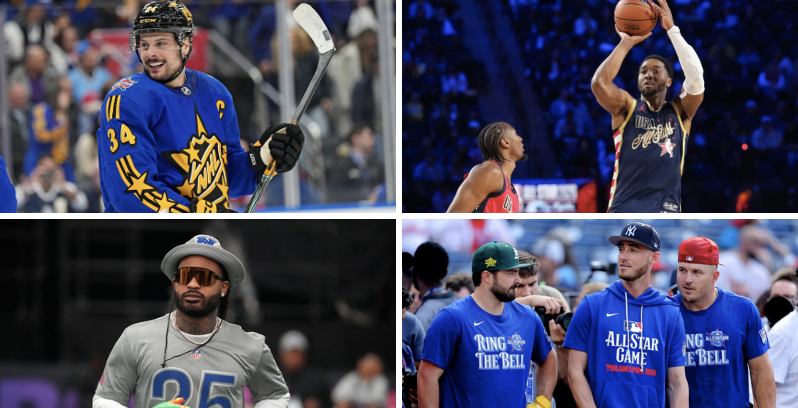
The plight of the All-Star Games is one of the biggest conundrums in modern sports. What has historically served as a showcase sporting event throughout the 20th century has been plagued by controversy, apathy, and one painful gimmick after another in the 21st.
And now, major American sports leagues are asking the question: Should they continue chasing the ghosts of relevance from years gone by? Or is it time to finally accept defeat and stop tilting at windmills?
The NFL finally made its decision this week to cancel the Pro Bowl after a years-long slide into irrelevance. The game was routinely above 10 million viewers in the early 2010s, with the 2011 contest drawing a high of 13.4 million viewers. However, that game was in Hawaii at the famed Aloha Stadium and had decades of tradition attached to it. By the time it ended, the Pro Bowl was a carnival event taking place in a nondescript San Francisco warehouse, watched by less than 2 million people.
The sad truth is that nobody will miss the Pro Bowl now that it’s gone, at least the Frankenstein’s Monster of a Pro Bowl that it had become. So if the country’s most popular sport can finally waive the white flag, will others follow? Let’s take a case-by-case look at where the major leagues stand and whether their All-Star Game may be next on the chopping block.
MLB All-Star Game
Surely the safest of all the major All-Star Games is the one with the most history, tradition, and meaning. The MLB All-Star Game dates back to 1933. Does it mean everything it once did? Of course not, thanks to years of interleague play and now even the DH being eligible in both the American and National Leagues. But it is still a huge occasion in the sports world.
It’s true, the Midsummer Classic has had its troubles. Perhaps the single most humiliating All-Star Game moment is Bud Selig throwing up his hands and declaring a tie in 2002 when both sides ran out of pitchers. Baseball tried to make it matter the next year again by deciding home-field advantage in the World Series for the winning league for a number of years, but that finally fell by the wayside in 2016. And to mitigate concerns about running out of arms in the exhibition contest, the league instituted a swing-off in 2022 if the game were to be tied after nine innings.
But the most important question is whether fans are still invested. And that seems to be the case. The All-Star Game is never going to reach 36 million viewers again as it did in 1980, but it’s still by far the most-watched baseball game of the year before the postseason. The 2026 version drew the highest viewership number in eight years with 8.79 million viewers. Those are strong numbers in modern times. And the league, players, and fans are all still on board with the concept.
NBA All-Star Game
If you had asked this question a year ago, it may have been a 50-50 proposition on whether or not the NBA would still have an All-Star Game. It sits only behind Major League Baseball in history, tradition, and popularity. However, it’s been haunted by the same non-competitive nature that doomed the Pro Bowl.
After a 192-182 “game” in 2017, the NBA ditched the East vs West format and went to a fantasy draft. It brought back the East-West game in 2024, and the contest was even more of a joke with a 211-186 scoreline. The league experimented with Elam Endings, charity prizes, and everything in between to try to get players to try, but nothing really worked. In 2025, it led to a series of mini-games resembling the current NHL All-Star Game, but that was the worst version yet. The NBA All-Star Game looked hopeless, lost, and irredeemable.
Suddenly in 2026, everything seemed to change. And we may have one person to thank: Victor Wembanyama.
With new teams based in the United States and international rosters, Wemby shocked the basketball world when he actually appeared to try. His competitive intensity lifted everyone else, and the basketball on display was something not seen in years. Even with a convoluted format, the game drew 8.8 million viewers on NBC, nearly doubling what it drew the previous year. Of course, it had network television and the Olympics to thank for that, but a win is a win. And after years teetering on the brink of extinction, it looks like it’s here to stay thanks to the energy of one of the new faces of the league.
NHL All-Star Game
If there’s one major All-Star Game that looks destined for the history books and joining the Pro Bowl, it’s the NHL’s. But it’s not just due to the fact that hockey’s All-Star Game has had years of diminishing importance and returns, but that the sport has also found something much better to replace it.
Like the NBA version, a lack of effort and playground feel ruined the competitive vibes for a game that dates back to 1947. By the time 2015 came around, a fantasy draft format saw a final score of 17-12. From 2016-2024, the NHL All-Star Game has been a series of unmemorable minigames, save for the Cinderella story of enforcer John Scott. By 2024, the NHL was drawing just 1.4 million viewers for its All-Star Game, by far the least of the four major sports.
The NHL’s solution was to abandon the All-Star Game entirely in 2025 with a new international competition, the 4 Nations Face-Off. And it was a masterstroke of genius. There are few things in sports more intense and of a higher quality than best-on-best international hockey. The USA-Canada final that year drew an astonishing 9.3 million viewers, shattering all kinds of viewership records for the sport.
But the NHL isn’t ready to finally put the All-Star Game to bed once and for all. After the incredible Olympics this year, 2027 will see the return of 3-on-3 exhibition hockey while keeping the international theme going. However, 2028 will feature the return of the World Cup of Hockey and major international competition.
We could see an actual NHL All-Star Game become an every-other-year endeavor while international hockey is featured in between. Time will tell if that’s actually sustainable or necessary, or if the focus can just stay on the international game.
Around the sports world
Other All-Star events are seeing varying degrees of success. At the top of the list is the WNBA All-Star Game, which has drawn over 3 million viewers and has helped to cement a new era of women’s basketball stars in the American sports mainstream.
The MLS All-Star Game has shifted from featuring one of the top European teams taking on the American league’s top players to an MLS vs Liga MX format. While the game is far from top of mind for sports fans while tucked away on Apple TV, it at least was a sellout in Charlotte this year. Even though the calendar is flipping to join the top European leagues in 2027, an All-Star Game still looks like it will be part of the schedule.
The NASCAR All-Star Race has been searching for an identity ever since leaving Charlotte Motor Speedway in 2020. Unlike other sports, NASCAR doesn’t really receive a boost in viewers for its event because, well, it looks like pretty much every other NASCAR race. And the sport is firmly back at the drawing board when it comes to finding a solution for making it matter.
Final Verdict
All-Star Games across sports have dealt with similar dilemmas and declines from their past peaks. All of the four major sports have hit viewership lows in recent years for their showcase games. Other sports like MLS and NASCAR are continuing their events, but more out of a performative obligation, rather than having any real defining purpose.
However, looking across the landscape, the future of All-Star Games looks surprisingly safe. The viewership boosts for almost all these sports are far beyond what an average regular season game would provide. And the fact that the events get the league together in one place at one time represents a huge business opportunity for the power-brokers and influencers to assemble. Only the NHL has something to offer that would truly better their product versus continuing on in its current state. But the allure and passion for international hockey simply can’t be duplicated in other sports.
Perhaps the lesson learned from the Pro Bowl is that only the NFL is really big enough to finally pull the plug on something that doesn’t work like it once did. The Pro Bowl was a blip on the NFL radar from every standpoint, whether it be viewership, interest, relevance, or their overall business. For everyone else, it’s a matter of trying to find a way to carry on because they can’t live without it.