The remarkable 139-year story that binds Everton & Preston North End
Planet Football · Harry Watkinson · 2026-08-25T10:12:57+00:00 · nguồn gốc
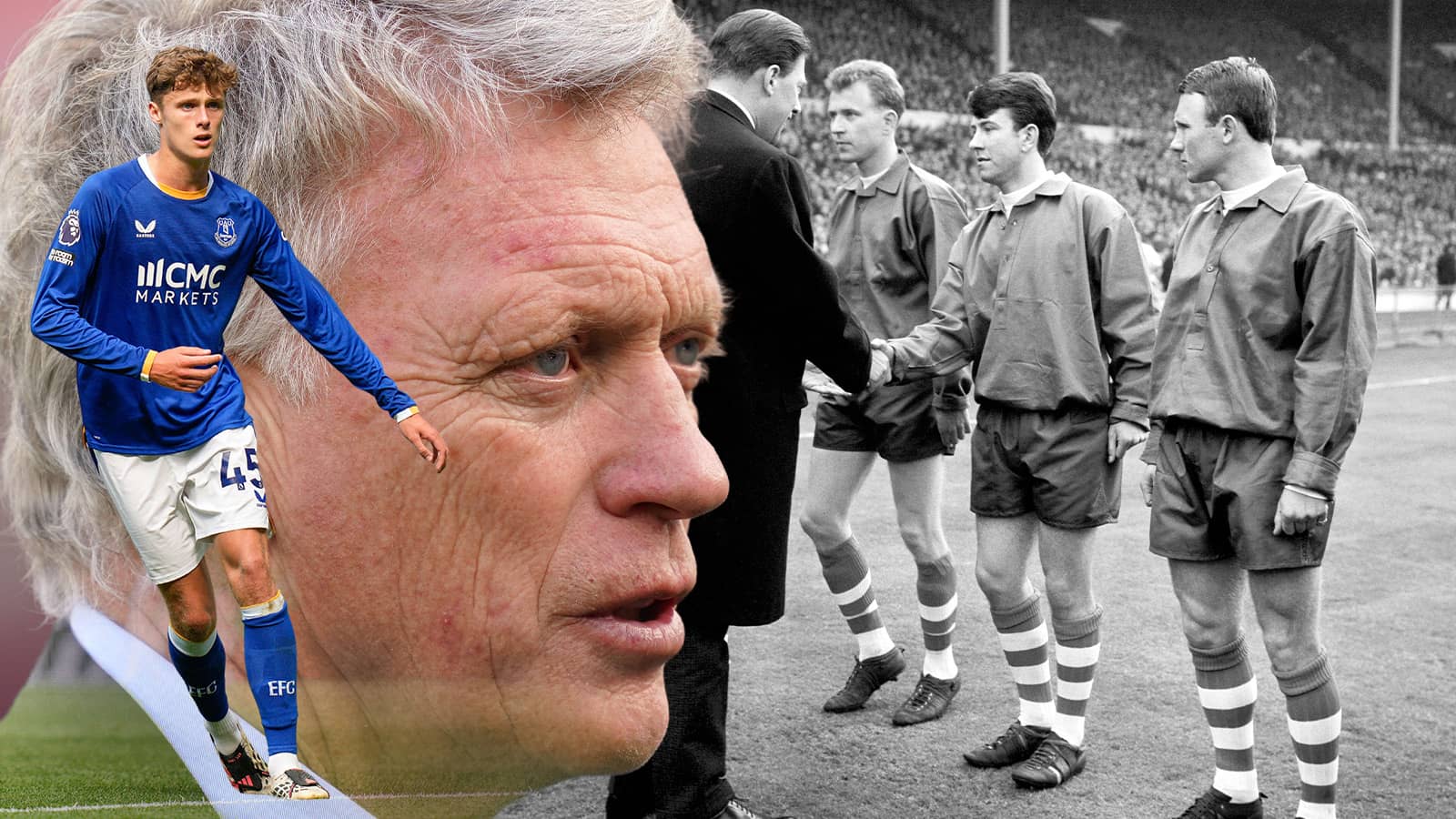
99 or 100? The remarkable 139-year story that binds Everton & Preston North End
Preston North End and Everton meet at Deepdale in the Carabao Cup on August 26, renewing a relationship that predates the Football League itself.
From a mysterious 6-0 victory that officially disappeared, to the Invincibles, Sir Tom Finney, Howard Kendall, David Moyes and generations of players to represent both clubs, the two founder members share a remarkable history stretching back 139 years.
For a Preston North End home game, the surroundings could hardly have been more unusual.
When Paul Heckingbottom’s side began their 2026-27 campaign against Huddersfield Town in the Carabao Cup on August 8, there was no Deepdale, no Sir Tom Finney Stand and no view across Lowthorpe Road.
Instead, North End walked out at Goodison Park. With Preston’s new hybrid pitch still being prepared for the Championship season, their first-round tie had been relocated 35 miles down the road to Everton’s former home.
Even the game refused to be conventional. Reduced to ten men, Preston found a late equaliser to make it 1-1 before goalkeeper Daniel Iversen saved twice in the shootout as North End won 4-3 on penalties.
Two days later came the second-round draw: Preston North End v Everton.
So Preston’s reward for winning a home game at Everton’s old stadium was a home game against Everton themselves.
The tie will be played at Deepdale on Wednesday, almost 22 years since these two grand old clubs last met competitively.
That alone would make for a neat cup story. Dig deeper, though, and it becomes something much more.
The player-eligibility scandal that predates The Football League
Preston and Everton first took the field against each other in 1887. The Football League did not yet exist.
And 139 years later, nobody can say with complete certainty whether the latest encounter should be described as their 99th competitive meeting – or their 100th.
The reason takes us back to Victorian Deepdale, a six-goal thrashing and a football match that officially ceased to exist.
So, is it No 99 or No 100? Consult different historical databases and you will receive different answers.
One records 98 previous recognised meetings between Preston and Everton. Another records 99. The discrepancy is not caused by wartime football or disagreement over whether a friendly should count.
It comes down to one extraordinary FA Cup afternoon on November 26, 1887.
Preston played Everton at Deepdale. North End won 6-0. Except, officially, they didn’t.
Everton had reached the tie after a marathon first-round contest with Bolton Wanderers, but questions surrounding player eligibility subsequently caught up with the Merseyside club.
Everton were disqualified from the FA Cup after being found to have used ineligible players in the previous round. It meant they should never have progressed to play Preston.
The authorities effectively wound the competition backwards. Preston’s 6-0 victory was declared void, Bolton were restored to the competition and North End were required to play them instead.
Preston won that game 9-1. Almost a century and a half later, the consequences of that Victorian administrative chaos remain visible in the record books.
Some statistical records exclude the 6-0 altogether and list 98 recognised previous encounters. Others count a match that unquestionably took place, despite subsequently being expunged, and arrive at 99.
So when the teams walk out at Deepdale this month, it will be either competitive meeting No 99 or No 100.
Few fixtures in English football require investigating a 139-year-old player-eligibility scandal to determine the number of previous meetings.
Preston North End vs Everton – the numbers
Excluding the void 1887 game – PNE wins 32 – Draws 28 – Everton wins 38 – Meetings 98
Including the void 1887 game – PNE wins 33 – Draws 28 – Everton wins 38 – Meetings 99
Whichever convention is preferred, one thing is beyond dispute. This relationship is older than league football itself.
Two of the original 12
When the Football League staged its inaugural season in 1888-89, Preston North End and Everton were among its 12 founder members.
North End didn’t merely take part. They made history.
William Sudell’s team went through the entire 22-game league season unbeaten, winning 18 matches and drawing four.
They also lifted the FA Cup without conceding a goal. The original Invincibles had arrived.
Everton were beaten twice during that extraordinary league campaign – 3-0 at Deepdale in December 1888 and 2-0 away the following month.
And the early encounters could be spectacular. Preston won 5-1 away to Everton in November 1889 and 5-0 at Deepdale in December 1892. Everton responded emphatically in February 1893, winning 6-0.
Weeks later the clubs met in the FA Cup and needed three matches to separate them: a 2-2 draw, then 0-0, before Everton finally won a second replay 2-1.
These weren’t occasional cup encounters between clubs inhabiting different footballing worlds.
For decades, Preston and Everton competed together at the summit of the English game.
From Victorian Deepdale to the Carabao Cup
Nov 1887 – PNE 6-0 Everton – Played, then declared void – the source of today’s 99/100 mystery
Dec 1888 – PNE 3-0 Everton – First Football League season; the Invincibles
Dec 1892 – PNE 5-0 Everton – One of North End’s biggest wins in the season
Feb 1893 – Everton 6-0 PNE – Everton’s biggest win of the season
Aug 1954 – Everton 1-0 PNE – Played before 76,839 at Goodison
Aug 1955 – Everton 0-4 PNE – First of three remarkable four-goal PNE wins at Goodison
Feb 1957 – Everton 1-4 PNE – Finney-era North End overwhelm Everton again
Aug 1958 – Another four-goal PNE win, watched by over 52,000
Feb 1961 – PNE 1-0 Everton – The clubs’ last league meeting
Jan 2000 – Everton 2-0 PNE – Moyes manages PNE; Unsworth scores for Everton
Oct 2004 – Everton 2-0 PNE – Their only previous League Cup meeting
Aug 2026 – PNE vs Everton – Competitive meeting No 99 – or No 100?
When Finney’s Preston terrorised Goodison
Modern football’s divisions inevitably shape perceptions of clubs. Preston have not played in England’s top flight since 1961, while Everton are one of English football’s great top-flight constants.
But the history of the fixture is a reminder of just how powerful North End once were.
On August 28, 1954, Everton beat Preston 1-0 at Goodison Park.
The attendance was 76,839. Sir Tom Finney was then at the heart of a Preston side capable of competing with anybody in the country. And what North End subsequently did at Goodison was remarkable.
In August 1955 they won 4-0. In February 1957 they returned and won 4-1.
After Everton gained revenge with a 4-2 victory in March 1958, North End came back five months later. They won 4-1 again.
That latest victory was watched by 52,306. Three visits, within four seasons, in which Preston scored four goals at Goodison.
This was the North End of Finney’s later years, but still a formidable force. They finished runners-up to Wolves for the First Division title in 1957-58.
Within three years, everything had changed. Preston beat Everton 1-0 at Deepdale on February 25, 1961. It remains their most recent league meeting.
North End were relegated at the end of that season and, remarkably, these two founder members of the Football League have never shared a division since.
Their histories, however, continued to intertwine. Nobody represents that better than Howard Kendall.
Howard Kendall: the boy of Deepdale who became Goodison royalty
If one person belongs to both stories, it is Kendall. He joined Preston as a youngster and in 1964 Second Division North End embarked upon a run to the FA Cup final.
West Ham United awaited at Wembley. Kendall was just 17 years and 345 days old, becoming the youngest player to appear in an FA Cup final at Wembley.
Preston led twice before West Ham broke their hearts, Ronnie Boyce scoring in the final minute to make it 3-2.
For Kendall, however, an extraordinary career was only beginning. Three years later he moved to Everton.
At Goodison he was converted into a midfielder and, alongside Alan Ball and Colin Harvey, formed the combination Evertonians came to know simply as the Holy Trinity.
Harry Catterick’s side swept to the First Division championship in 1969-70. Kendall had won the title as an Everton player.
His greatest contribution to the club was still to come. He returned to Goodison as manager in 1981 and, after a difficult beginning, built the greatest Everton team of the modern era.
The FA Cup arrived in 1984. Then came 1984-85.
Everton won the league championship and the European Cup Winners’ Cup, losing only narrowly to Manchester United in the FA Cup final as they came within one game of an extraordinary treble.
Another league title followed in 1986-87. Kendall remains Everton’s most successful manager.
To generations of North End supporters, he was the teenager who had walked out at Wembley in white. To generations of Evertonians, he became one of the greatest figures in the club’s history.
From Preston prodigy to Everton champion and then Everton’s greatest manager, Kendall may be the ultimate human link between Deepdale and Goodison.
But he is far from the only one.
Players who wore both colours
Kevin Kilbane was born in Preston, developed through North End’s youth system and established himself at Deepdale before moving to West Brom in 1997.
By 2003 he was at Everton. Kilbane went on to make 121 appearances in all competitions for the Blues, scoring five goals, and became a trusted member of David Moyes’ team.
Then there was Brian McBride. The United States international arrived at Preston on loan from Columbus Crew in 2000 while Moyes was North End manager.
A permanent transfer did not materialise, but Moyes remembered him.
Three years later, now in charge of Everton, he brought McBride to Goodison on another loan. The American scored four Premier League goals in eight appearances.
Jermaine Beckford took the opposite route. Everton signed him from Leeds United in 2010 and he scored ten goals during his season at Goodison, including a memorable individual effort against Chelsea.
Four years later he joined Preston. His defining North End moment came at Wembley.
After years of play-off anguish for PNE, Beckford scored a hat-trick as North End demolished Swindon Town 4-0 in the 2015 League One play-off final. He had played for Everton. He became a Preston folk hero.
Go further back and Derek Temple provides another link. Temple was the man whose goal completed Everton’s famous comeback from 2-0 down against Sheffield Wednesday in the 1966 FA Cup final. He later wore Preston’s white.
And these connections aren’t confined to players.
From one dugout to the other
Brian Kidd played for Everton in 1979 and 1980. By the mid-1980s he was at Deepdale as assistant to Tommy Booth, later taking charge of Preston himself during one of the bleakest periods in North End’s history.
Alan Irvine provides an even more direct bridge. He played for Everton before moving into coaching and later became David Moyes’s assistant at Goodison.
In November 2007 he left Everton to take his first managerial job. The club waiting for him was Preston North End.
Years later, Irvine returned to Everton, including another spell working alongside Moyes. Then there is David Unsworth. His story might be the most tangled of them all.
Moyes, Unsworth and a glimpse of the future
After Preston’s 1-0 league victory in 1961, North End and Everton went almost 39 years without meeting competitively.
That ended on January 29, 2000. Preston were thriving under a highly-rated young manager. His name was David Moyes.
The FA Cup sent North End to Goodison. Everton won 2-0.
And the player who broke the deadlock was David Unsworth, notching a fine free kick from the edge of the box.
Joe-Max Moore added Everton’s second in stoppage time.
In an exclusive interview with Planet Football, Unsworth told us about his memories of the match.
“I remember it was a tough game and Preston played well that day. I was playing in midfield, I think because of a few injuries. I managed to get the ball over the wall and it crept in the corner.
“It was a decent strike and it was great to see it go in as it was late on in the game. Joe-Max Moore scored right at the end to make it 2-0 but it was a very close game.”
At that stage, Unsworth was already steeped in Everton.
He had emerged through the youth system, made hundreds of appearances across his spells with the club and was part of Joe Royle’s 1995 FA Cup-winning squad.
But nobody watching that afternoon could have known quite how neatly the two men’s careers would subsequently intertwine with the clubs on the pitch.
Moyes left Preston for Everton in March 2002. Unsworth eventually moved into coaching – at Preston.
He became part of North End’s coaching staff and twice served as caretaker manager. Later he returned to Everton’s coaching structure and twice took caretaker charge there too.
We asked Unsworth about his opinions on both Everton and Preston.
“There’s no comparison really. Everton fans are the best in the country and they have always been really good to me and they travel in such huge numbers. I love the Everton fans,” Unsworth said.
“Preston is obviously a smaller club, but they have a really passionate core. They haven’t seen success for a long time and are the only northwest club to not have had a period in the Premier League, which I hope changes because they deserve it just for their sheer loyalty.”
Look back at that 2000 cup tie now and it appears almost like a photograph of the future.
Future Everton manager David Moyes managing Preston against Everton, with future Preston caretaker manager David Unsworth scoring against him.
And four years later, Moyes found himself on the other side.
The only previous League Cup meeting
On 27 October, 2004, Preston returned to Goodison. This time Moyes occupied the Everton dugout.
It was the League Cup – the only previous meeting between the clubs in the competition now known as the Carabao Cup.
Everton won 2-0. Lee Carsley scored a free-kick before being sent off, while Marcus Bent added the second late on despite the Blues being down to ten men.
The crowd was 33,922. Then the fixture disappeared again.
Almost 22 years later, when it finally returns, Moyes will once more be Everton manager. But his Preston connection has never become merely a historical footnote.
As recently as last season, it was still helping link the two clubs.
From Pickford to Armstrong – and Gibson: Deepdale’s role in developing talent
One of the most interesting modern strands in the Preston-Everton relationship concerns young players.
Jordan Pickford wasn’t an Everton player when he arrived at Deepdale in 2015. He belonged to Sunderland.
But a loan spell with Preston represented a significant stage in the goalkeeper’s development, giving him sustained Championship football before he returned to the Stadium of Light, established himself in the Premier League and moved to Everton in 2017.
He would become Everton and England’s long-term No.1, while Anthony Gordon travelled directly from Goodison to Deepdale.
Everton loaned the academy graduate to Preston in February 2021 and he made 11 appearances before returning to Merseyside and breaking into the Blues’ first team.
Then came Tom Cannon. Another Everton academy product, Cannon joined Preston in January 2023. The loan proved hugely successful.
He scored eight Championship goals during the second half of the season and established himself as one of North End’s most dangerous attacking players.
And most recently came Harrison Armstrong. Everton’s highly-rated midfielder joined Preston on loan in September 2025.
He made 17 appearances and scored once, against Wrexham, before Everton recalled him on January 1 this year.
North End’s own assessment of his spell was telling: Armstrong had caught the eye with performances and maturity beyond his years.
His development also brought Moyes and Preston back into direct contact more than two decades after he had left Deepdale for Goodison.
After an impressive pre-season for Everton, Armstrong could play a key role for the Toffees when they face Preston on Wednesday.
The other most immediate connection is Lewis Gibson.
The Preston defender came through Everton’s academy, progressing through the youth ranks at Finch Farm after joining the Blues as a highly-rated teenager.
His route into senior football eventually took him away from Goodison, through a series of loans and subsequent moves before he established himself at Preston.
Now an important member of North End’s squad, Gibson represents something different from Pickford, Gordon, Cannon or Armstrong.
He isn’t merely part of the historical chain. Like Armstrong, he could be standing on the Deepdale pitch against Everton when the two clubs meet on August 26.
For a player educated inside Everton’s academy system, the prospect of facing the club that helped shape his early career adds another contemporary thread to a relationship already stretching across generations.
From Pickford’s formative Preston loan to Everton academy products Gordon, Cannon, Armstrong and Gibson, Deepdale has repeatedly provided either a staging post or a permanent footballing home for players connected with the Blues.
It is a relationship that remains alive rather than preserved only in history books. On Preston’s role in developing youngsters like Armstrong, Unsworth added:
“First of all, Preston is local and there are a lot of good people at the club.
“It’s got good facilities and a management team that has worked with young players and who are good coaches that can help develop players.
“Harrison [Armstrong] had a fantastic loan spell there last season and really helped the team.”
And then Ryan Ledson returned to Goodison…
Even the first round of this season’s Carabao Cup added another twist.
Ryan Ledson developed in Everton’s academy and was once a Goodison Park ball boy.
He never established himself in Everton’s senior side but, after leaving, eventually found his footballing home at Preston.
Ledson spent seven years at Deepdale and made more than 200 appearances for North End before joining Huddersfield this summer.
Preston’s temporary relocation meant Ledson returned to Goodison – captaining Huddersfield against the club he had just left, at the stadium where his football education had begun.
The game went to penalties. Ledson missed. Preston won. Two days later, North End discovered their next opponents. Everton.
Sometimes football produces coincidences that would look contrived if somebody wrote them into a script.
Back where it all began
And so, 139 years later, the story returns to Deepdale.
The football world surrounding Preston and Everton has changed beyond recognition since November 1887.
When the clubs first faced each other, the Football League did not exist. Neither did goal nets.
Substitutes were generations away and professionalism itself was still sufficiently contentious that arguments over who could legally be paid to play football could result in a 6-0 cup victory being erased from the record.
Within a year, Preston and Everton would become founder members of the world’s first Football League.
North End became its first champions and the original Invincibles.
Across the decades came packed Goodison Park terraces and Finney’s Preston scoring four goals against Everton three times in four seasons.
Then came Kendall – from teenage Preston FA Cup finalist to Everton champion and ultimately the architect of the greatest period in the Blues’ history.
Kidd and Irvine crossed between the clubs. Kilbane, McBride and Beckford wore both colours.
Moyes built his managerial reputation at Deepdale before spending more than a decade at Goodison.
Unsworth travelled between the two clubs in almost the opposite direction.
“It will be great for David Moyes to go back there and I’m sure he will get a great reception,” he said.
“It will be a tough game for Everton. I expect a close game, a full house and a great atmosphere. I think it will be a very close match. It may go all the way to penalties, and then who knows!”
In more recent times, Pickford, Gordon, Cannon, Armstrong and Gibson have ensured the connection has continued into another generation.
Among those involved on Wednesday could be a Toffees youngster who shone on loan with North End, and a Preston player whose own football education began at Everton.
Will it be the 99th competitive meeting? Or the 100th? Perhaps the uncertainty is more interesting than the answer.
The fact that determining it requires deciding whether to recognise a 6-0 Preston victory from 1887 that was subsequently wiped from the FA Cup record tells its own story.
These are two clubs whose histories have been crossing since before league football existed. Now their paths are about to cross again.
By Harry Watkinson
READ NEXT: The story of the ex-Everton & Sunderland Scouser who now plays for China
TRY A QUIZ: Can you name Everton’s top Premier League appearance maker for every initial?